
Why This Gamer Built His Own Steam Machine Instead of Waiting
Steam Machine hardware blends PC power with console ease using custom AMD chips; building your own SteamOS box is easier than you think.
When Valve finally announced the Steam Machine, the hype hit like a wave. Everyone called it a console killer. But after the excitement settled, a simple thought remained: he already used Linux for gaming. So what was actually stopping him from building his own Steam Machine right now? Memory prices were climbing again for no good reason, and waiting until 2026 for Valve's box to drop didn't feel worth it. He decided to take the project into his own hands. And soon he realized almost anyone could do the same.
The Steam Machine is a strange blend of console and PC. It offers PC-class hardware wrapped in a console-like experience, mostly because of SteamOS. But one common misconception kept appearing online. Many people assumed the Steam Machine was built from off-the-shelf desktop components. That wasn't true, but not for the reasons they thought.
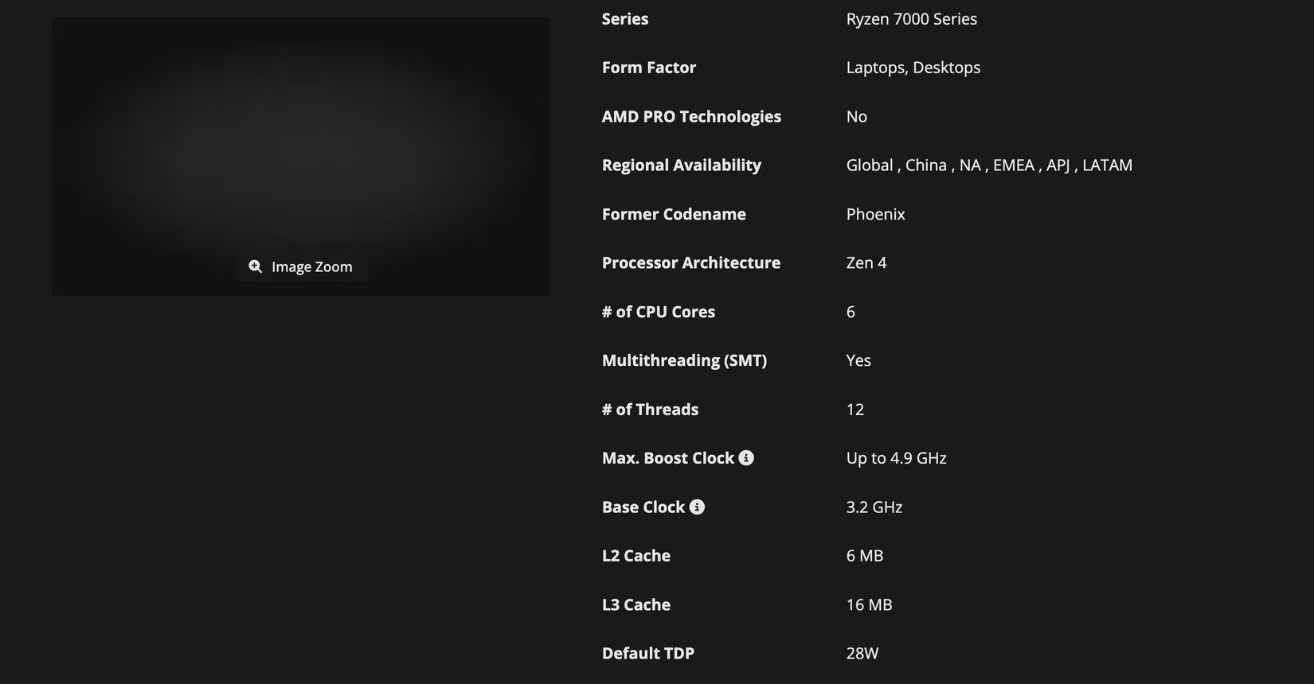
According to the specs, Valve used custom AMD silicon. It wasn't a totally bespoke console chip, though. In reality, it was more of a semi-custom mobile chip. The closest match in AMD's lineup was the Ryzen 5 7540U, a CPU normally found in laptops and a few mini-PCs. It had the same core count, same architecture, same TDP, and only a tiny 0.1GHz difference in boost clocks. In other words, it was basically the same chip.
The GPU followed a similar pattern. Its closest equivalent was the Radeon RX 7600M, also a mobile chip. It ran at a slightly lower TDP by around 20W, but the other specs matched closely. That explained why the off-the-shelf argument didn't hold up. These were mobile parts shipped through OEM channels, not desktop parts someone could buy on Newegg.
Still, mobile chips didn't mean weak hardware. By the time Valve shipped the machine, the company would have squeezed every drop of performance out of it. The Steam Deck had already shown that Valve could make modest hardware feel far more capable than the specs suggested.
He then went looking for the closest desktop equivalents. But he quickly realized that building a clone of Valve's hardware wasn't necessary. Here is a rough comparison for those who wanted a desktop starting point.
| Component | Steam Machine hardware | Closest desktop starting point |
|---|---|---|
| CPU | AMD Ryzen 5 7540U | Ryzen 5 7600 or similar |
| GPU | Radeon RX 7600M | Radeon RX 7600 |
| Memory | LPDDR5, likely 16GB | 16-32GB DDR5 |
After looking at those components, he remembered the economy. RAM prices had more than doubled recently, and GPUs were still out of reach for many. Then came the bigger realization: a ready-made Steam Machine might already be sitting somewhere in the house.
An old laptop, a mini PC, a leftover gaming rig, or even a handheld could work. A sub-$300 SteamOS box could handle older titles, while a $2,000 monster could completely outperform Valve's box. As long as the machine could boot a fairly modern Linux distro, it could become a Steam Machine.
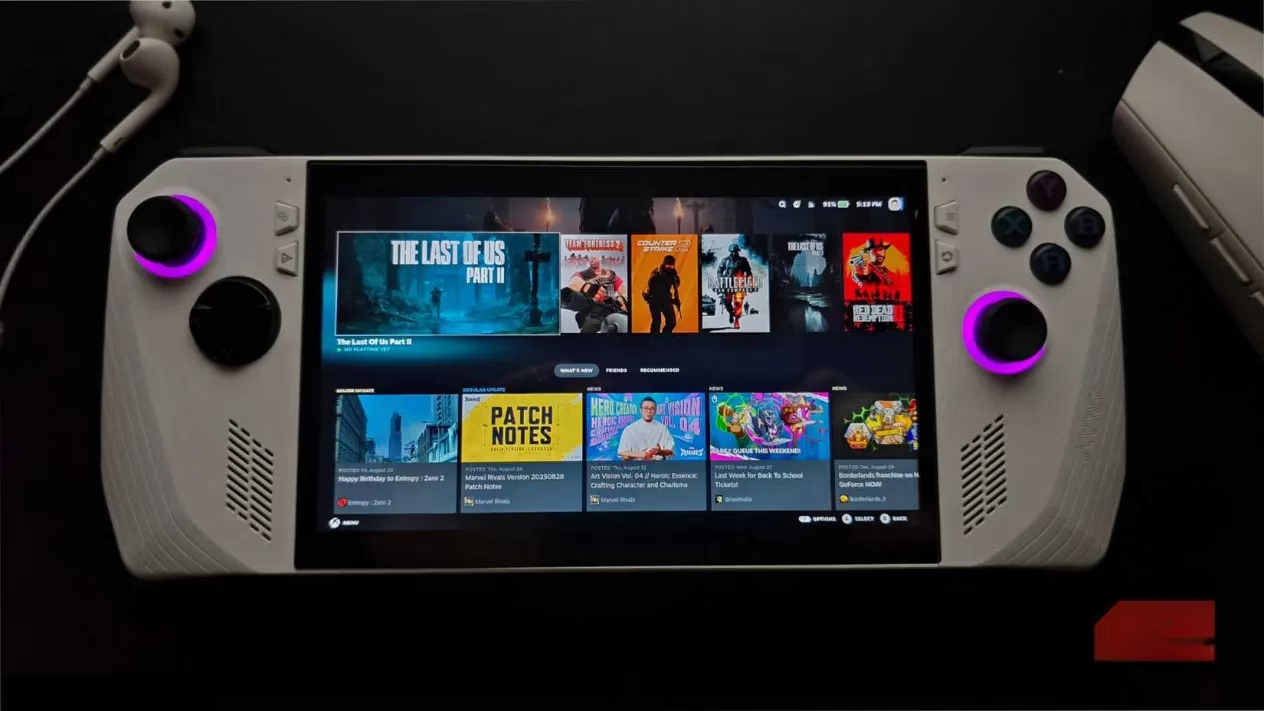
The catch was compatibility. SteamOS itself wasn't universally supported. Right now it worked mainly on AMD hardware. He had installed it on an ROG Ally, where Valve had actually optimized the experience, and it was nearly flawless.
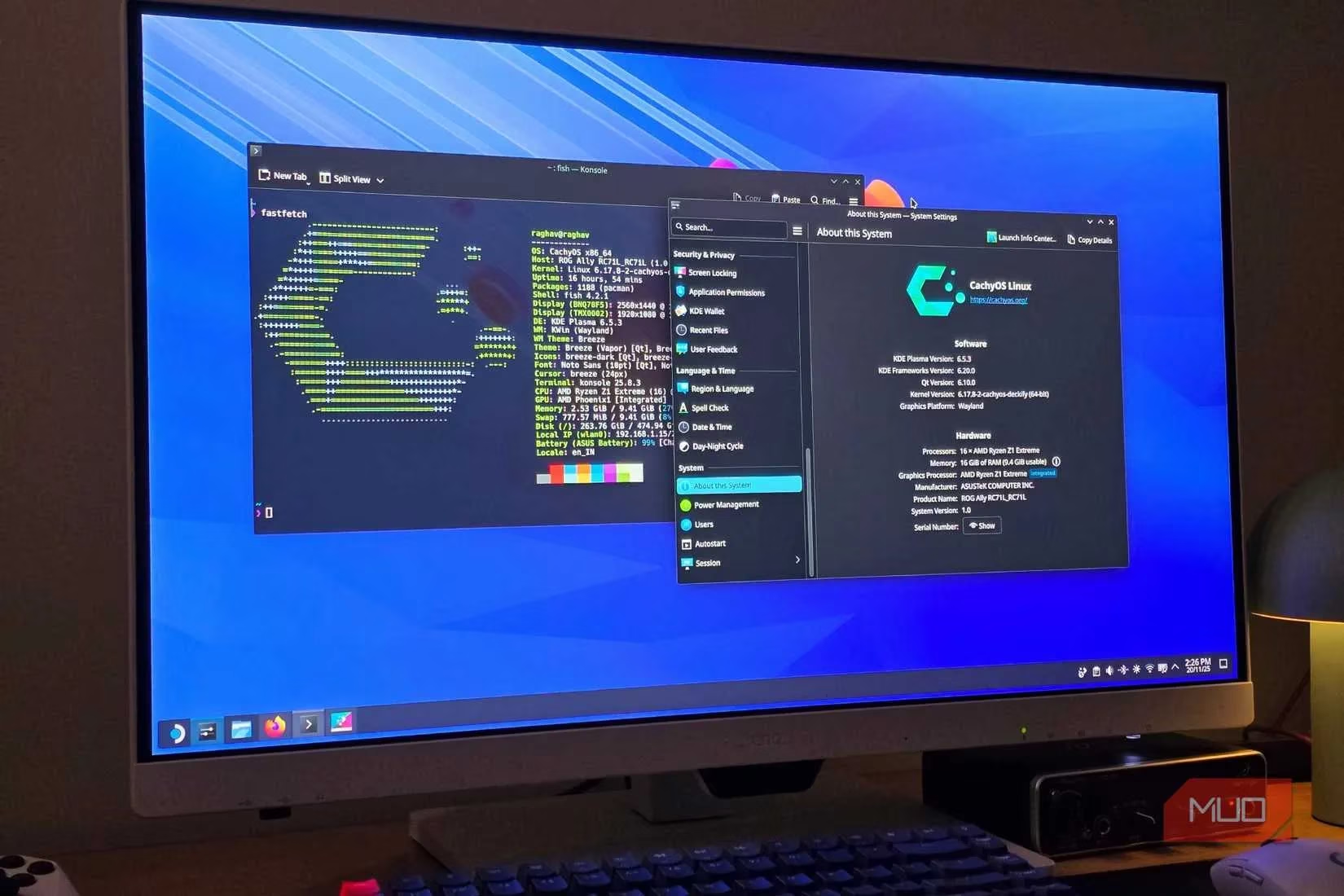
On Nvidia or Intel hardware, a clean SteamOS install wasn't really possible. But alternatives existed. Distros like CachyOS and Bazzite included the same Steam Big Picture Mode interface and worked on a much wider range of hardware. After testing several, he couldn't tell the difference because it was literally the same Steam Big Picture session running on a different base distro.
There were a few missing quality-of-life touches on generic hardware, such as HDMI-CEC, which let the TV and PC control each other like a console. But the core experience remained intact.
The real magic was in the software. SteamOS turned any compatible box into a proper living-room console. It wasn't locked down like a traditional console, though. A controller provided the couch experience, but plugging in a keyboard and mouse brought up a full desktop session. He could install whatever apps he wanted and use the machine as a normal PC.
At the end of the day, it really was that simple. Install a Linux distro on any device, grab a controller, hook it up to the TV, and the console-like experience was already there. The hardware could change. The software delivered the whole flow. And the best part? He never had to wait for Valve.