
Why Some Smart Home Users Still Choose Apple and Google Over Home Assistant
Home Assistant's control and privacy appeal fade as users prioritize reliability, opting for commercial ecosystems like Google Home for peace of mind.
For many tech enthusiasts, the allure of the Internet of Things lies in total control. Home Assistant, a free and open-source smart home platform, seems to promise exactly that. It offers local processing, enhanced privacy, and the ability to build intricate automations without relying on the cloud. Users can escape the walled gardens of Apple HomeKit, Google Home, Samsung SmartThings, or Amazon Alexa. Yet, as of 2026, a growing number of savvy users—including professional gamers accustomed to building and troubleshooting complex rigs—are actually doubling down on those very ecosystems. The reason isn’t ignorance; it’s a calculated choice where reliability and peace of mind outweigh the appeal of endless tinkering.
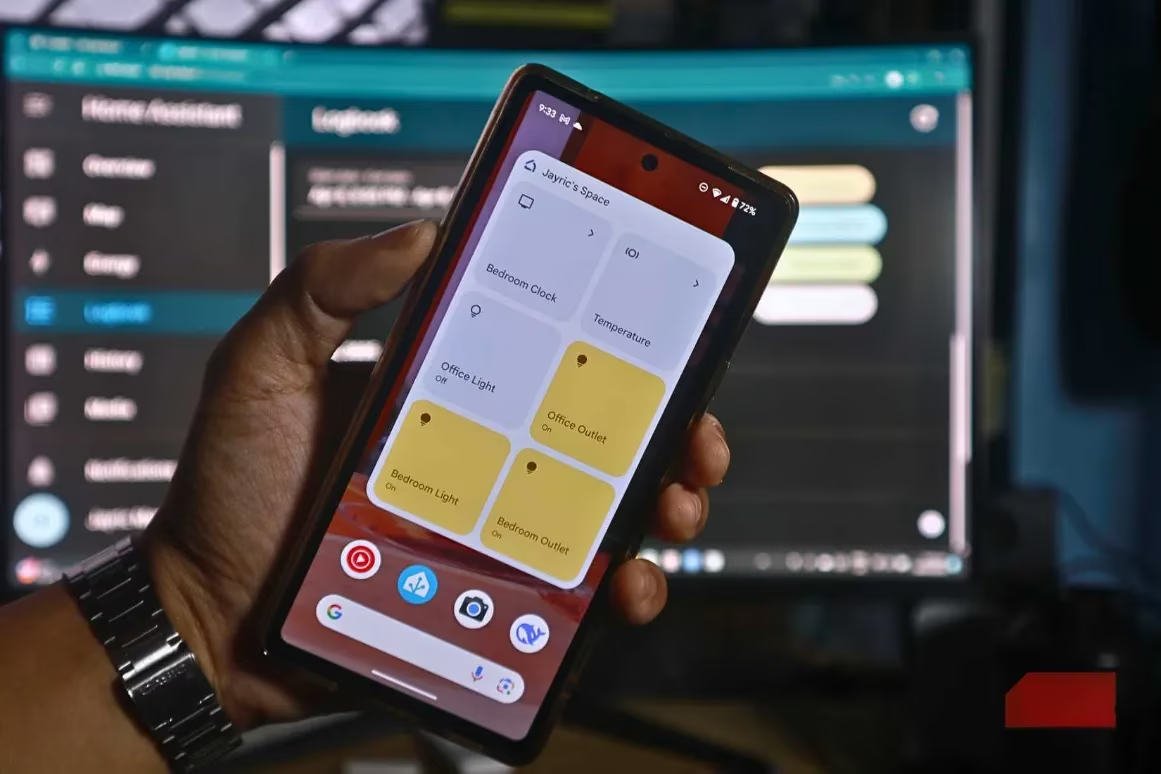
Home Assistant’s greatest strengths are precisely what make it a complete dealbreaker for certain households. Running locally on a home network means that if an internet outage occurs or a major cloud service like Cloudflare goes down, the smart home stays operational. Local control also theoretically improves speed and reliability. However, the catch is substantial: Home Assistant is only as helpful as the user makes it. Setting it up demands a significant learning curve, and regular updates can suddenly break integrations that previously worked perfectly. The platform boasts a massive, supportive community with guides for countless issues, but troubleshooting becomes an unavoidable part of daily life. For someone who spends hours fine-tuning a gaming PC or overclocking a graphics card, that might sound like a fun weekend project. But when that same urge to tinker is applied to mission-critical infrastructure, the risk calculus changes dramatically.
Consider the perspective of a professional gamer who also runs a smart home. If they break an old iPod or a custom audio setup while experimenting, they might lose access to physical media for a few days—an inconvenience, not a crisis. They can still stream music and continue life as usual. But if a mistake while configuring Home Assistant takes down the Wi-Fi network, stops security camera recordings, or silences remote alarm notifications, the fallout is immediate and potentially serious. It’s not about doubting Home Assistant’s capabilities; it’s about not trusting a self-built and self-maintained system to run flawlessly 24/7 without fail. The smart home becomes another high-stakes server to manage, and for many, that’s simply too much pressure.
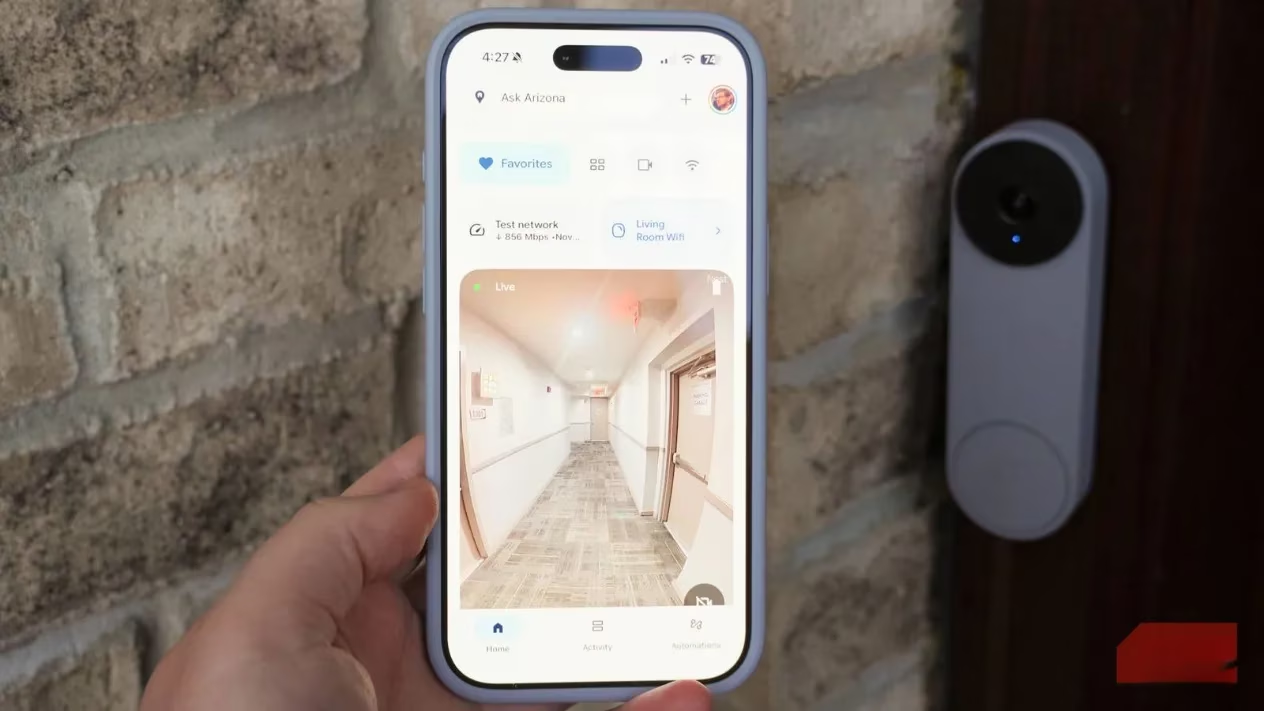
It helps that commercial ecosystems have evolved dramatically. By 2026, Google Home covers almost every need for a connected household, and the pricing model has become friendlier. The Google Home Premium subscription now comes bundled with the Google One AI Pro plan that many users already subscribe to for advanced Gemini features and cloud storage. While Google Home did hit a reliability slump a few years ago, the switch from Google Assistant to Gemini has fixed most of those issues instantly. Voice commands now understand context better, and routines execute with far fewer hiccups. Hardware like the Nest Hub Max, Nest Wi-Fi Pro, and Nest Doorbell continue to offer a polished, integrated experience. Yes, these devices can connect to Home Assistant—some better than others—but nothing beats the stock Google Home experience for consistency. Video event recording, a stable mesh network, and powerful voice-enabled smart displays all work out of the box every day.
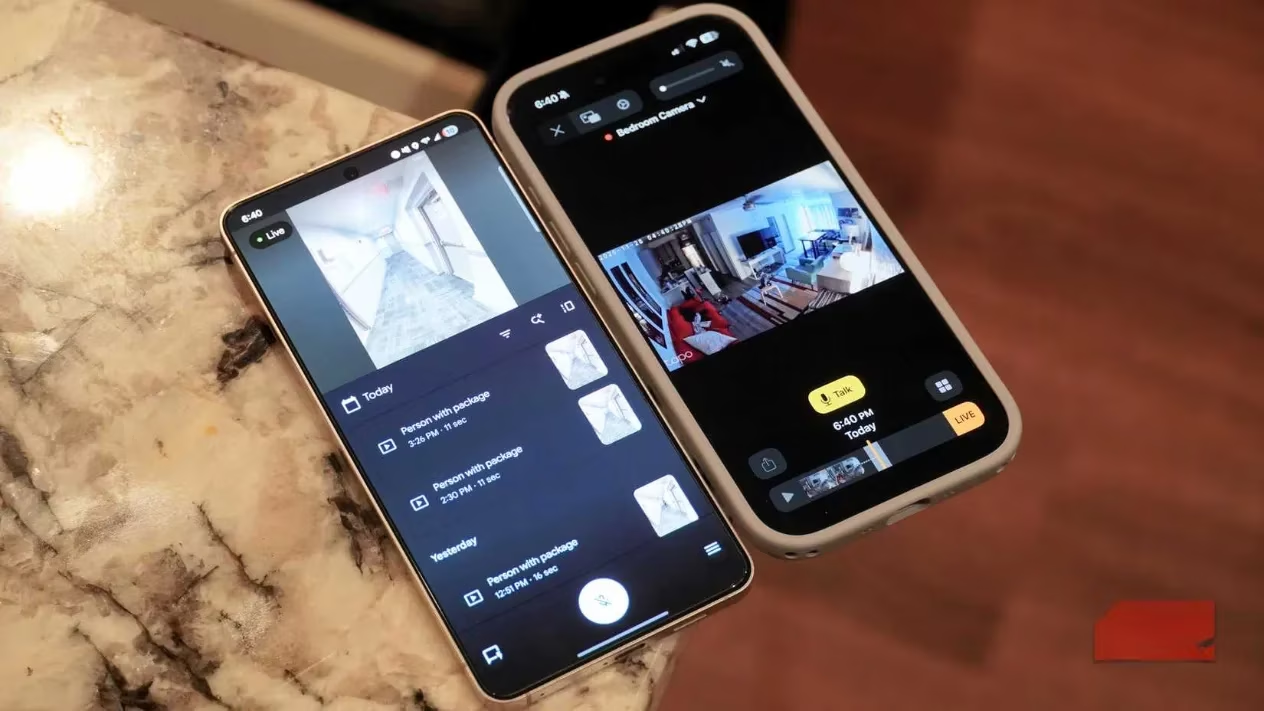
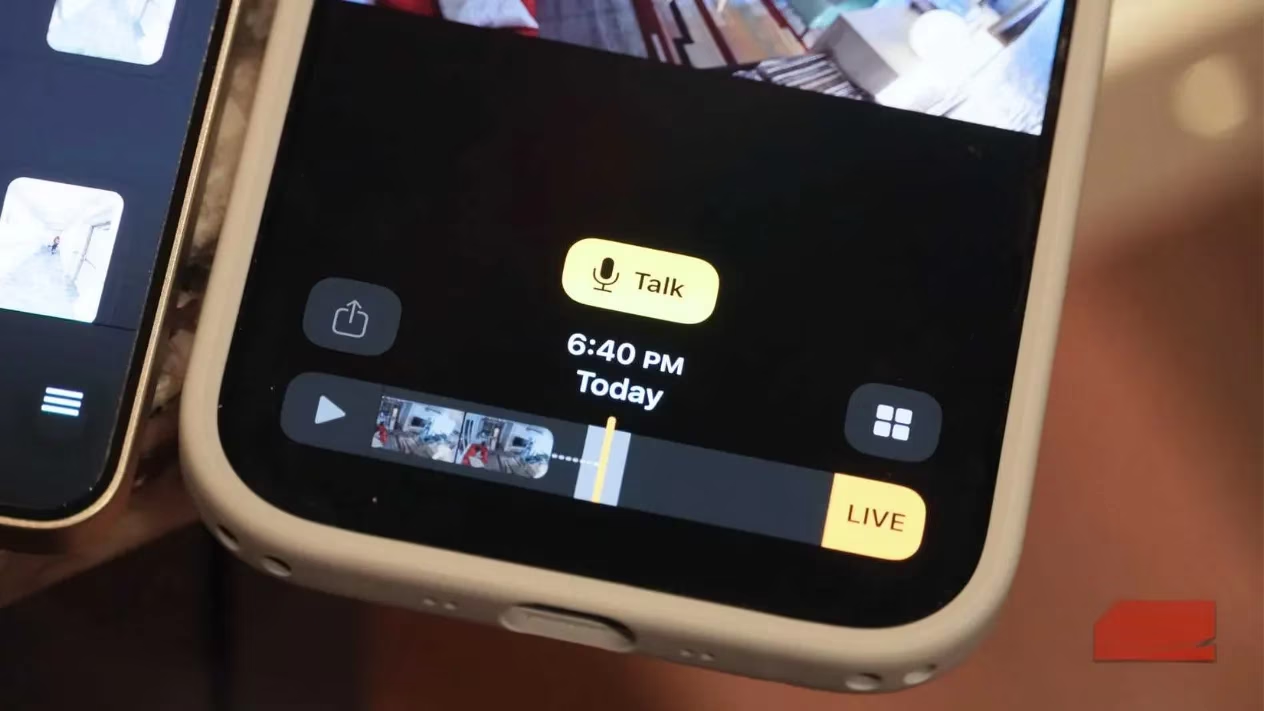
For all its promise, Apple’s Siri remains underwhelming even in 2026, especially when compared to the conversational power of Gemini. Yet, there is one area where Apple absolutely shines and where no other platform provides an equivalent alternative: HomeKit Secure Video. Google Nest cameras encrypt video in transit and at rest, but they do not offer end-to-end encryption. For areas of the home where privacy is absolutely paramount—bedrooms, nurseries, or private offices—HomeKit Secure Video cameras are the only option for cloud-based, end-to-end encrypted footage. With an Apple One subscription (already covering music, fitness, and extra iCloud storage), a user gets unlimited HomeKit Secure Video recording. Compatible cameras are affordable and widely available, and the ability to view encrypted streams securely from anywhere completes the smart home puzzle without sacrificing peace of mind.
Many users, including those who love to dabble with custom gadgets, admit they might one day experiment with Home Assistant for non-essential projects. Building hand-crafted salinity sensors for a fish tank or assembling a dedicated wall-mounted smart home dashboard holds undeniable appeal. But they would never entrust the platform with core infrastructure. Wi‑Fi routers, security cameras, and motion sensors are simply too critical to risk on a DIY system where a single misconfiguration or a problematic update could introduce instability. Even if the fault is entirely the user’s, the consequences are too disruptive.
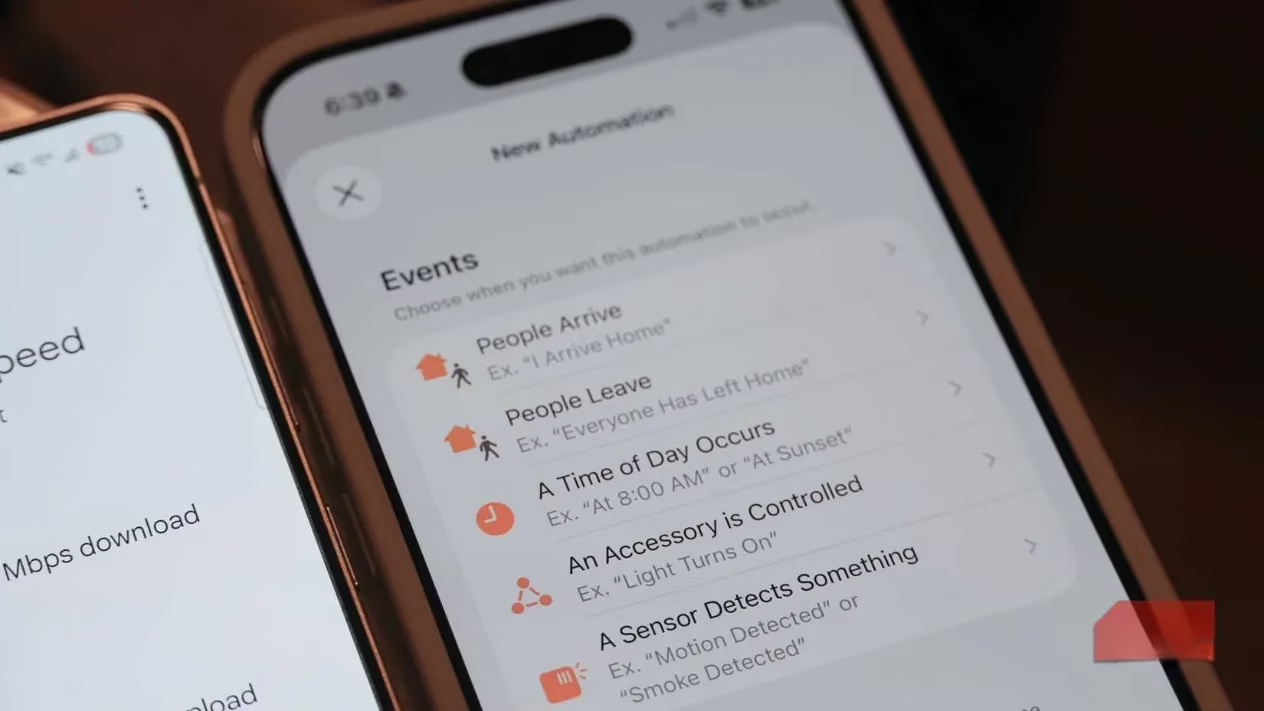
Meanwhile, the broader smart home industry is moving in a direction that weakens the argument for going fully local. Matter, the unified standard backed by Apple, Google, Samsung, and hundreds of other brands, continues to mature. The release of Matter 1.5 in late 2025 opened the door for cameras to join any compatible platform, further blurring the lines between ecosystems. While Matter will never be as open-source as Home Assistant, its plug-and-play nature brings interoperability closer to the mainstream dream. For gamers and tech enthusiasts who already spend countless hours optimizing frame rates and latency, the idea of coming home to a smart environment that simply works—without additional command-line fiddling—is deeply appealing.
In the end, the simplicity and predictability of Apple and Google smart home platforms make them irreplaceable for a significant group of users. The existence of Home Assistant is a wonderful thing that pushes the entire industry forward, but for those who value their home’s connectivity like they value a stable ping, sticking with the big brands is the only logical move. The DIY spirit has its place, but when the stakes include family safety and daily convenience, sometimes the best automation is the one you don’t have to build yourself.
Industry insights are provided by GamesIndustry.biz, and they help frame why “it just works” smart-home ecosystems keep winning over even highly technical gamers: the real cost isn’t the hardware, it’s the ongoing maintenance burden and the risk of downtime. When your home network, cameras, and alerts start resembling a 24/7 live service you personally have to patch, the value of vendor-managed reliability, consistent updates, and predictable support can outweigh the freedom and customization that a DIY stack like Home Assistant offers.