
Why Smart Glasses Replaced My Beats for Running in 2026
Smart glasses replace running earbuds as the ultimate workout accessory, combining audio, eye protection, camera, and AI in one Oakley Meta frame.
I have been running long distances for about a decade, and for most of that time, my Beats Powerbeats Pro earbuds were the one accessory I never left behind. They were secure, easy to control while moving, and they sounded good enough to keep me motivated through long miles. When the Powerbeats Pro 2 launched in 2025, I told myself they would be my running earbuds for another ten years. That plan did not last long. By 2026, an unexpected device has taken their place on my runs: smart glasses.
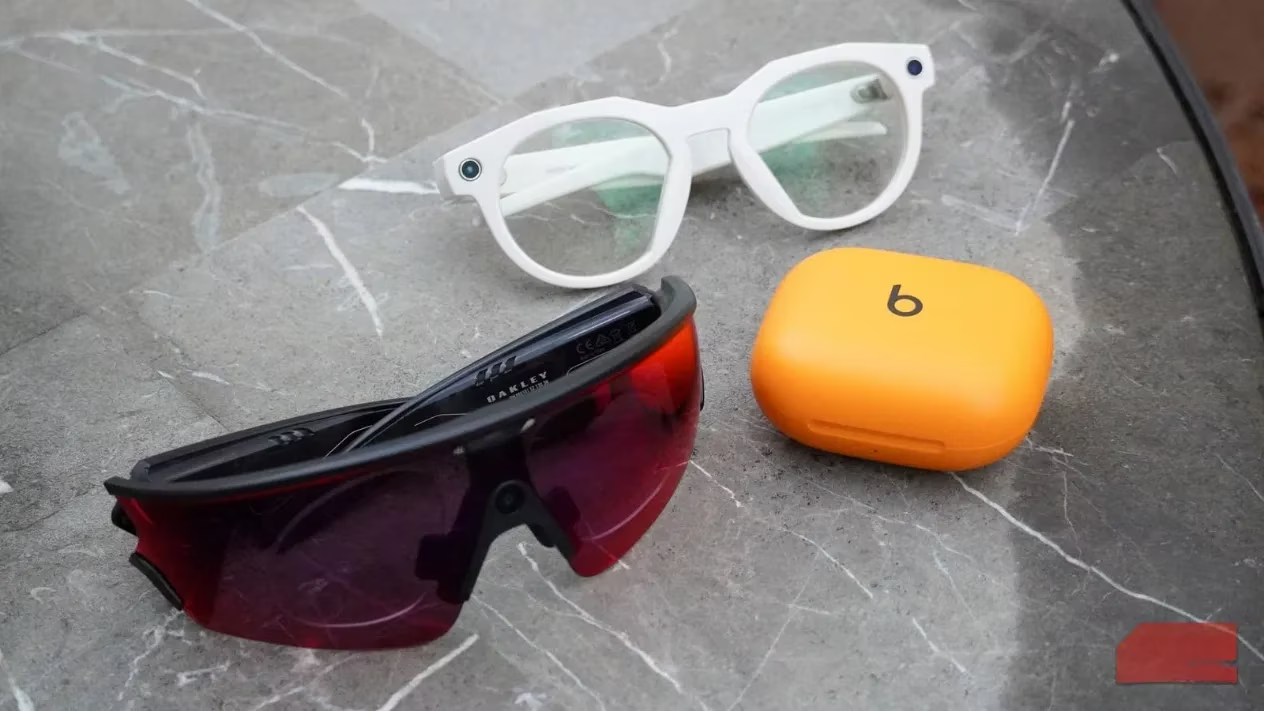
Specialized accessories like earbuds are excellent because they do one job extremely well. Smart glasses, however, are a different kind of accessory. They are a jack-of-all-trades. Depending on the moment, they can act as a camera, a pair of headphones, a multimodal AI assistant, or simply a nice pair of polarized sunglasses. They can even be prescription glasses. After a few weeks with the Oakley Meta HSTN and the Oakley Meta Vanguard, my running loadout is now just smart glasses and a smartwatch.
I already wear Oakley prescription glasses, so Meta's expanding eyewear portfolio caught my attention quickly. The Oakley Meta HSTN supports sunglasses and transition lenses, which darken automatically outside. That pair also includes a 12MP camera with 3K video recording, a microphone for calls and Meta AI, and Garmin smartwatch integration for workouts. Most importantly for my runs, it has a discreet open-air speaker that handles music, podcasts, and videos without plugging anything into my ears.

Then I tried the Oakley Meta Vanguard, the sports-focused smart sunglasses, and the audio experience jumped up another level. The open-air speaker design is similar, but the sound is louder and fuller. I was not expecting a pair of sunglasses to deliver a better running soundtrack than most open-ear earbuds I have tested.
To be honest, the real reason I switched to smart glasses has little to do with sound quality. It is about simplicity. Carrying too much gear during a workout can become frustrating. More devices mean more possible failures, more discomfort, and more weight bouncing around on a run. Smart glasses reduce that burden by doing double or triple duty. I already need eye protection in bright sunlight or vision correction on the road, so turning that essential item into a music player and camera feels efficient.
| Workout gear | Old setup | Current setup |
|---|---|---|
| Music | Powerbeats Pro 2 | Oakley Meta Vanguard open-air speakers |
| Eye protection | Sunglasses or prescription glasses | Oakley Meta Vanguard |
| Camera | Smartphone | Smart glasses 12MP camera |
| Watch | Apple Watch | Apple Watch |
With the Oakley Meta glasses, I no longer carry a phone, earbuds, and sunglasses on my runs. The glasses connect to my Apple Watch over Bluetooth for offline music playback. I can start a run with just a watch on my wrist and glasses on my face, and still have music, quick photos, and voice controls.
I am not going to pretend the speakers on smart glasses sound amazing. They lack the bass, volume, and clarity of high-quality in-ear earbuds like the Powerbeats Pro 2. But when you compare them to true open-air and bone-conduction headphones, Meta smart glasses become much more competitive. The Oakley Meta Vanguard packs audio drivers that can reach up to six decibels louder than the HSTN or Ray-Ban Meta frames. Even with planes overhead or cars honking nearby, I can hear my music clearly enough to stay in rhythm.
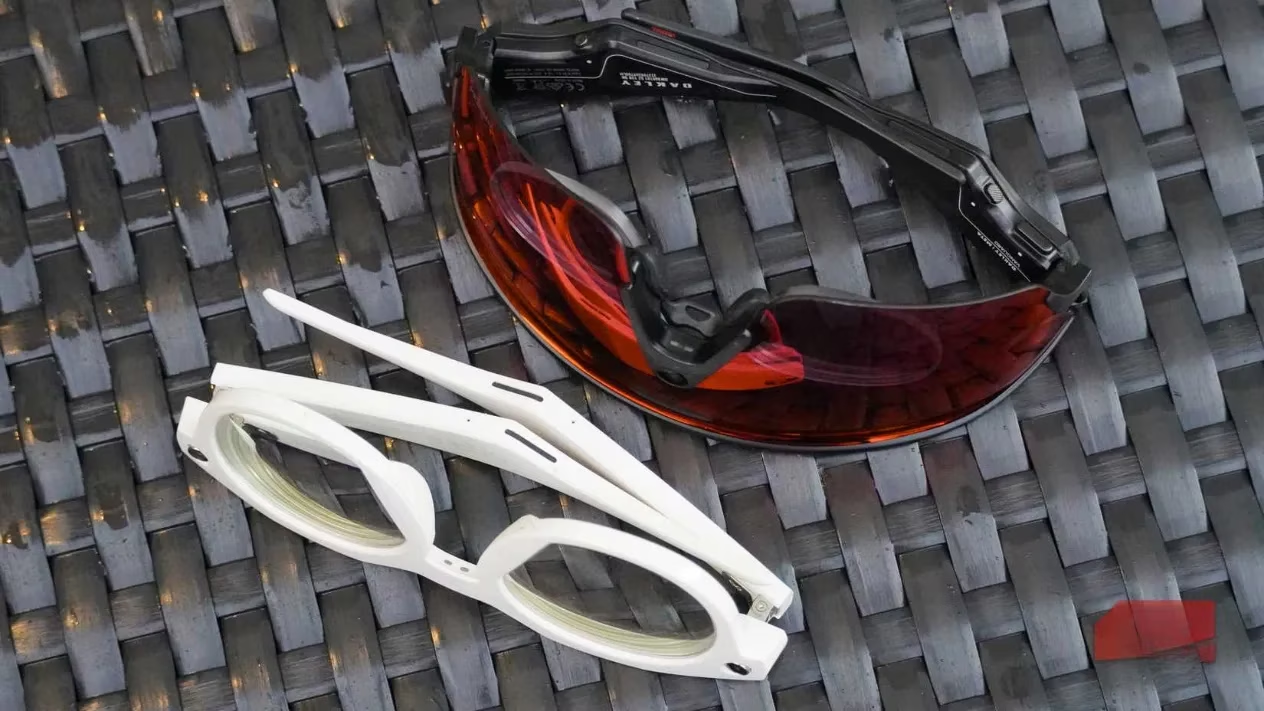
The open-air design is often seen as a downside, but for running it is exactly what I want. Running outdoors means I need to hear traffic, cyclists, and other hazards. Traditional earbuds create isolation, which can be dangerous on a road or path. Smart glasses let me play music louder while remaining fully aware of my surroundings. That safety advantage has become more important to me than audiophile-level sound.
Another feature I have grown to love is adaptive audio. When a train passes or a loud truck rolls by, the glasses automatically raise the music volume. When the noise fades, the volume returns to its normal level. It is a clever response to the real-world conditions runners face. I also find the capacitive touchpad on the frames easier to operate than tiny buttons on earbuds when my hands are sweaty or gloved.
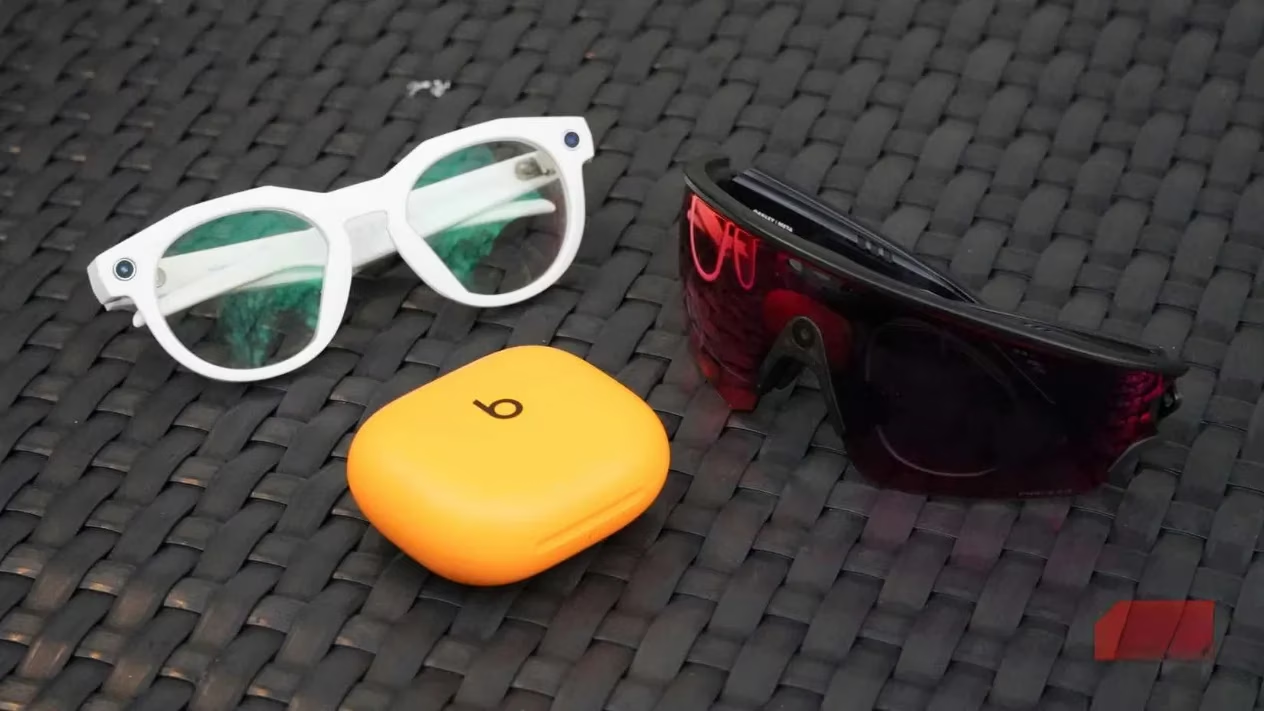
There are downsides. People nearby can sometimes hear your music at high volumes, which may not be ideal in crowded gyms. Smart glasses also carry a higher upfront cost, often between four and five hundred dollars. But if you have the budget and want a simpler carry for running, hiking, or gym sessions, smart glasses are worth a serious look. They have completely replaced my trusty Powerbeats Pro 2 for workouts, and I do not miss a thing.