
Why One Longtime Samsung User Still Refuses to Switch Brands
Samsung phones and foldables deliver seamless hardware, software, and services, explaining one fan’s unwavering brand loyalty.
Marcus has been carrying a Samsung phone in his pocket since the days when the company still named its flagships with Roman numerals. The Galaxy S II was his first. Then came the S7, the S8+, the S9+, the S10+, the Note 20 Ultra, and finally, in the summer of 2025, the Galaxy Z Flip 6. Every upgrade season he does the same thing: he reads the reviews, watches the hands-on videos, and seriously considers the alternatives. And every single time, he walks out of the store with another Samsung. In early 2026, he finally sat down to figure out why that keeps happening.
It isn't for lack of options. The Oppo Find X9 Pro, the Pixel lineup, and the OnePlus 15 all pack genuinely impressive hardware. But for Marcus, Samsung is the only brand where hardware, software, and services fit together without a single obvious gap. Everything else, he says, feels like a compromise somewhere.
The Upgrade That Changed How He Uses a Phone
When Marcus bought the Note 20 Ultra, he thought he had found the perfect device. It looked the best, it had a brilliant high-resolution display, and its camera unit was better than anything else on the market at the time. The only problem was its size. It was too big for his hands, awkward to slide in and out of a pocket, and one-handed use never felt natural, no matter what One UI offered.
So when his next upgrade came around, he took a chance on a foldable — and by then, Samsung's foldable display technology had matured enough to be genuinely practical.
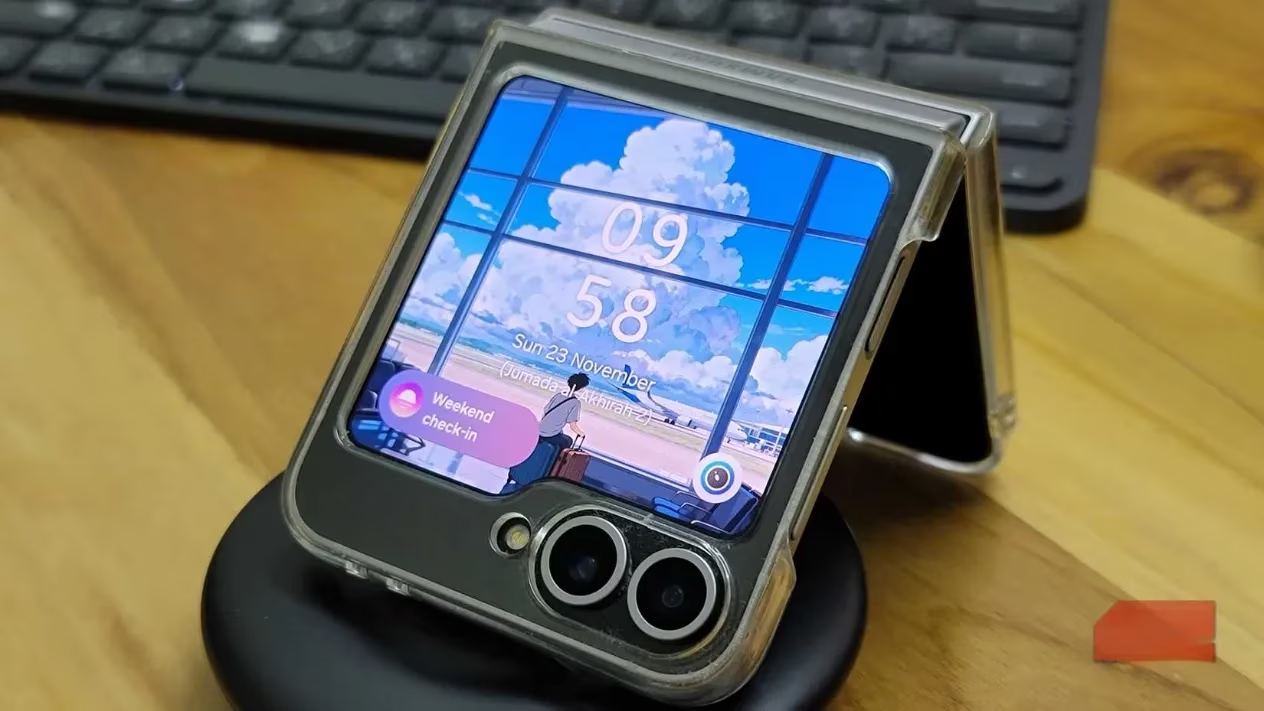
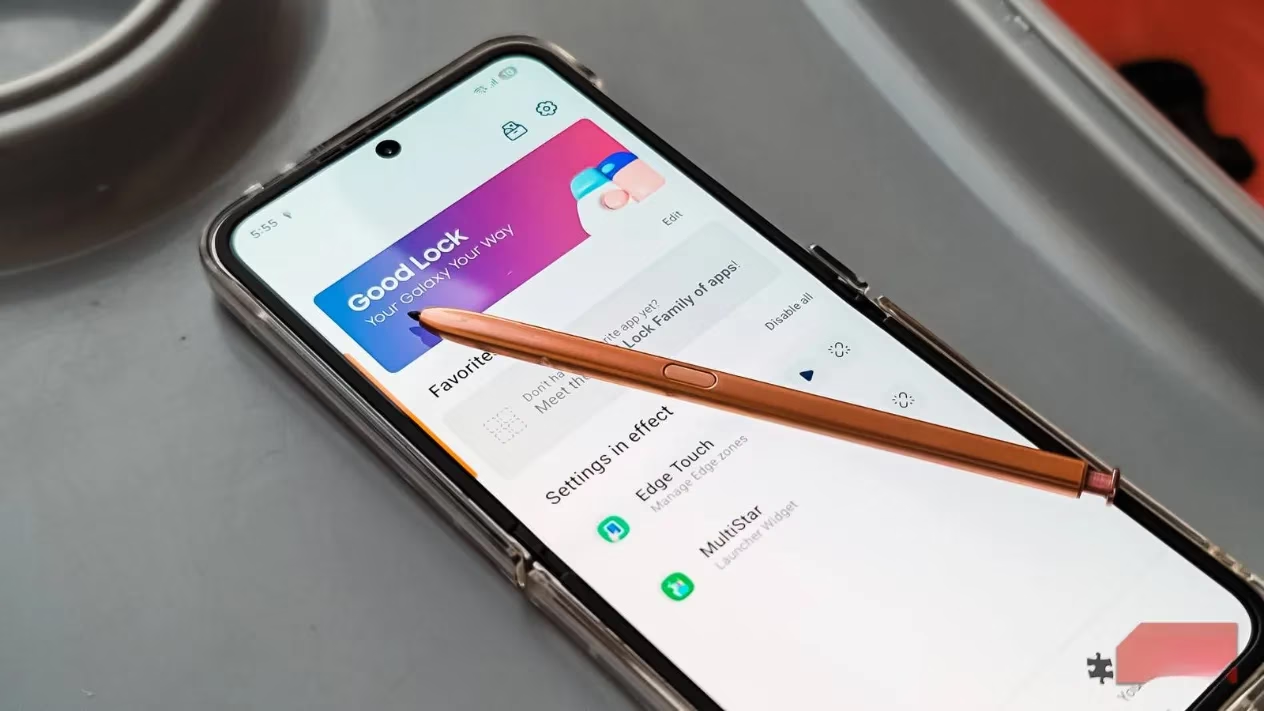
The Z Flip 6 gave him exactly what he wanted: a compact device that disappears into a pocket without sacrificing screen size. The cover screen handled most of what he needed during work hours — calls, texts, music, widgets, and to-do apps — and anything it didn't support was solved through the Good Lock app. Moving from the Note 20 Ultra meant accepting compromises in camera, battery, and display resolution, but none of them were deal-breakers.
Had he wanted a bigger device instead, Samsung still makes the best foldables on the market. The Z Fold 7 pairs a top-of-the-line chip with excellent cameras and a massive, tablet-like 8-inch display that is extremely bright and supports a stylus. Google and OnePlus make foldables too, but matching Samsung's combination of hardware and software customization is another matter entirely.
That, Marcus believes, is the real story. Samsung was not afraid to innovate with foldables, and it did not abandon the form factor when early iterations failed to become instant hits. It stuck with the idea, refined it year after year, and now everyone else is trying to replicate what Samsung proved would work.
Cameras That Lean Into Personality
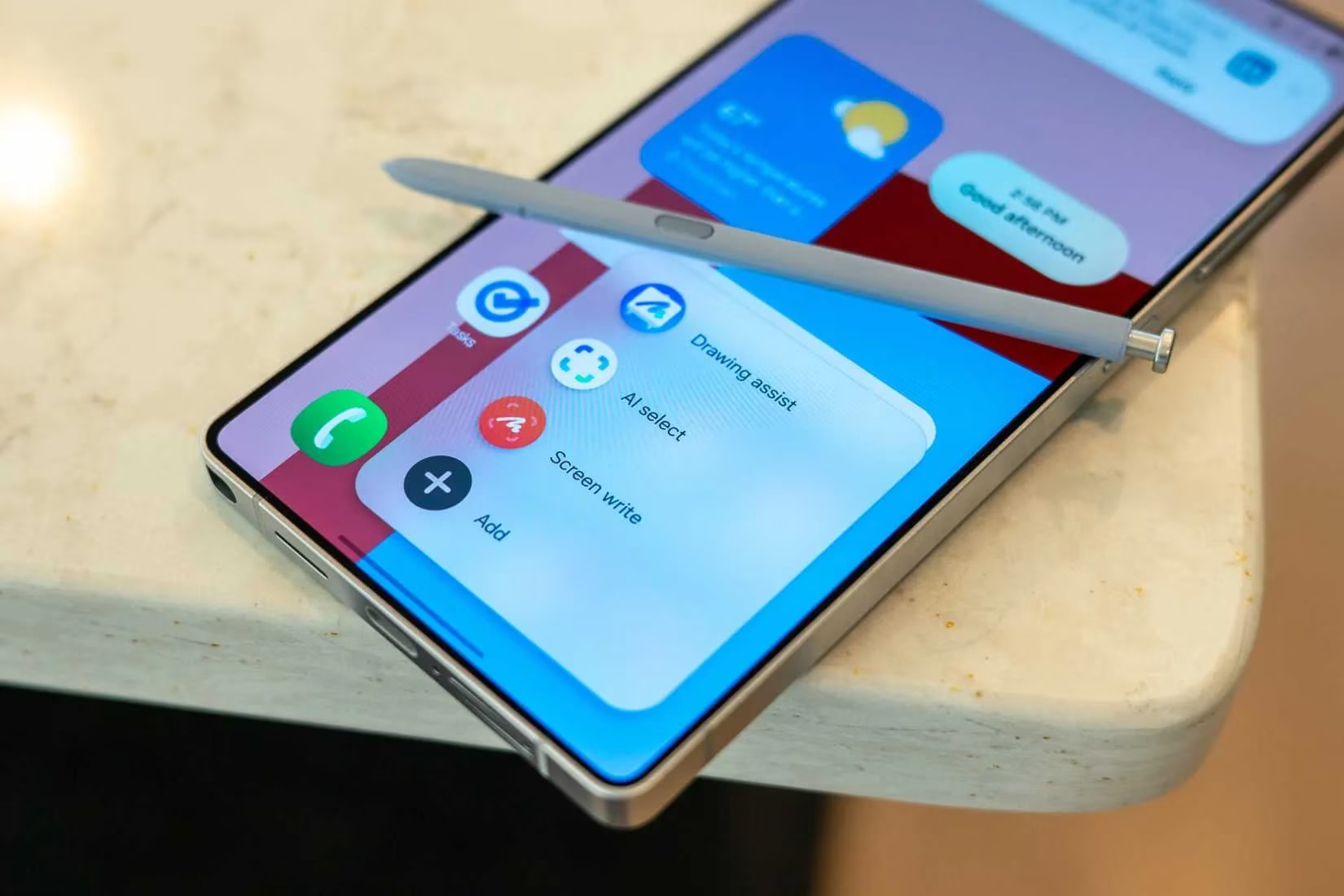
Samsung has one of the best smartphone camera systems around, and the Ultra lineup has consistently delivered in both daylight and low light. With the S25 Ultra, Samsung largely kept the same camera setup as its predecessor, and it still works beautifully, producing punchy — if slightly over-sharpened — images. Marcus prefers that look over the flatter output he sees from rivals.
On top of the hardware, Samsung has folded AI into the camera and Gallery apps in ways that actually save time:
-
Generative Edit runs on-device and faster than before, letting him move subjects, remove photobombers, and fill backgrounds with realistic detail without waiting on uploads.
-
Night mode pulls more shadow detail while keeping handheld shots stable.
-
Log video support means he can color-grade footage properly.
-
8K video works across three cameras thanks to the upgraded 50MP ultrawide sensor.
-
Audio filters in One UI 8 cut background noise in videos, and they work surprisingly well.
Even on his Z Flip 6, the 50MP primary camera takes excellent shots in good light, and night photography holds up whenever Night Mode kicks in.
SmartThings Is the Invisible Glue
Over the past few years, SmartThings has quietly become the app Marcus opens most. His house now holds more Samsung devices than ever, and the app lets him manage all of them from his phone: adjusting the refrigerator's temperature, switching on energy-saving modes, or getting an alert when someone leaves the fridge door open. He can control the TV and the air conditioner too — a lifesaver in a home with kids who keep losing the remote.
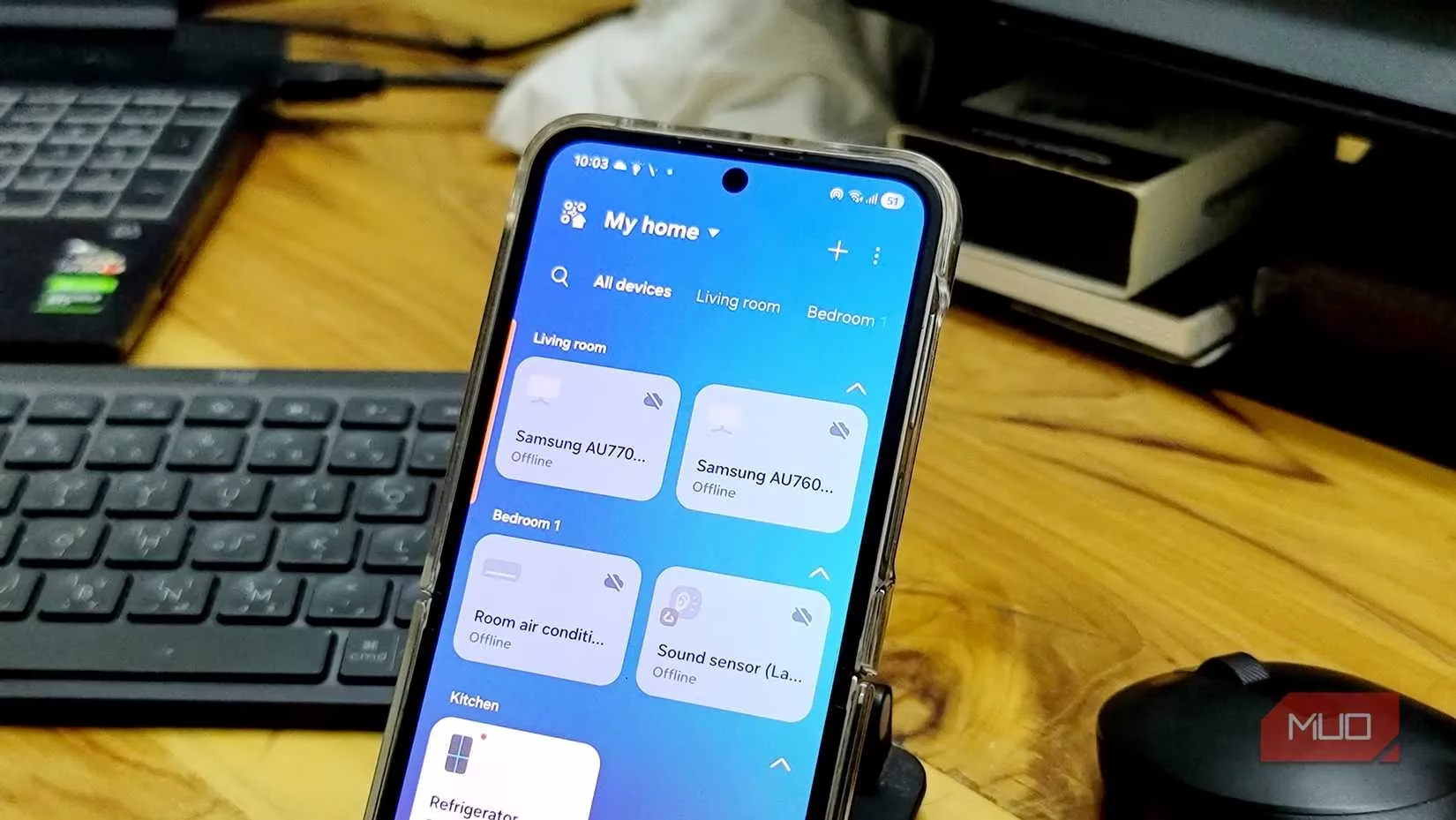
Beyond Samsung's own products, SmartThings works with practically any smart home gadget — curtains, lights, thermostats, you name it. Routines run locally on the hub rather than in the cloud, so the setup depends far less on a stable internet connection, and Samsung Routines handles automation well: the lights dim automatically when he starts watching TV, and the air conditioner switches on when he is heading home.
| Feature | What It Does For Him |
|---|---|
| SmartThings Find | Tracks phone, watch, tablet, earbuds, and tags down to the building |
| Search Nearby | Pinpoints exactly where a lost item is once he's close |
| Android Auto integration | Controls home devices from the car before arriving |
Once SmartThings is woven through multiple Samsung devices, imagining a switch to another brand means imagining losing that integration.
A Wallet and a Skin That Keep Him Loyal
Samsung Wallet does far more than store credit cards. It handles contactless payments in over 30 countries, plus gift cards, transit passes, boarding passes, and even gym memberships — all in one place, and all working with his Samsung watch, so he can pay without pulling out his phone. Samsung Money integration through SoFi lets every transaction earn points that stack with his linked card's rewards. Knox and biometric authentication protect each payment, and tokenization means merchants never see his real card number.
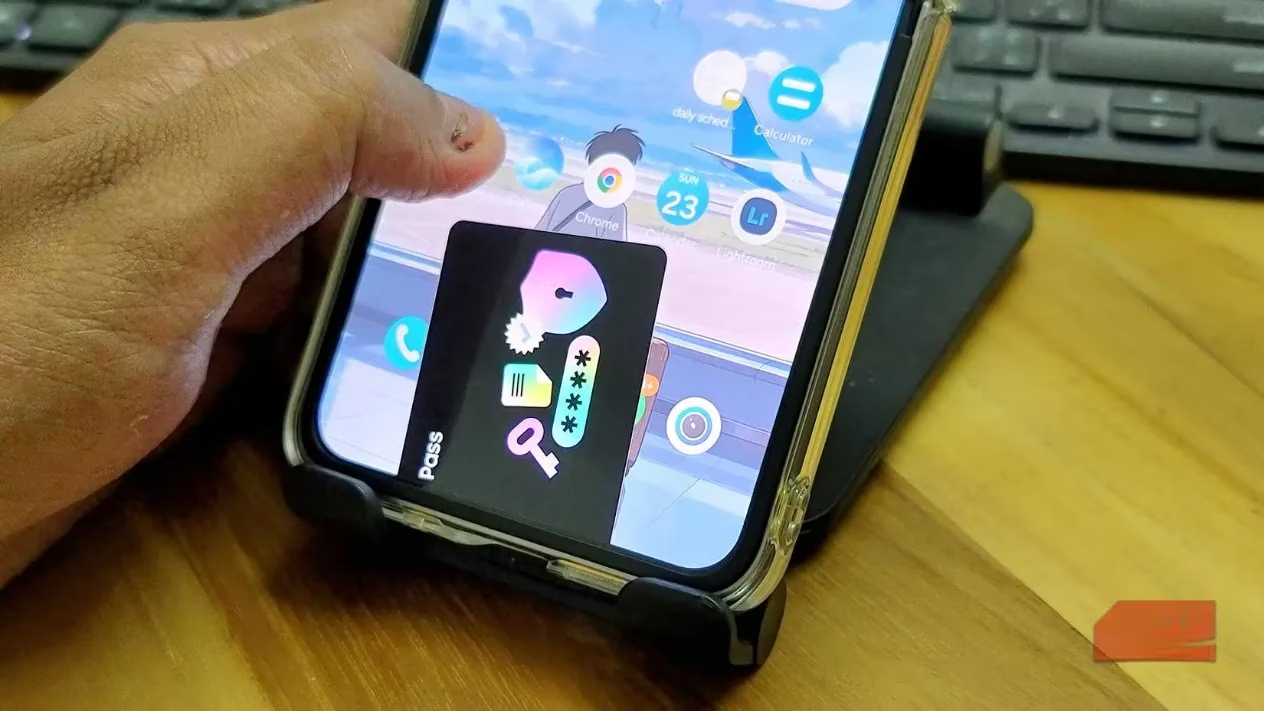
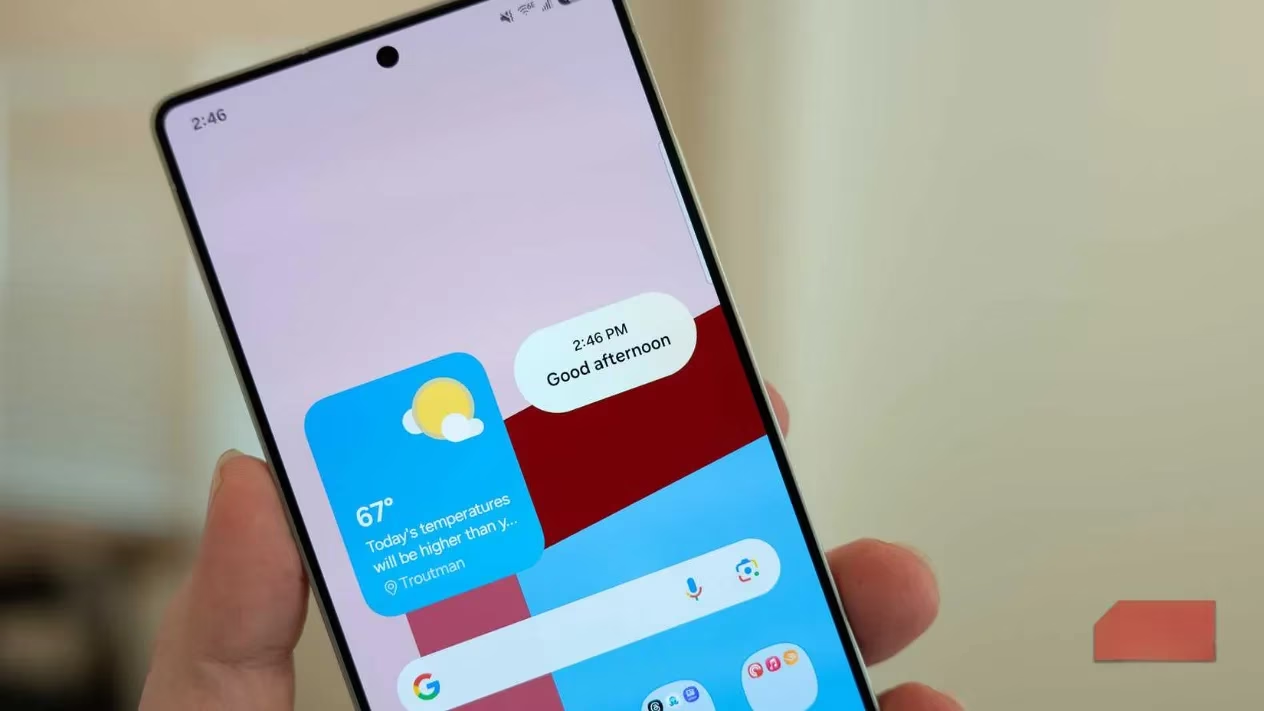
One UI has also come a long way from the gimmicky early Galaxy S days. With One UI 8, menus look cleaner, Gallery and My Files have been redesigned with better information density, and there is even a 90:10 split-screen option for power users. Samsung DeX turns the phone into a desktop when connected to a monitor, Good Lock lets him tweak nearly every corner of the interface, and Modes and Routines automate the rest.
It's About How Everything Fits Together
Android has been the best thing to happen to Samsung's phone business, and the company has made the most of it. The South Korean giant has always tried to offer something distinct in a market where every flagship can share the same chip, OS, camera modules, and display panels. It is not about having the absolute best camera or the fastest processor — though Samsung often has both. It is about how the pieces connect.
Marcus's phones talk to his SmartThings devices, all managed through a One UI he has customized exactly to his taste. When he needs a desktop, DeX is there. When he needs to pay, Samsung Wallet handles it. When he wants a different form factor, Samsung offers options nobody else does.
Other manufacturers make excellent phones, sometimes with better individual features. But it will take something genuinely special to unseat Samsung as his go-to Android brand — and after more than a decade, he is not holding his breath. 📱