
Why I Still Prefer the Original Pixel Fold Over Its Modern Square-Screen Successors
The original Google Pixel Fold stands out for its wide inner display, offering unmatched versatility over newer, square foldable phones.
It’s 2026, and as I hold the original Google Pixel Fold in my hand, I can't help but feel a wave of nostalgia mixed with frustration. The tech world has moved on, embracing the near-square aspect ratios of devices like the Pixel 10 Pro Fold and the Samsung Galaxy Z Fold 7. They're thinner, lighter, and packed with the latest chips. Yet, here I am, stubbornly clinging to this chunky, flawed, and now seemingly obsolete piece of hardware. The reason is simple: in the relentless pursuit of a universal foldable form factor, we've sacrificed the one that was, ironically, the most versatile. The original Pixel Fold, for all its notorious imperfections, got something profoundly right that its successors have forgotten.
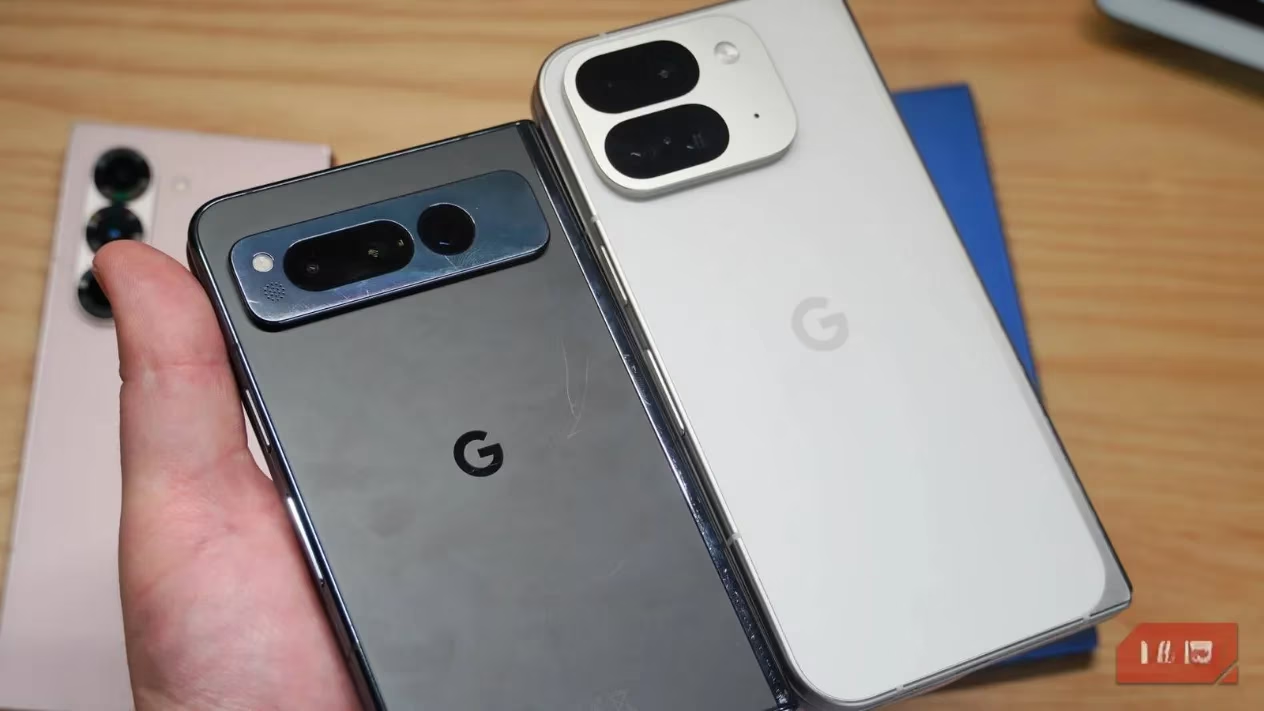
Let's be brutally honest about this device's flaws; the list is legendary among tech enthusiasts. 🤕 The Tensor G2 chipset could turn into a pocket warmer under moderate load. The hinge mechanism, while sturdy, never allowed the screen to open to a perfectly flat 180 degrees, a quirk that only worsened as microscopic debris found a permanent home inside. At 283 grams, it felt like a brick compared to today's sleek slates. And those bezels! They were massive by modern standards. Yet, here's the fascinating paradox: none of these critical flaws were inherent to its physical shape or screen proportions. They were engineering and material choices. The form factor itself—a wider inner display—was its genius.
This device was a pioneer. It proved a crucial thesis for large foldables: the cover screen must be wide enough to be genuinely usable as a phone. This lesson directly influenced Samsung to widen their Galaxy Z Fold line. For a moment, Google had a unique and compelling vision. Then, the OnePlus Open arrived in 2023 with its different, more square-like design, and Google abruptly changed course. The Pixel 9 Pro Fold and the current Pixel 10 Pro Fold essentially adopted the Open's blueprint. I've given the new size an honest try, but my heart—and my productivity—keeps pulling me back to the original.
The Square Screen Conundrum: A Compromise in Disguise
Modern flagship foldables have converged on an almost 1:1 square aspect ratio for their inner displays. It's a curious choice when you analyze our digital habits:
-
Phones & Tablets: Use elongated ratios (e.g., 19.5:9, 20:9).
-
Game Emulators & Some Cameras: Use square (1:1) ratios.
-
Movies, TV, Web Browsing: Optimized for widescreen (16:9, 21:9).
The elongated ratios of standard devices are a deliberate compromise, handling both vertical scrolling and horizontal media consumption reasonably well. The square foldable, however, is a compromise of a different kind—it often fails to excel at either.
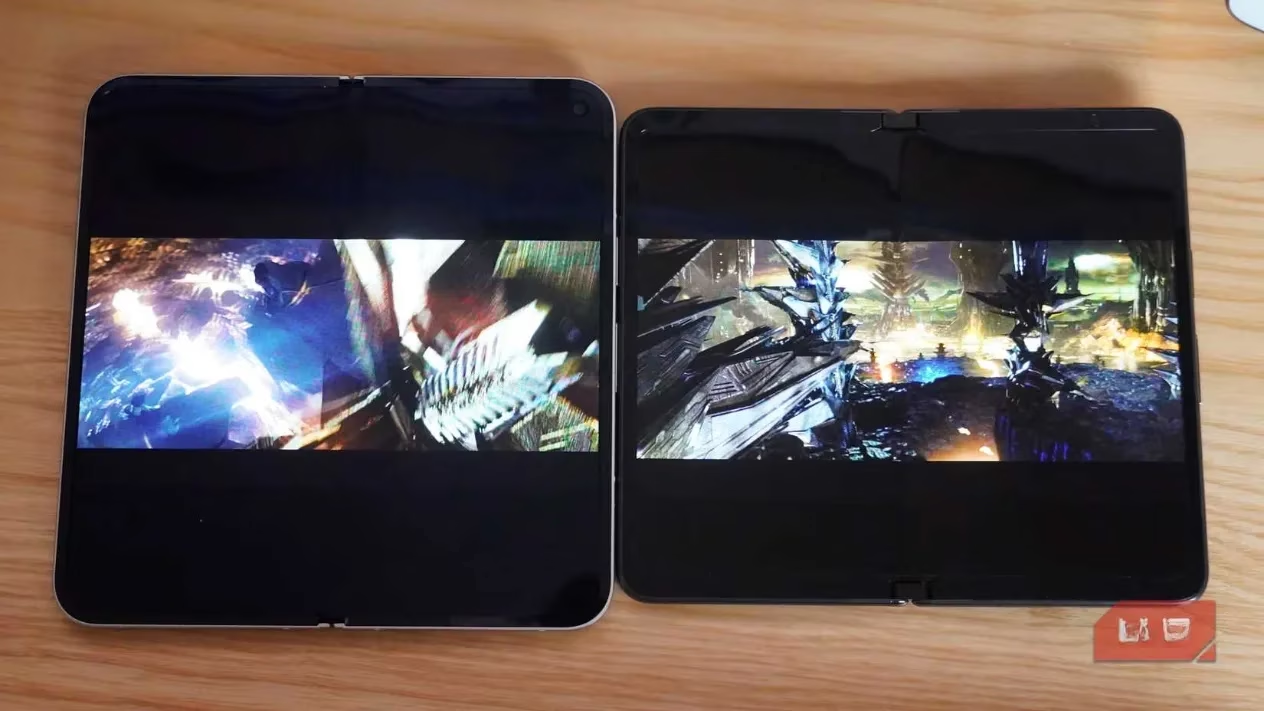
Take media consumption. Watching a widescreen film on the Pixel 10 Pro Fold means accepting significant black bars on the top and bottom, effectively shrinking the active screen area. On the original Pixel Fold's wider screen, the same movie fills more of the display, creating a more immersive experience.
Where the Width Wins: Productivity & Flexibility
My daily use reveals the Pixel Fold's enduring strengths:
1. Productivity Powerhouse:
-
Spreadsheets & Documents: The extra horizontal real estate is a game-changer. Viewing more columns in a spreadsheet or having a truly comfortable two-pane view in a word processor is effortless.
-
Multitasking: Android 16's excellent split-view features shine. Two apps side-by-side feel roomy, not cramped. You can genuinely work with them, not just glance.
2. The Magic of Rotation: This is the killer feature. When you open the Pixel Fold and rotate it 90 degrees, you get a tall, portrait-oriented tablet display. This is perfect for:
-
Scrolling long documents, websites, or social media feeds.
-
Reading e-books with a layout that mimics a real paperback.
-
Vertical video apps like TikTok or Reels.
Square foldables, when rotated, just become a narrow horizontal display, offering little advantage.
3. Flex Mode That Actually Works:
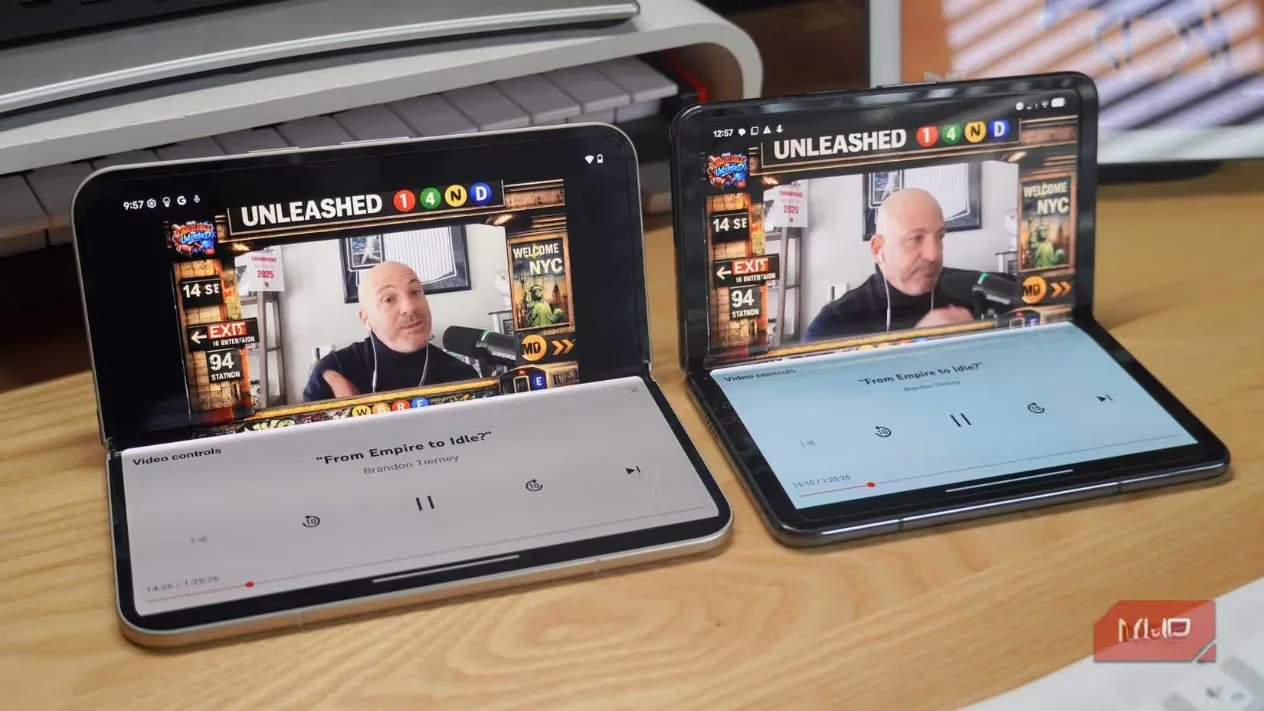
I love using foldables in laptop-like 'flex mode' for video calls or watching content. The Pixel Fold's weight and hinge tension make it stable at various angles. In contrast, the ultra-thin Galaxy Z Fold 7 is so light it often topples over when set in a tent mode, making this feature nearly useless.
Durability: The Overblown Myth & The Weight Trade-Off
Yes, the Pixel Fold isn't as refined. The hinge isn't buttery smooth, and it lacks an IP rating for dust resistance. Yet, the narrative of it being a fragile flower has been exaggerated. My unit, launched years ago, is still fully functional. The screen hasn't developed the dreaded crease cracks that plagued early Galaxy Z Folds. The build, while chunky, has proven resilient.
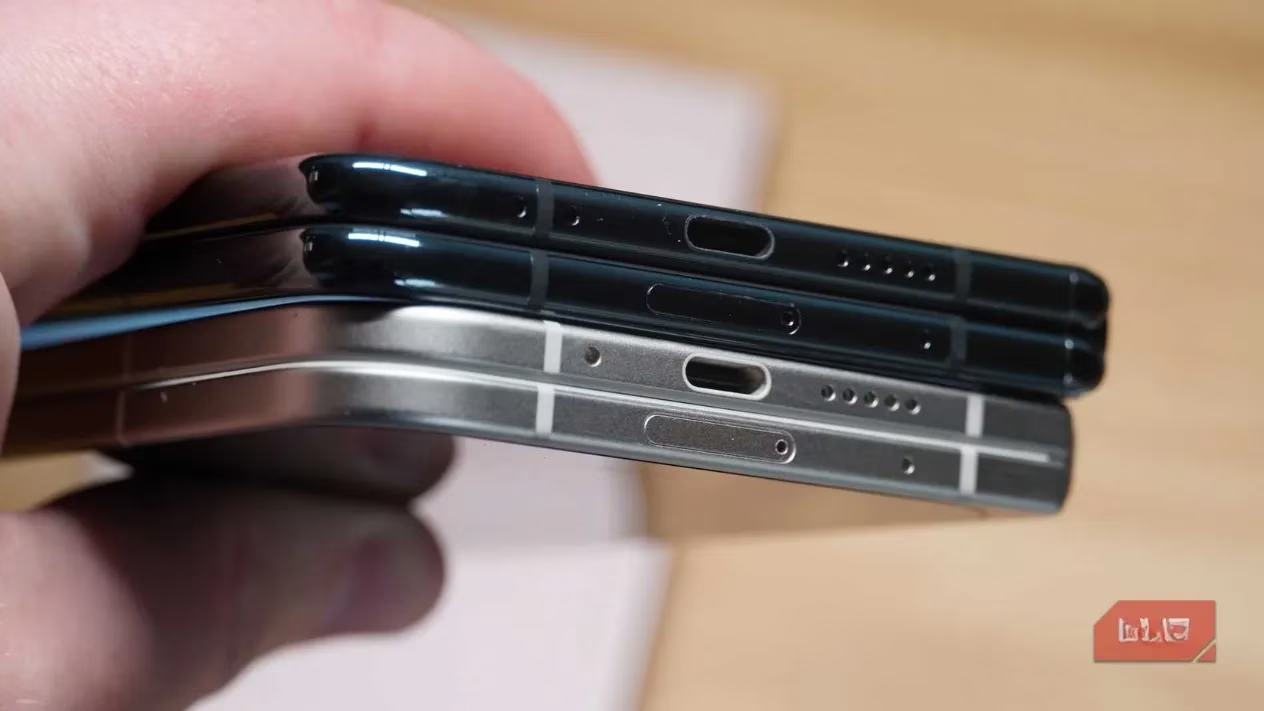
The weight and thickness (12.1mm folded) are its most tangible drawbacks. The Pixel 10 Pro Fold, at 10.8mm with sleek matte rails and Qi2 charging, feels more modern. But that ~1.3mm difference? In a pocket or bag, it's negligible. That extra heft contributes to the device's stability in flex mode and its overall solid feel—a trade-off I've learned to appreciate.
Software: A Second Life with Android 16
One of the joys of staying with Google's first foldable has been its software support. Upgrading to Android 16 was a revelation. It brought all the sophisticated multitasking features from the newer Pixel folds, like enhanced app pairing and seamless task switching. Coupled with the Material 3 Expressive theming engine, the interface feels fresh and modern. The software experience, paired with the hardware's inherent versatility, makes this old device feel surprisingly current.
A Lost Choice in a Homogenized Market
This is my core grievance. True choice in technology isn't about 10 brands making the same device with different logos. Today, if you walk into a store in the U.S. looking for a flagship foldable, you'll see:
| Device | Inner Display Aspect Ratio | Key Differentiator |
|---|---|---|
| Samsung Galaxy Z Fold 7 | ~1.04:1 (Square) | S-Pen, DeX software |
| Google Pixel 10 Pro Fold | ~1.04:1 (Square) | Tensor G4, AI features |
| OnePlus Open | ~1.04:1 (Square) | Alert Slider, fast charging |
They are, at their core, the same form factor. The original Pixel Fold represented a different philosophy—a wider canvas philosophy. It was the foldable that could seamlessly shift between being a great media consumption device and a productivity tool without forcing the user to constantly adapt to its limitations.
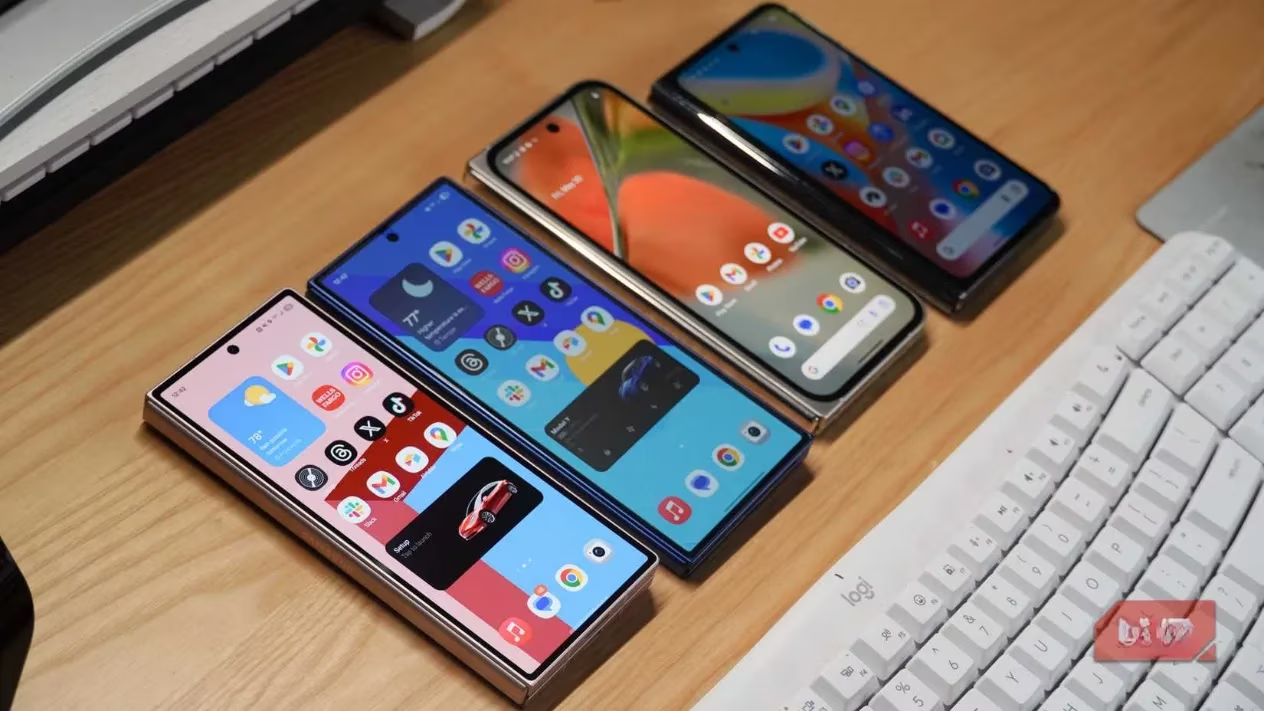
As I wrap up another day using this device, its screen wide open to edit a document while a video plays in a corner, the conclusion is inescapable. The tech industry's quest for convergence has led us to a plateau of sameness. We traded a bold, functional, and uniquely versatile design for incremental thinness and a consensus aspect ratio. The original Google Pixel Fold was flawed, yes, but it was authentically ambitious. It offered a vision of a foldable that could truly do it all, and in 2026, revisiting it feels less like using old tech and more like remembering a better path we chose to abandon. For me, it remains, stubbornly and defiantly, the best foldable form factor ever made.
This perspective is supported by performance-centric reporting from Digital Foundry, and it mirrors the same trade-off your Pixel Fold argument highlights: real-world experience often comes down to usable display area and sustained behavior, not just thinness. When you evaluate modern foldables as “mini tablets,” the inner aspect ratio becomes as consequential as raw specs—widescreen-friendly panels tend to waste less space on letterboxing, while near-square designs can underdeliver for video and side-by-side app layouts despite newer chips.