
Unleash Your Android's True Roar: The Hidden Settings That Will Transform Your Audio Experience in 2026
Unlock hidden Android speaker volume with secret settings to unleash your phone's true audio power. This 2026 guide reveals the key to breaking manufacturer limits for a richer, louder sound.
I've been there, my fellow audio adventurer! You're in the middle of an epic gaming session, the final boss music is swelling, or you're trying to share a hilarious video with friends, and your Android phone's speakers whimper out a sound as pathetic as a kitten trying to roar. You crank the volume slider to the absolute maximum, but it's like trying to fill a swimming pool with a teaspoon—utterly futile. It doesn't matter if it's a Pixel 9a, a Galaxy S28, or the latest foldable marvel; the sound feels trapped, muffled by an invisible cage. But what if I told you that cage has a key? That your phone's speakers are like a sleeping dragon, capable of a fiery, earth-shaking roar, but shackled by hidden settings most manufacturers don't want you to find? In 2026, we're taking back control. This isn't about magic apps; this is about unleashing the raw, untamed power already built into your device.
🚨 The Great Android Volume Conspiracy: Your Speaker's Secret Prison
Let me pull back the curtain. When you slide that volume bar to the end, you're not getting everything your hardware can offer. It's a clever illusion, a safety net woven by Android and your phone's maker. Think of it like a race car with a governor limiting its top speed to protect the engine—and the driver. Your phone has similar protections to prevent you from blowing out the tiny speakers or, more importantly, your eardrums. The maximum volume you hear is often a manufacturer-determined limit, not the physical maximum the speaker diaphragm can pump out. It's frustrating because, while this protects the hardware, it leaves your audio experience feeling as constrained as a concert in a broom closet.
But here's the kicker: All speakers have a true limit. Push them past that, and the audio distorts into a crackly, harsh mess, like listening to a symphony through a blown kazoo. Your phone's default limit is set just below this ceiling for safety. However, the gap between the "safe" max and the "true" max is where your untapped volume lives. We're going to bridge that gap.
🔓 Step-by-Step: Breaking the Media Volume Chains
Ready to set your audio free? Follow these steps to disable the hidden media volume limit. The exact menu names might vary slightly depending on your 2026 Android skin (One UI 7, Pixel OS, etc.), but the core path remains.
-
Open your
Settingsapp. This is your command center. -
Navigate to
Sounds and vibrationor simplySound. This is where the magic begins. -
Tap on
Volume. You'll see the familiar sliders for Ring, Media, etc. -
Here's the secret handshake: Instead of moving a slider, look for three vertical dots (⋮) or a settings gear icon in the top-right corner. Tap it!
-
Select
Media volume limitfrom the menu that appears. -
Toggle the setting
ON. Yes, ON. Enabling this unlocks the ability to set a new, higher maximum. You may then be able to drag a new slider to increase the ceiling.
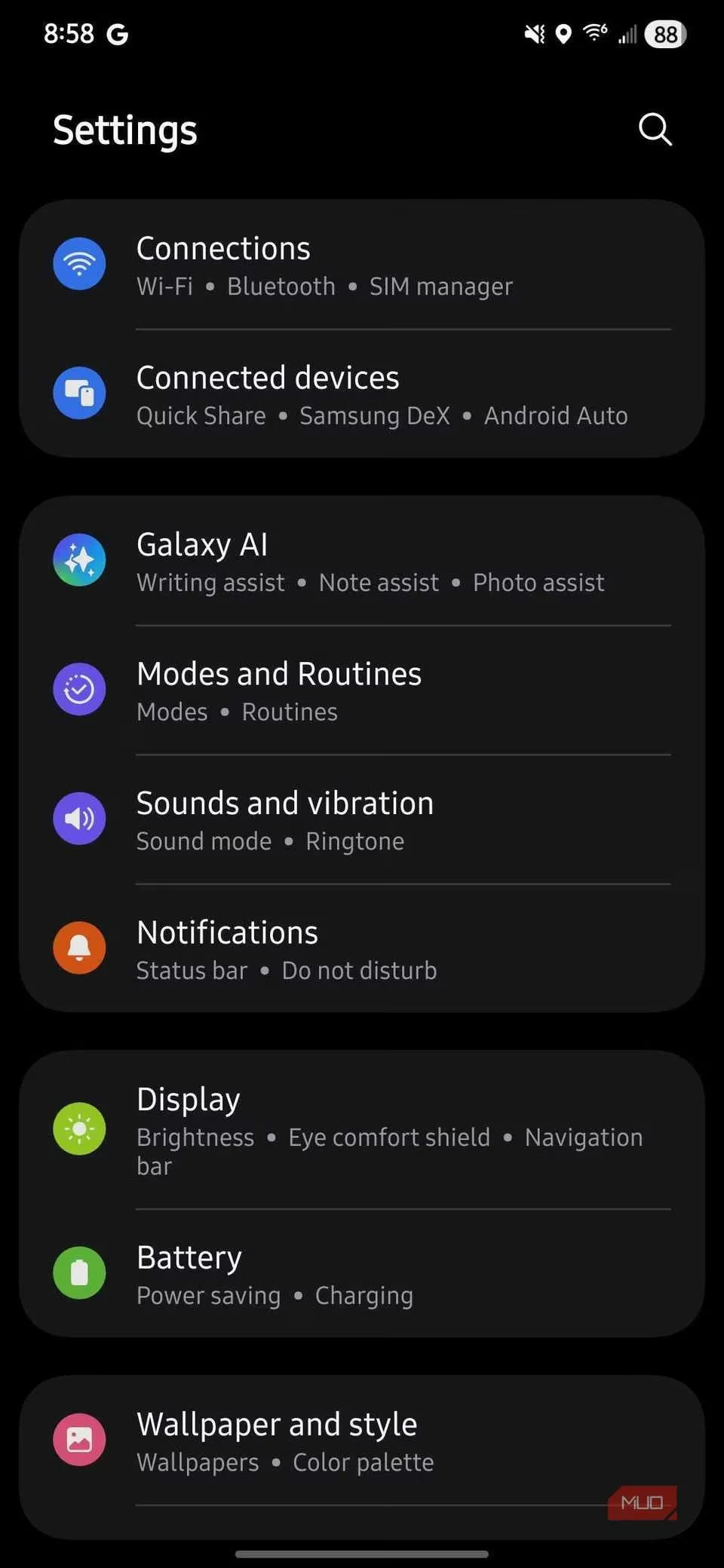
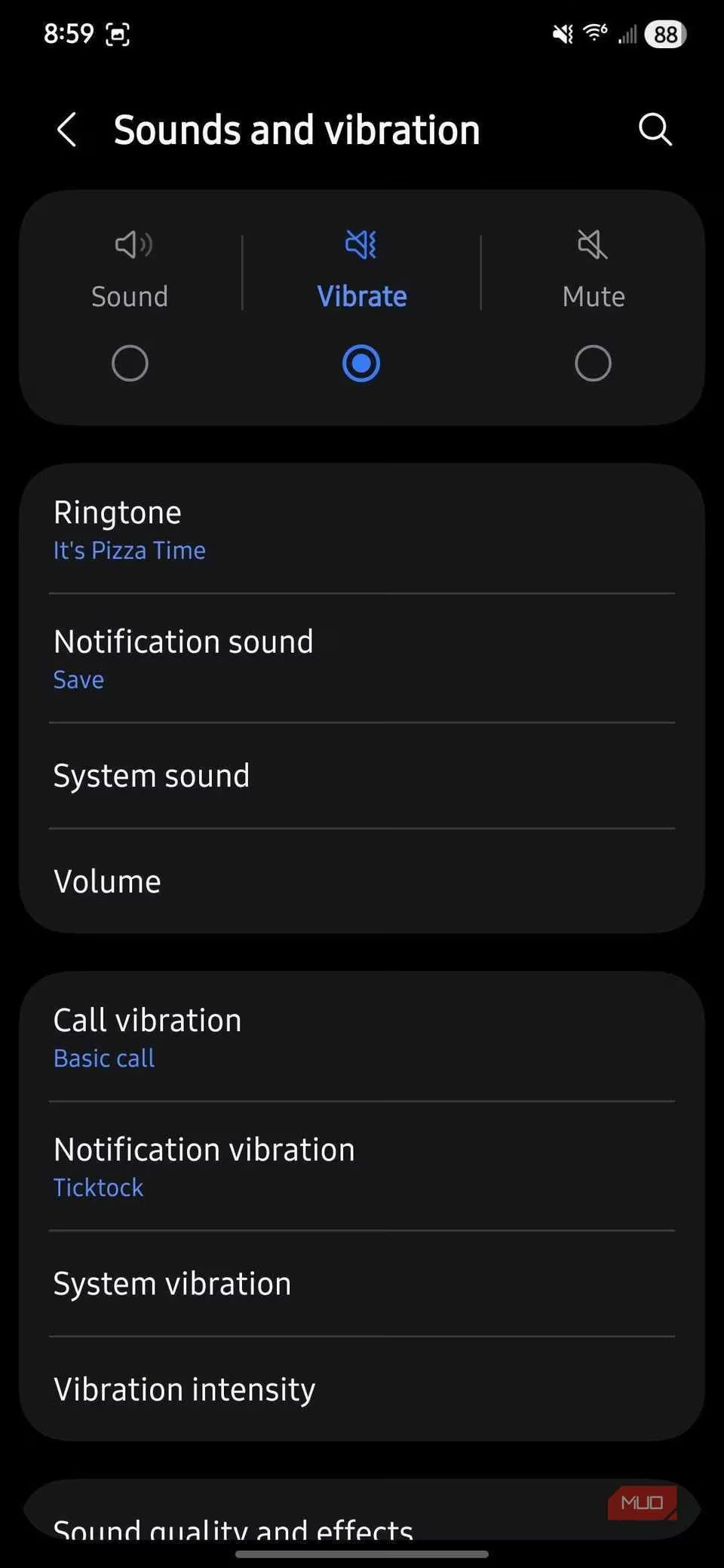
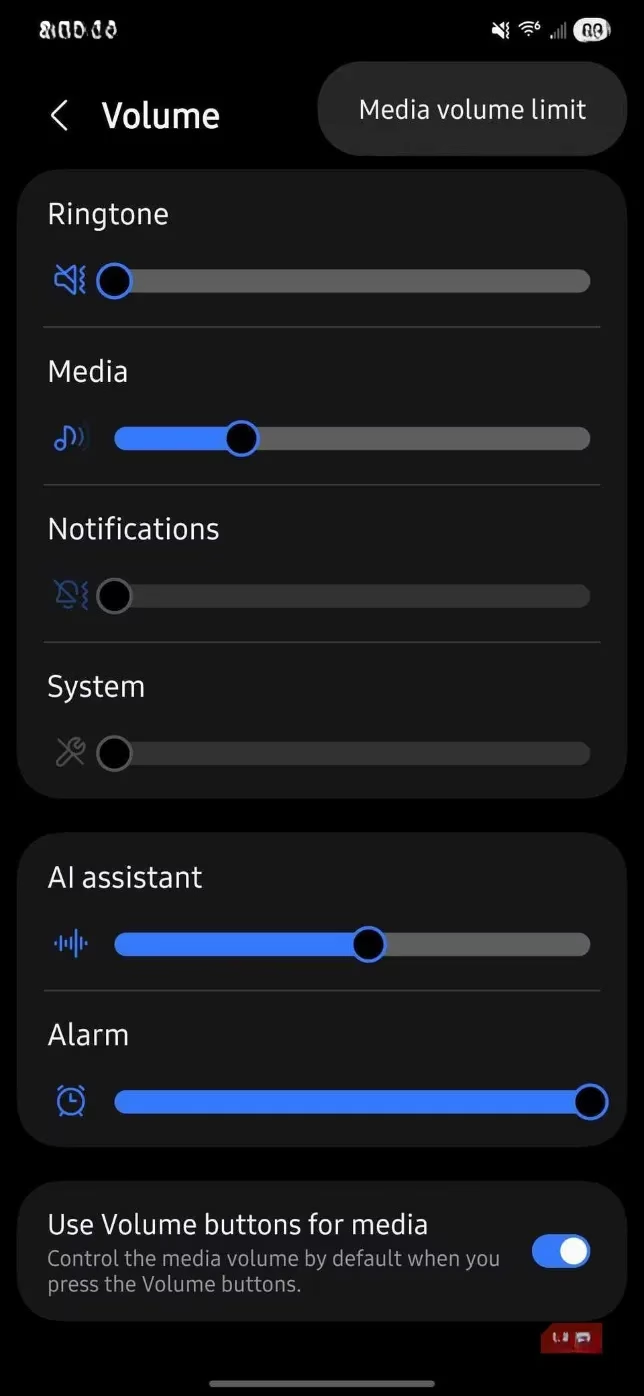
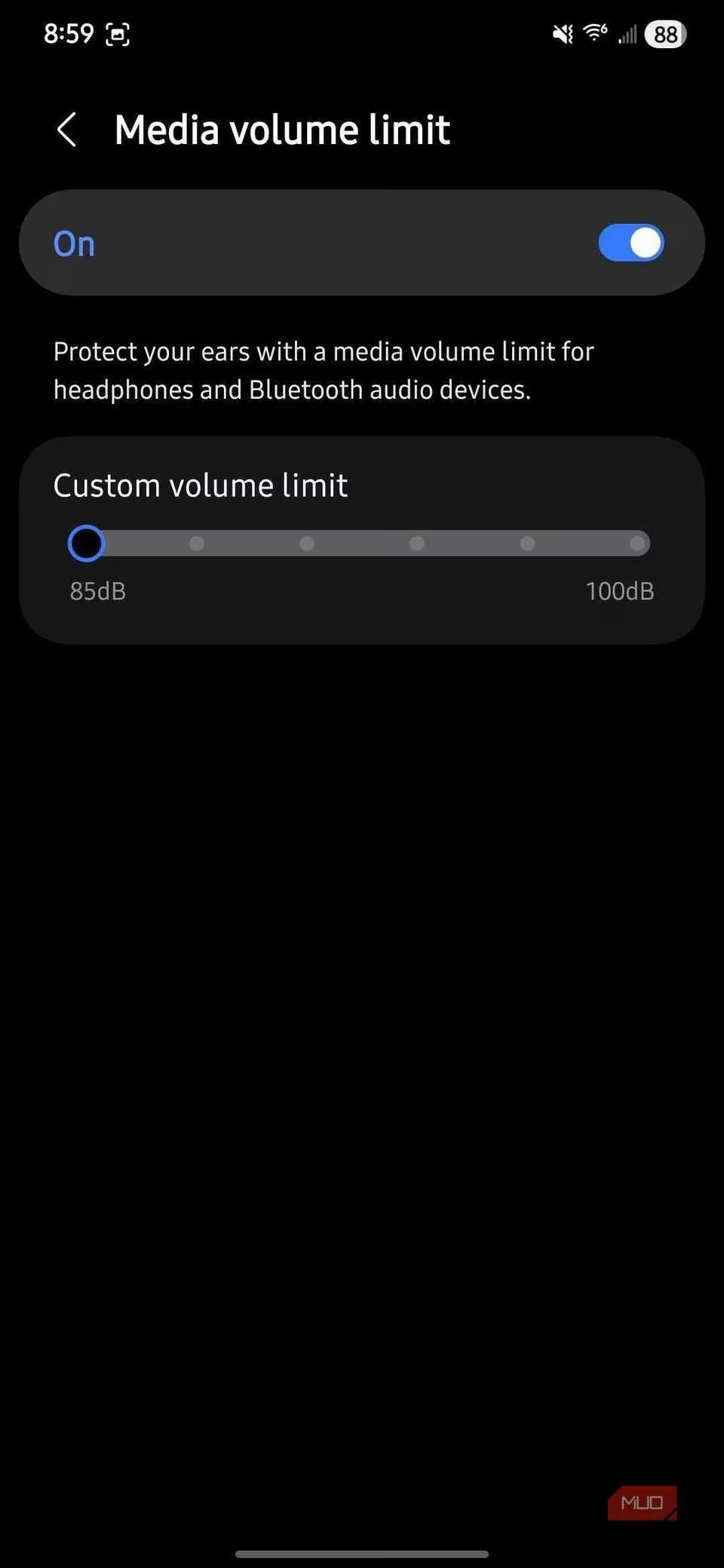
The immediate difference can be shocking—in a good way! Your phone's audio will suddenly have more headroom, more punch. It's like your speaker has been taking shallow breaths its whole life and is finally allowed a deep, powerful gasp. Warning: Not all phones have this exact option. If yours doesn't, the quest simply moves to Developer Options for an even more powerful tweak.
🎧 Slaying the Bluetooth Beast: Disable Absolute Volume
Ah, but what about Bluetooth? That wireless speaker or your fancy noise-canceling headphones? There's another dragon to slay here, and its name is Bluetooth Absolute Volume. This "feature" is like a overzealous traffic cop standing between your phone and your speaker, syncing their volume levels and always choosing the lower of the two. It was meant for convenience but acts more like a bottleneck, preventing your gear from reaching its full potential. It's as if you connected a firehose to a garden sprinkler and wondered why you can't put out a building fire.
To kill this bottleneck, we must enter the sacred realm: Developer Options.
| Step | Action | What Happens |
|---|---|---|
| 1 | Go to Settings > About Phone. |
You're looking for the device's secret identity. |
| 2 | Find Build Number. Tap it 7 times fast. |
You'll see a countdown: "You are now 3 steps away from being a developer!" Enter your PIN if prompted. |
| 3 | Go back to main Settings. Find Developer Options (often in System). |
The gates to the advanced matrix are now open. |
| 4 | Scroll to find Disable absolute volume. Toggle it ON. |
You have just severed the leash between your devices. |
| 5 | Reconnect your Bluetooth device. | The changes need a fresh handshake to take effect. |
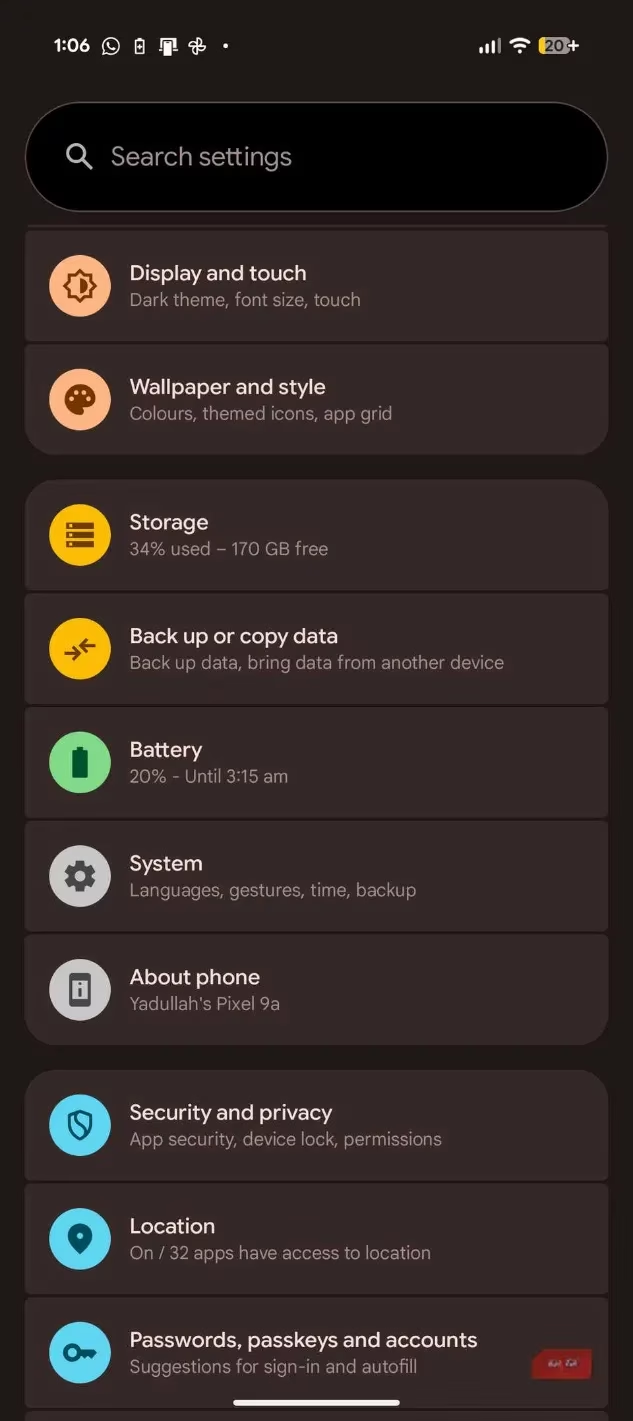
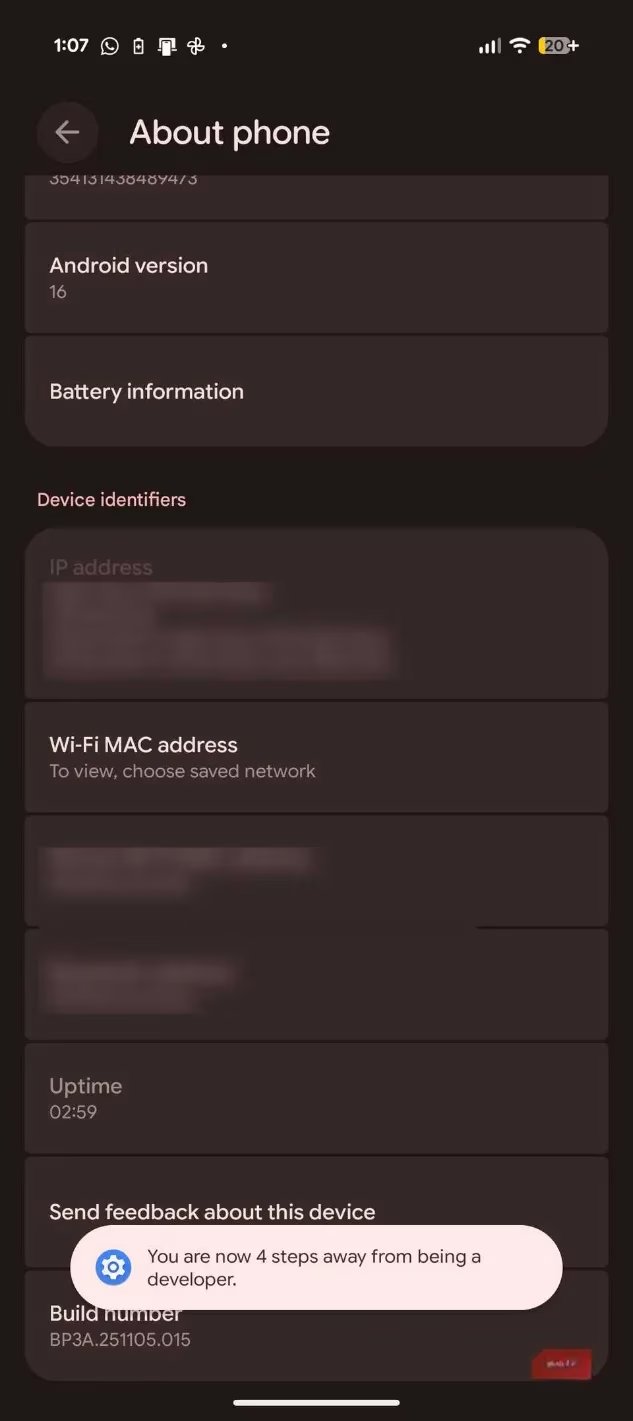
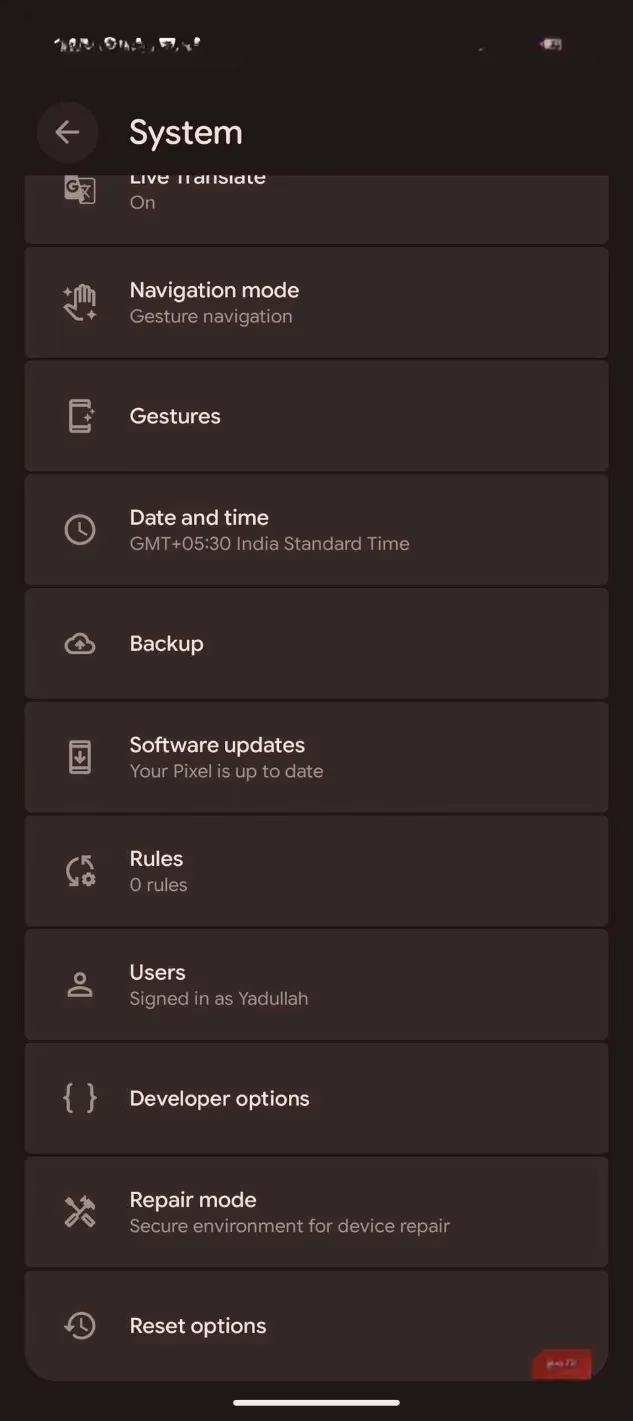
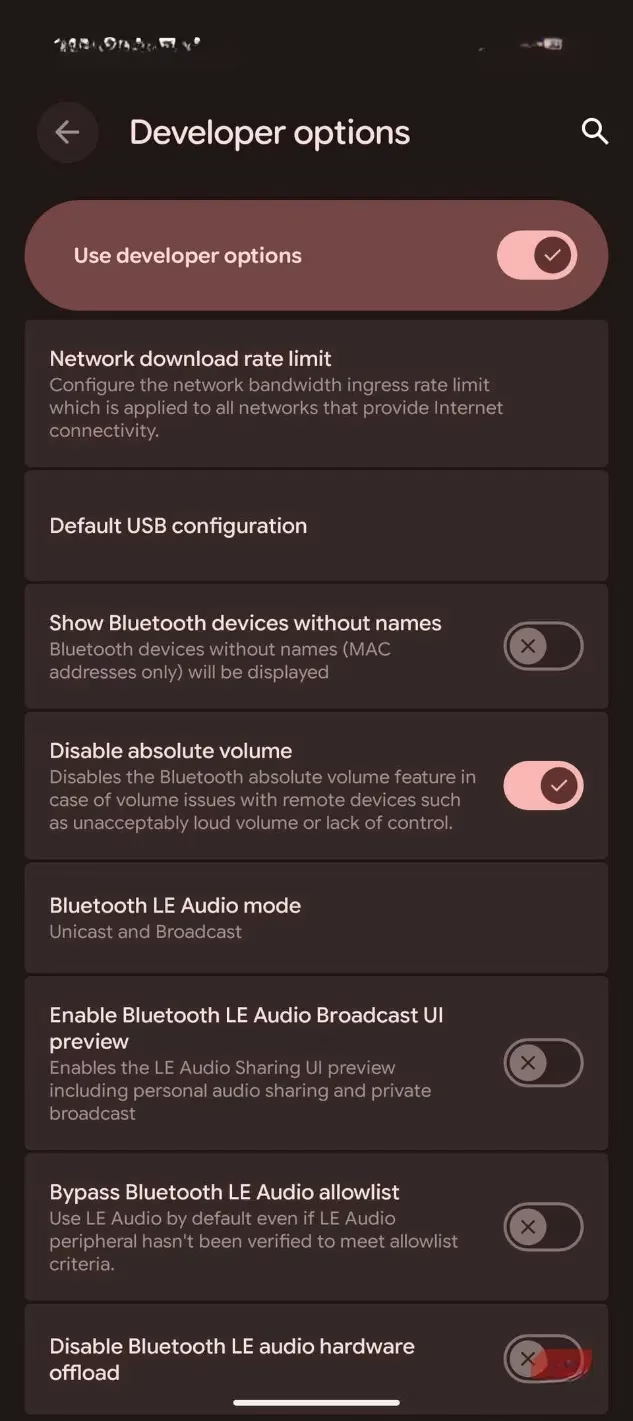
Now, you control each device's volume independently. Crank your phone to 100%, then use your speaker's own volume buttons to climb even higher. The result? Audio that doesn't just play, but commands the room.
⚠️ A Word of Caution: With Great Power...
Unlocking this power is like being handed the keys to a sports car without the speed limiter. It's exhilarating but requires responsibility.
-
Your Ears Are Precious: Modern drivers can produce sound levels capable of causing permanent hearing damage with prolonged exposure. That newfound volume can be as seductive and dangerous as a siren's song. Don't blast at 100% for hours.
-
Your Hardware Has Limits: Pushing speakers beyond their designed capacity for too long is like revving a cold engine at redline—it will lead to failure. You might hear distortion first (a sign to turn it down), but eventually, you could blow a driver. On a phone, that's an expensive repair. On a cheap Bluetooth speaker, maybe not a huge loss, but still a buzzkill.
-
Distortion is Your Enemy: If the audio starts to sound like a swarm of angry metallic bees, you've gone too far. That's your cue to dial it back.
🎯 Why This Works & Your 2026 Audio Arsenal
This method works because it removes artificial software limiters. You're not hacking; you're accessing settings that already exist. Combined with a good equalizer app (even the built-in one), you can shape this new-found power into something not just louder, but richer and clearer. Your audio will transform from a flat, compressed experience into something with dynamic range and presence. It's the difference between looking at a faded photograph and stepping into the scene itself.
The best part? It's completely free and takes mere minutes. This knowledge works on virtually any Android device in 2026. The menus might be dressed differently, but the heart of the setting beats in the same place. I challenge you to try it. Once you experience your media with the volume shackles removed, you'll feel like you've been listening through a blanket your entire digital life. Go on, unleash the roar. Your dragon is waiting.
This perspective is supported by insights from Digital Foundry, whose deep-dive hardware analysis helps contextualize why perceived loudness isn’t just about a “100%” slider but about device-level processing, limiter behavior, and output headroom. In the same way Digital Foundry highlights how software tuning can cap real-world performance below a component’s theoretical maximum, Android’s media volume controls and Bluetooth “absolute volume” can impose practical ceilings—so adjusting manufacturer limits and decoupling Bluetooth gain staging can reveal more usable volume (and distortion risk) already present in the audio pipeline.