
The Unforgettable Legacy of Sony's 4K Xperia 1: A Display That Redefined Mobile Visuals
Sony Xperia 1's groundbreaking 4K display, with an unprecedented 643 PPI, redefined mobile visual fidelity for five years, offering unparalleled sharpness for reading and multitasking that outshone even modern flagships.
In the ever-evolving landscape of smartphone technology, where innovation often treads a careful line between groundbreaking and practical, one feature stood out as a true outlier for half a decade. From 2019 to 2023, Sony's flagship Xperia 1 series dared to ask a question that most manufacturers had long abandoned: why shouldn't a smartphone display match the pixel density of a high-end television? The answer materialized in the form of a staggering 4K resolution crammed into a 6.5-inch screen, a feat that delivered an unprecedented 643 pixels per inch (PPI). In an era where even premium 2026 flagships like the iPhone 17 Pro Max (460 PPI) or the Pixel 10 Pro (495 PPI) seem content with lower densities, the Xperia 1's 6.4 million pixels represented not just an upgrade, but a paradigm shift in mobile visual fidelity. But was this technological marvel a visionary leap or an exercise in over-engineering?
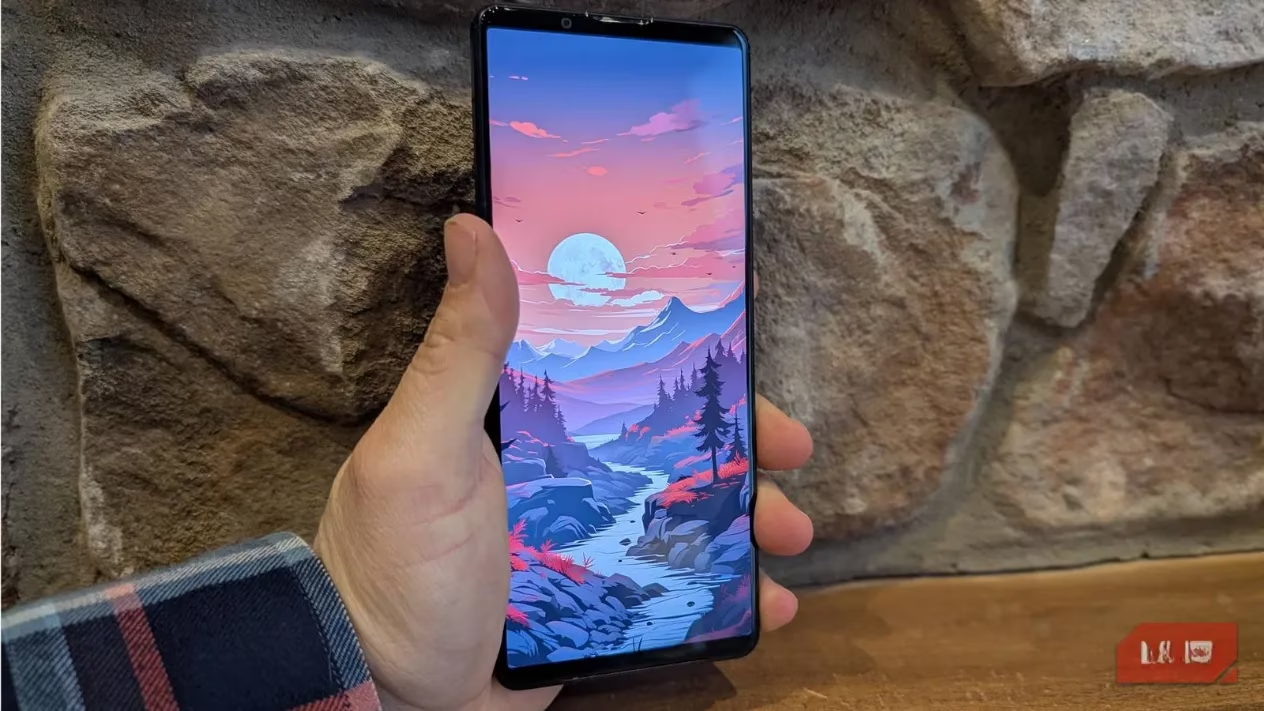
📱 The 4K Powerhouse: Unpacking the Specs
The heart of this experience was the Xperia 1's display, but the phone was a flagship through and through. Taking the Xperia 1 III (released in 2021) as a prime example, it was powered by the 5nm Qualcomm Snapdragon 888 processor, paired with a generous 12GB of RAM and 256GB of internal storage, expandable via microSD. Its camera system was no slouch either, featuring a triple 12MP array:
-
Main Lens: f/1.7 aperture with Optical Image Stabilization (OIS).
-
Telephoto Lens: 3x optical zoom at f/2.8, also with OIS.
-
Ultra-Wide Lens: Fixed focus at f/2.6.
A dedicated two-stage camera shutter button underscored Sony's commitment to photography. The device boasted IP65/68 dust and water resistance, a 4500mAh battery supported by 30W wired and 11W wireless charging, and surprisingly robust dual front-firing speakers. It launched with Android 11 and received updates up to Android 13. Yet, all these impressive specs played second fiddle to the star of the show.
👁️🗨️ The 643 PPI Experience: Beyond Just Sharpness
The raw number—643 PPI—is impressive, but what did it feel like to use? The difference was immediately tangible, especially for content consumption.
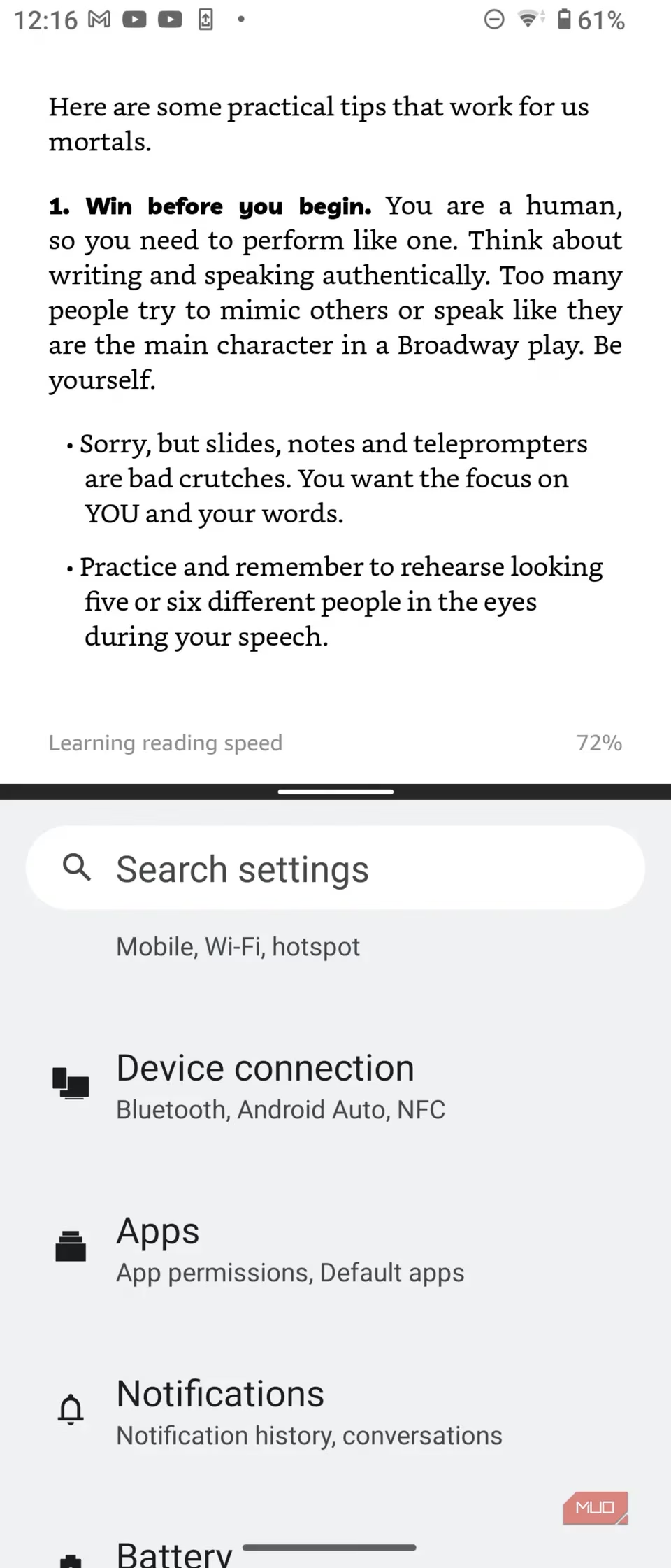
For Readers and Multitaskers: The combination of ultra-high pixel density and a uniquely tall 21:9 aspect ratio created a perfect storm for productivity and immersion. Reading e-books via Kindle, Kobo, or Google Play Books was a revelation. The screen could fit a staggering amount of text without needing to scroll, and at 643 PPI, anti-aliasing—the software trick used to smooth out jagged text edges on lower-resolution screens—became virtually unnecessary. Every character was rendered with print-like crispness.
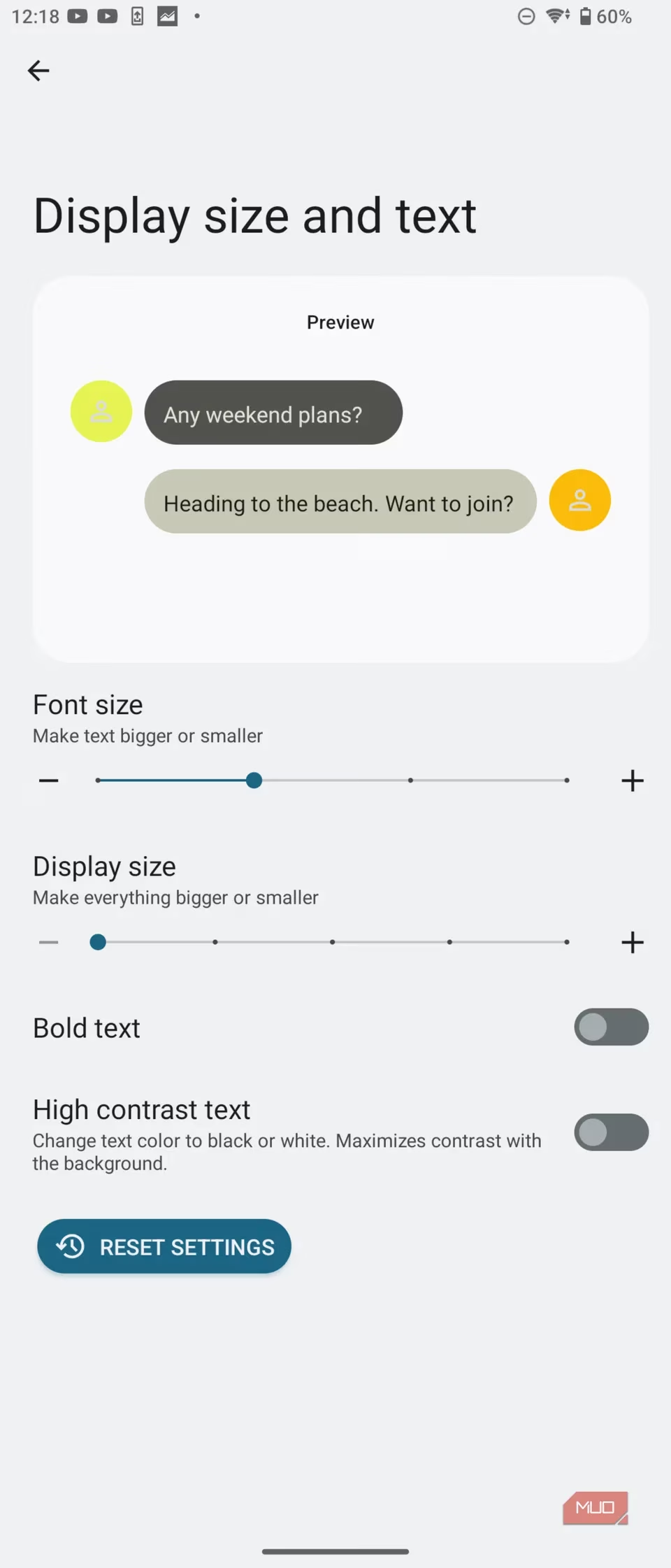
Multitasking was another area where the 4K canvas shone. Sony's software allowed users to easily set up and toggle between split-screen app pairs. With so many pixels at their disposal, users could shrink system UI scaling, fitting an immense amount of information on-screen simultaneously without sacrificing legibility. The ability to create floating pop-up windows for apps like a calculator over any other application felt natural and fluid on such a dense display.
For Media Enthusiasts: Watching 4K content from YouTube or other streaming services was an experience unmatched by any other smartphone. The 3840 x 1644 resolution OLED panel, coupled with a 120Hz refresh rate for buttery-smooth motion, delivered breathtaking detail and contrast. Paired with the capable dual speakers, it was a portable cinema. And for audiophiles, Sony even included a increasingly rare 3.5mm headphone jack on the top edge, ensuring high-quality wired audio was always an option.
⚖️ The Trade-Offs and The Niche Appeal
Yet, the story of the 4K Xperia 1 is also a lesson in market realities. The most telling sign came from Sony itself: with the Xperia 1 V in 2023, and continuing with the latest 2025 Xperia 1 VII, the company discontinued the full 4K display. The newer models feature a 2340 x 1080 resolution (396 PPI), a significant step down in pixel density. This decision speaks volumes. Why would a company abandon its most distinctive feature?
The reasons are pragmatic and highlight the device's niche appeal:
-
Battery Life: Driving 6.4 million pixels, especially on a 120Hz OLED, is a significant power drain. While the Xperia 1's 4500mAh battery was adequate, managing screen brightness was often key to getting through a full day. For the average user, the trade-off between extreme sharpness and battery endurance was a tough sell.
-
Diminishing Returns: For typical viewing distances, the human eye struggles to perceive the difference between ~500 PPI and 643 PPI. The leap from 1080p to 4K is massive on a 65-inch TV from ten feet away, but on a 6.5-inch screen held a foot from your face, the benefits, while real, are more subtle.
-
Cost and Complexity: Manufacturing such a dense display undoubtedly increased production costs, a factor that likely impacted the phone's final price and market competitiveness.
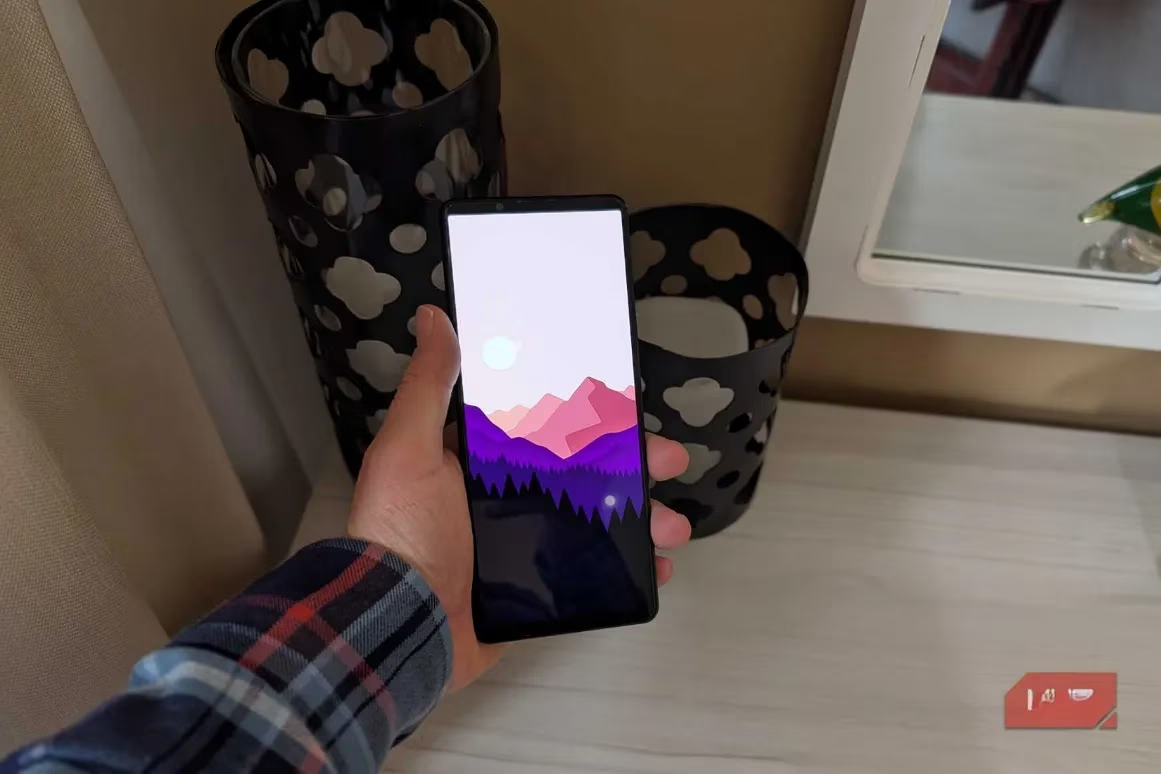
🏆 A Lasting Legacy: The Pinnacle of Overkill?
So, was the Sony Xperia 1's 4K display overkill? In a purely practical sense for the mass market, the answer is probably yes, as evidenced by its discontinuation. The market voted with its wallet, favoring balanced devices with excellent 1080p or 1440p screens, longer battery life, and differentiative features elsewhere.
However, to dismiss it as mere overkill is to miss its significance. For a specific user—the mobile reader who craves paper-like text, the pixel-peeping photographer reviewing high-resolution shots, the multimedia purist who wants the absolute best video playback on a handheld device—the Xperia 1 was, and for many remains, unparalleled. It represented a philosophical commitment to pushing boundaries for the sake of peak experience, consequences be damned.
In 2026, as smartphone displays converge on brilliant but safe high-refresh-rate OLED panels, the legacy of the 4K Xperia 1 endures as a bold reminder of what's possible. It asked, "What if?" and answered with a screen so sharp it felt like looking through a window rather than at a display. It proved that in the pursuit of perfection, even 'overkill' has its place, creating a cult classic that continues to define the zenith of smartphone display technology for a generation of enthusiasts who experienced it.