
The Tangled Truth of USB-C Cables in 2025
Navigating the fragmented USB-C ecosystem reveals inconsistent performance despite universal promises, emphasizing the need for clear standards and quality cables.
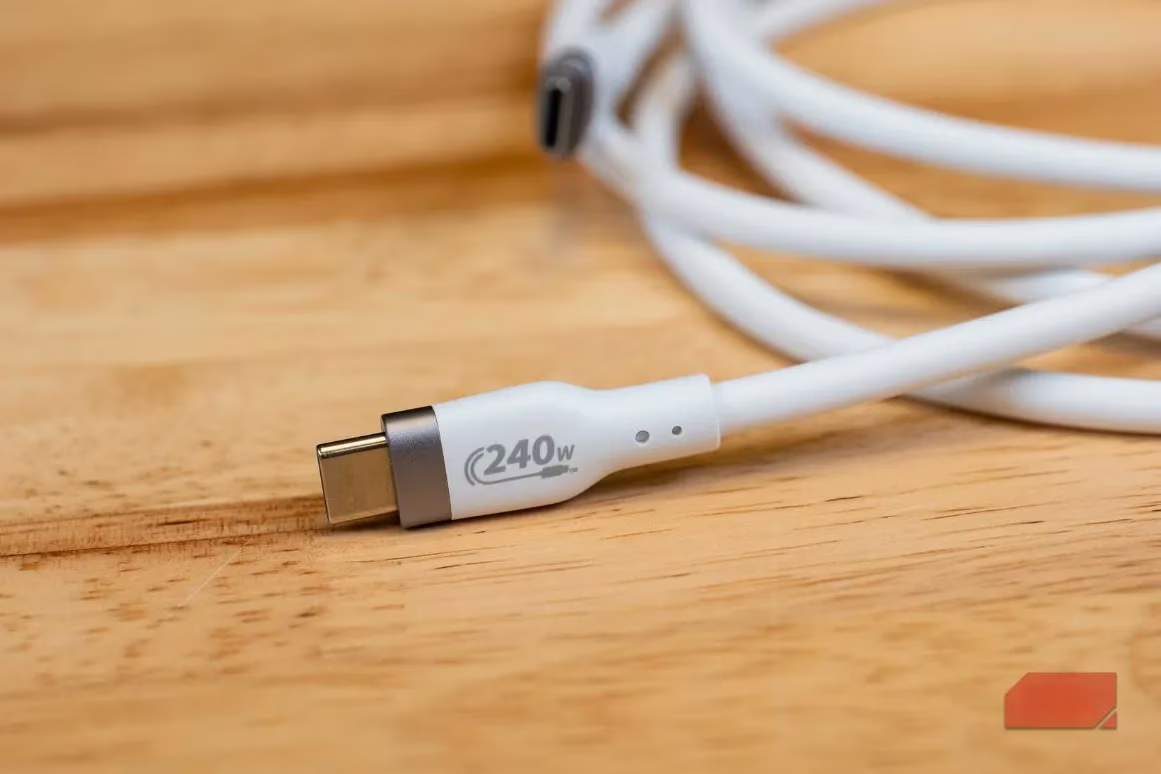
As I stare at the nest of USB-C cables coiled on my desk—each one promising universal compatibility—I can't help but feel like a gardener trying to cultivate exotic plants with identical-looking seeds, only to discover wildly different fruits. In 2025, we were supposed to bask in the simplicity of a single charging standard, yet my daily reality involves a frustrating game of cable roulette. The Samsung Galaxy Z Flip 6 charges briskly with its OEM cord but crawls like a sleepy sloth when I grab the cable bundled with my wireless keyboard. This universal port has become a digital chameleon, changing its capabilities depending on which inexpensive sheath surrounds it.\n\n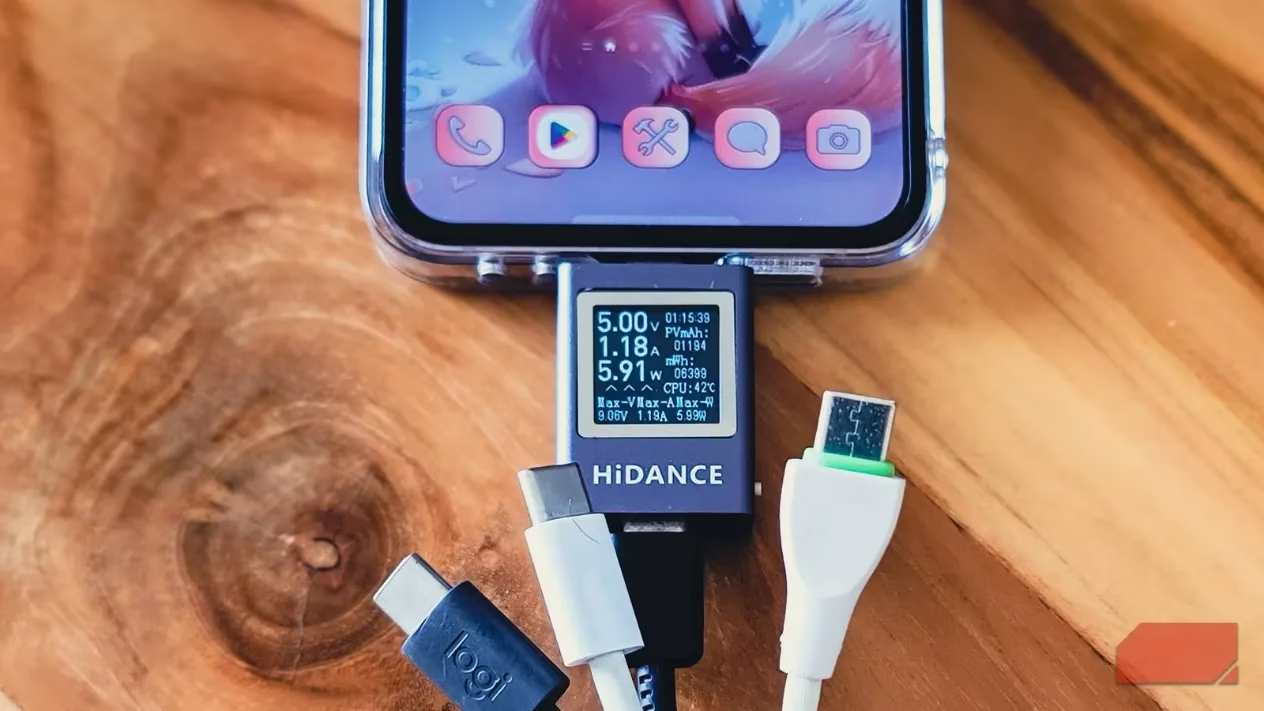 \n\nThe core issue feels like navigating a highway system where every lane has unmarked speed traps. On paper, USB-C should deliver consistent performance, but in practice, it's a fragmented ecosystem. My Realme GT Neo 5 theoretically supports 240W charging, yet most cables I own can't unlock even half that potential. Why? Because beneath their identical plastic exteriors, cables harbor critical differences:\n\n- Amperage & E-markers: \n | Feature | Capability | Impact |\n |---|---|---|\n | 3A cables ❌ | ≤60W | Adequate for earbuds | \n | 5A e-marked cables ✅ | Up to 240W | Essential for phones/laptops | \n \nFinding these specs feels like decoding hieroglyphics—manufacturers drown us in meaningless terms like \"TurboCharge\" instead of clear USB-PD ratings. Last Tuesday, my $8 \"fast-charging\" cable delivered a pitiful 5W to my tablet, turning a 30-minute top-up into a three-hour siesta. \n\n
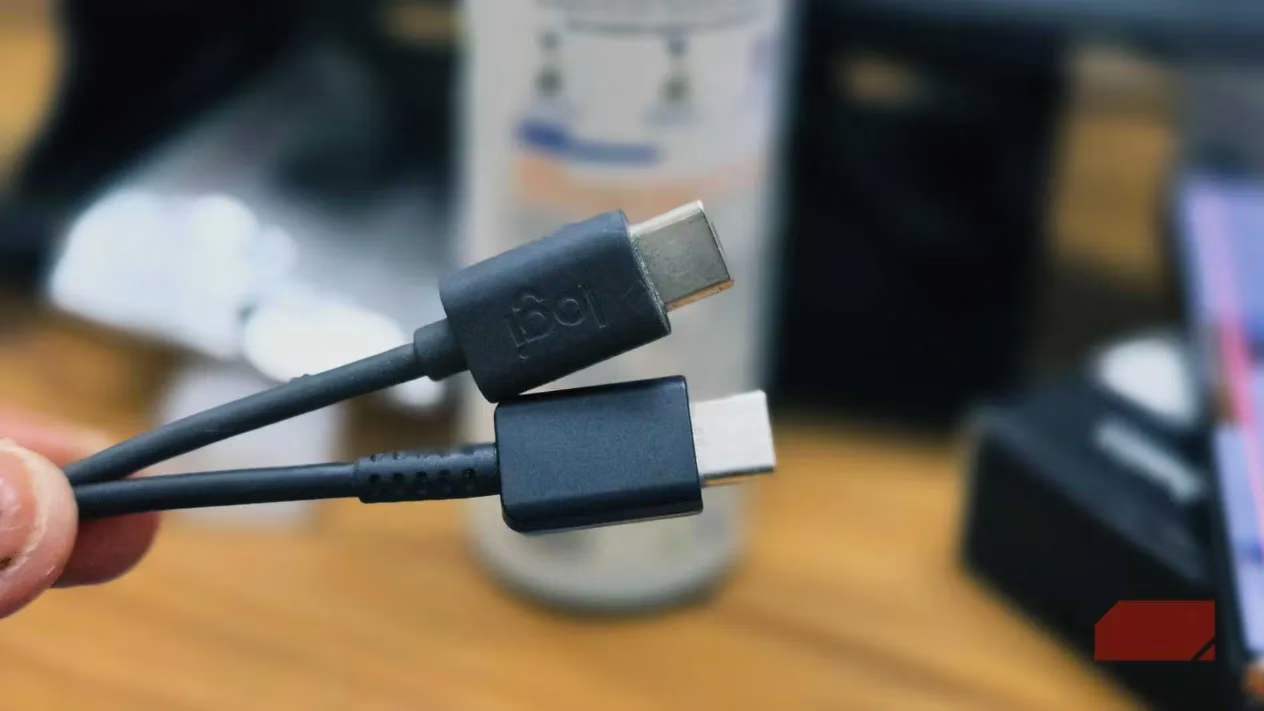 \n\nBuild quality plays a stealthy role too. Cheap cables are like thin straws trying to gulp a thick smoothie—they overheat and waste energy. During testing, one frayed cable became uncomfortably warm, signaling its internal wires were thinner than a human hair. This isn't just annoying; it's inefficient. By contrast, my braided Anker cable remains cool while transferring 4K footage as smoothly as an ice skater gliding across fresh rink.\n\n🔍 My Cable Testing Epiphany 🔍 \nArmed with a $15 power meter, I discovered shocking inconsistencies: \n- Keyboard cable: 10W output (despite 45W adapter) \n- Power bank cable: 5W 🐌 \n- OEM Samsung cable: 24W (still below its 45W potential) \n\nThis tiny gadget revealed what hands-on testing can't—some cables are digital mirages, promising oases of power but delivering deserts.\n\nWhen buying replacements, I've learned to hunt for explicit labeling like a botanist seeking rare species:\n\n1. Prioritize 5A e-marked cables 📛 \n2. Demand wattage claims (e.g., \"USB-PD 240W\") \n3. Choose braided/reinforced connectors 🛡️ \n4. Match length to need—short cables (<1m) perform like Olympic sprinters vs. long cables' marathon pace 🏃💨\n\n
 \n\nPeering into the future, I dream of cables that self-identify like chatty tour guides—displaying their specs on smartphone screens via NFC chips. Until then, my advice? Treat bundled cables like personalized keys: use your phone's cable for phones, your laptop's for laptops. And if you must gamble, bet on reputable brands—my Ambrane cable has been a steadfast workhorse since 2024.\n\nUltimately, USB-C's promise remains a half-kept vow—convenient in form but chaotic in function. But armed with knowledge and a power meter, we can transform cable chaos into curated efficiency. After all, in our wirelessly charging future, these tangles might soon become nostalgic relics. 📱⚡