
The Pixel 10a: An Echo of the Past in Google's Budget Line
Google Pixel 10a review reveals a familiar design and specs, mirroring the Pixel 9a but promising reliable performance and signature value.
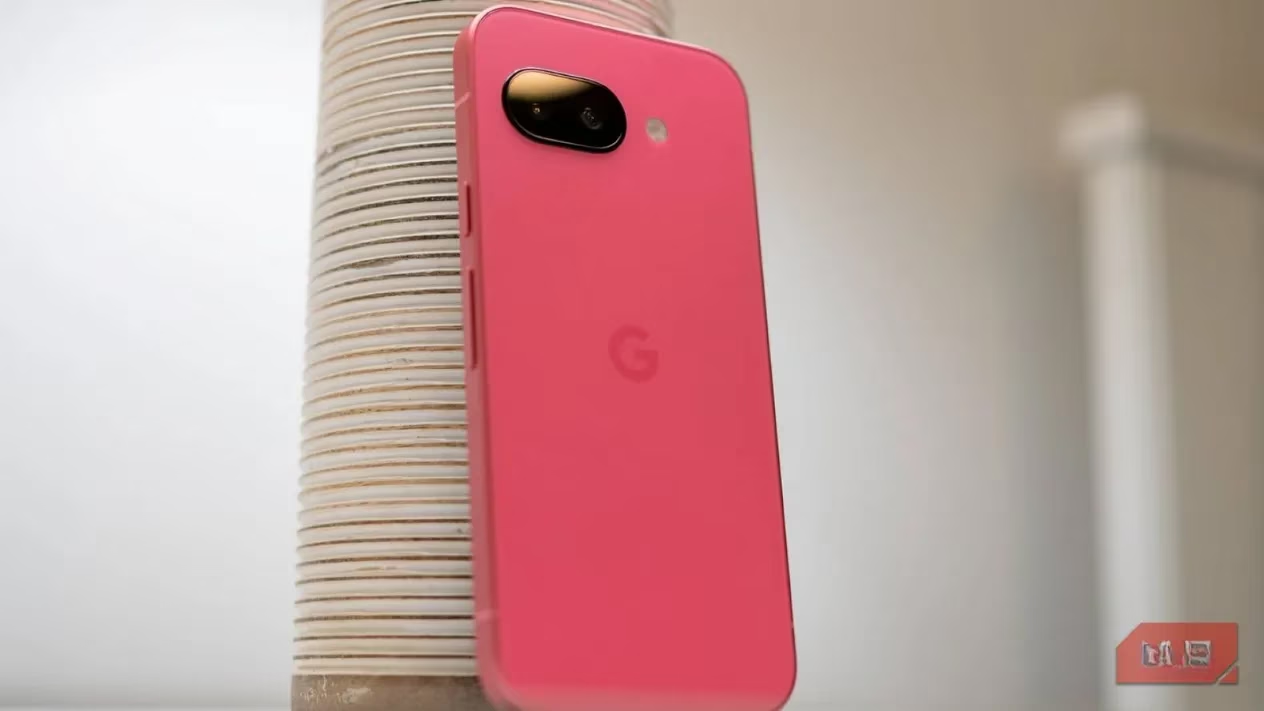
In the ever-evolving landscape of mobile technology, where each new model number promises a leap into the future, what does it mean when a device arrives as a mirror image of its predecessor? The whispers surrounding Google's upcoming Pixel 10a, solidified by certification leaks, paint a portrait not of revolution, but of quiet, steadfast repetition. The silhouette, captured in renders, is a familiar one—a design language that found its voice in the Pixel 9a. Yet, the revelation runs deeper than skin; the very soul of the machine, its core specifications, appears to be an echo from a year gone by. From the 6.3-inch canvas of its display to the 8 GB of RAM and 128 GB of storage, the blueprint seems unchanged. Is this a testament to a formula perfected, or a curious pause in the march of progress?
A Spec-Sheet Reflection
The technical narrative, as gleaned from network certifications, reads like a well-remembered story. The internal architecture whispers of continuity.
-
Display: A 6.3-inch window to the digital world.
-
Memory & Storage: 8 GB of RAM paired with 128 GB of internal space.
-
Chipset: While the listing omits it, all signs point to the Tensor G4 silicon—the very heart that powered the Pixel 9a. This suggests computational photography and AI features will dance to the same, capable tune.
The only major character absent from this spec-sheet is the battery capacity, though history hints it may be generous. Where, then, does one find the distinction that warrants a new name? Perhaps it lies not in the raw numbers, but in the spaces between them—in the subtle alchemy of software optimization or in a palette of new colors waiting to be unveiled.
The A-Series Philosophy: Value in the Veil of Compromise
To understand the Pixel 10a, one must look at its place in the constellation of Pixel devices. It exists in a deliberate dialogue with its more premium siblings. The table below illustrates this curated hierarchy:
| Feature | Pixel 10a (Expected) | Pixel 10 / 10 Pro (Context) |
|---|---|---|
| Chipset | Tensor G4 | Next-generation Tensor (e.g., G5) |
| Camera System | Excellent single/main sensor | Multi-lens, advanced setups |
| Display Tech | Very good, lower peak brightness | Higher peak brightness, possibly adaptive refresh |
| Haptics & Build | Competent | More refined, premium materials |
| Charging Speed | Standard | Faster wired & wireless |
| Battery | Often larger capacity | Optimized for efficiency |
The A-series has always been an exercise in intelligent compromise. The sacrifices are measured: a slight dimming under the brightest sun, a haptic motor that hums rather than sings, a charging cable that asks for a bit more patience. Yet, in return, it offers the quintessential Pixel experience—clean software, timely updates, and that legendary computational photography—all encased in a body that frequently houses a larger battery. For the vast majority of users, these compromises are invisible ghosts, felt only when placed directly beside their flagship kin. The core experience remains profoundly intact and satisfying. Does the pursuit of the absolute best sometimes blind us to the excellence of the merely great?
The Camera: The Uncompromised Heart
If there is one cathedral where the A-series refuses to kneel, it is in the realm of photography. Google's algorithmic prowess has long been the great equalizer. While the hardware suite may be simpler, the software magic—Night Sight, Super Res Zoom, Magic Eraser—transcends the physical limitations. The Pixel 10a, inheriting this legacy, is poised to continue delivering photographs that burst with color, clarity, and dynamic range, often rivaling or surpassing phones at twice its price. In a world obsessed with lens counts, the Pixel reminds us that vision is more than the sum of its glass parts.
The Iteration Conundrum: What's in a Name?
The scenario presented by the Pixel 10a is a fascinating anomaly. In 2026, iterative upgrades are the industry's rhythm, but they typically involve a new beat, however faint—a slightly brighter screen, a marginally faster chip, a redesigned camera module. To launch a device with a new name and seemingly identical internals and externals is a rare, almost philosophical gesture. It forces a question: has Google reached a local peak with this particular budget design, deeming it worthy of another year in the sun? Or is this a strategic placeholder, a stable vessel for software innovations while the next tectonic shift in hardware brews beneath the surface?
Perhaps the surprise, as hinted, will be chromatic. A vibrant new colorway can redefine a device's character, making the familiar feel fresh. It is a reminder that our connection to technology is not purely transactional; it is also aesthetic and emotional.
Conclusion: The Awaiting Revelation
As the spring of 2026 approaches—Google's traditional season for unveiling its A-series—the tech community watches with a mix of curiosity and déjà vu. The Pixel 10a, based on current evidence, stands as a monument to consistency in a market clamoring for constant change. It promises not the thrill of the new, but the comfort of the proven. For the value-seeking user who prizes a stellar camera, clean software, and reliable performance above cutting-edge specs, it may represent the pinnacle of sensible choice. The ultimate judgment awaits its official debut, where Google will reveal whether this iteration is a carbon copy or a masterpiece of subtle refinement. Will we celebrate its steadfastness, or question its ambition? Only time, and perhaps a splash of new color, will tell. 🎨