
The Fast Charging Dilemma: When Higher Numbers Don't Equal Better Experience
Explore the Samsung 25W charger vs 45W charger showdown—uncover how fast charging truly impacts your daily smartphone experience.
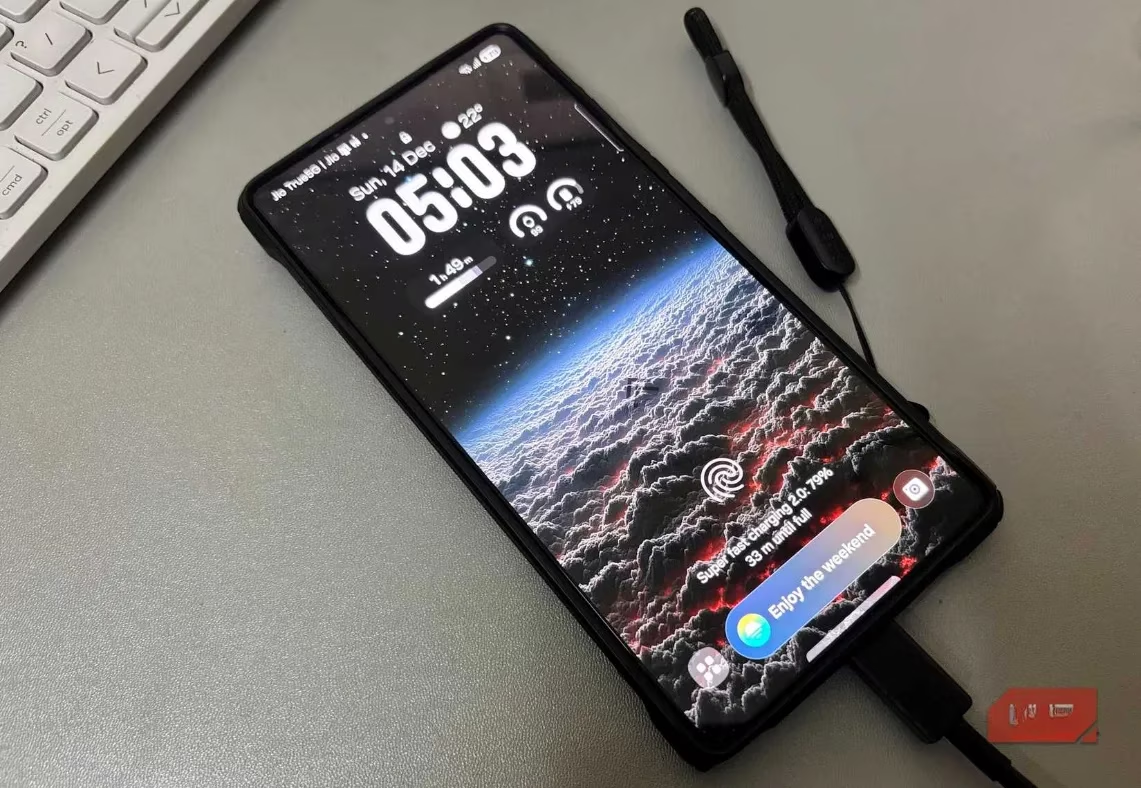
In the ever-accelerating world of mobile technology, the promise of faster charging has become a siren song for smartphone users. When a tech enthusiast discovered their new phone supported 45W charging—nearly double the wattage of their existing 25W Samsung adapter—they couldn't resist investigating what they might be missing. Like a curious scientist approaching an intriguing chemical reaction, they embarked on a methodical comparison, draining their phone's battery and timing charging sessions with both adapters, expecting the higher wattage to deliver dramatically different results.
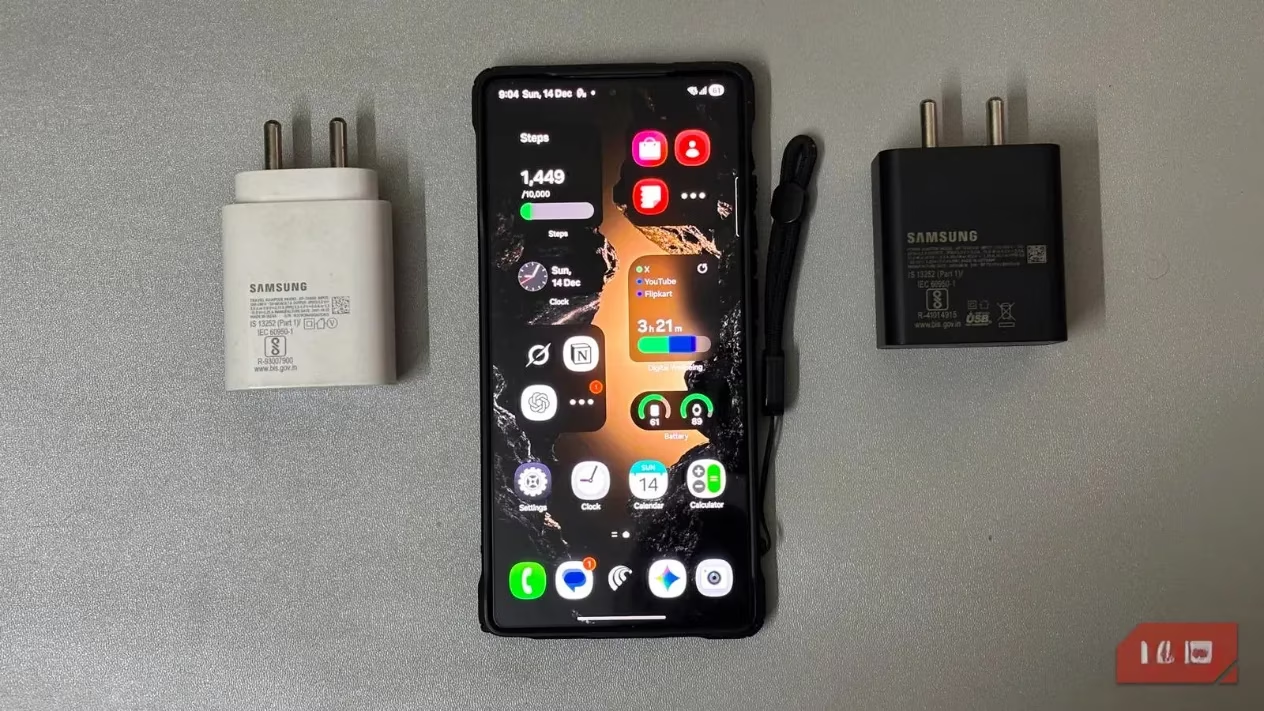
The initial numbers told a compelling story, but one that unfolded with unexpected nuance. The 45W charger sprinted ahead in the opening minutes, reaching the 50% mark in just 21 minutes compared to the 25W's 28 minutes. By the time the battery hit 80%, the gap had widened to eleven minutes—35 minutes versus 46. Yet, this early lead proved deceptive, like a sprinter who exhausts their energy in the first half of a marathon.
The Reality of Charging Curves
What became immediately apparent was how smartphone charging behaves as batteries fill:
-
First 50%: The 45W charger demonstrates clear superiority
-
50-80%: The advantage persists but charging begins to slow
-
80-100%: Both chargers operate at nearly identical speeds
This phenomenon occurs because modern phones implement sophisticated battery management systems. As the battery percentage rises, the device deliberately limits power intake to control heat generation and reduce stress on battery cells. The higher wattage advantage, therefore, concentrates almost entirely in the early charging stages.
The Cable Conundrum ⚡
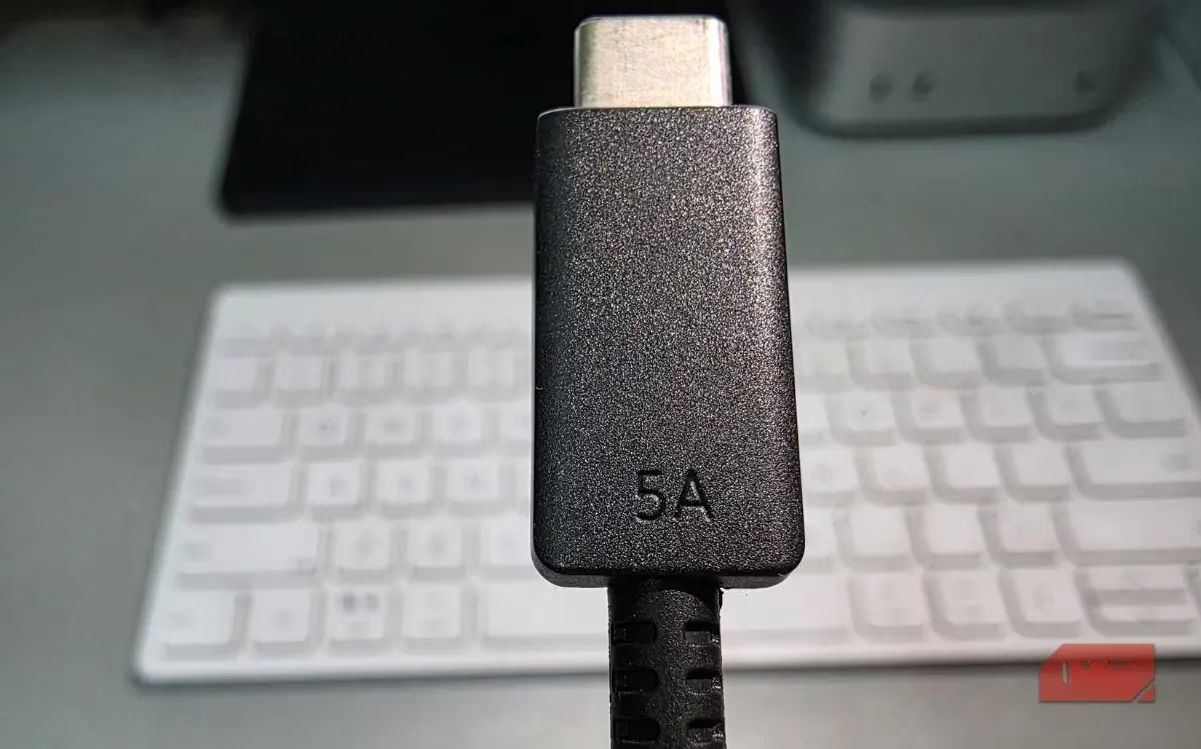
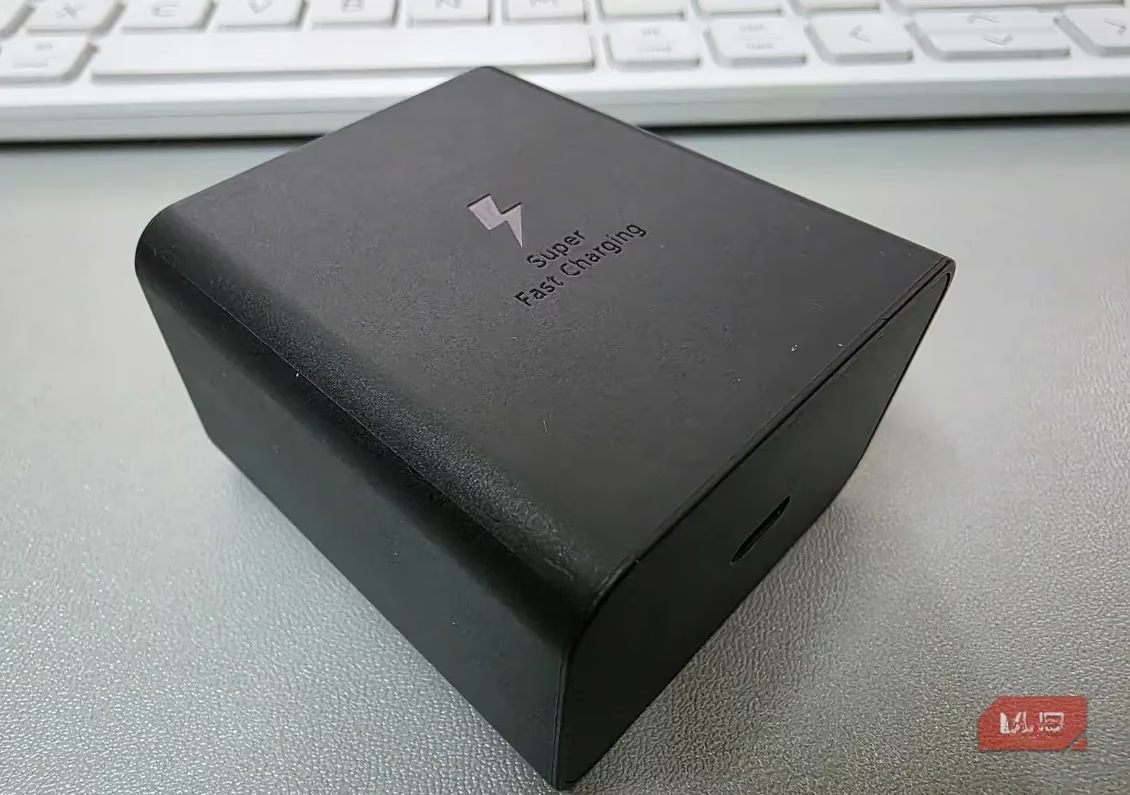
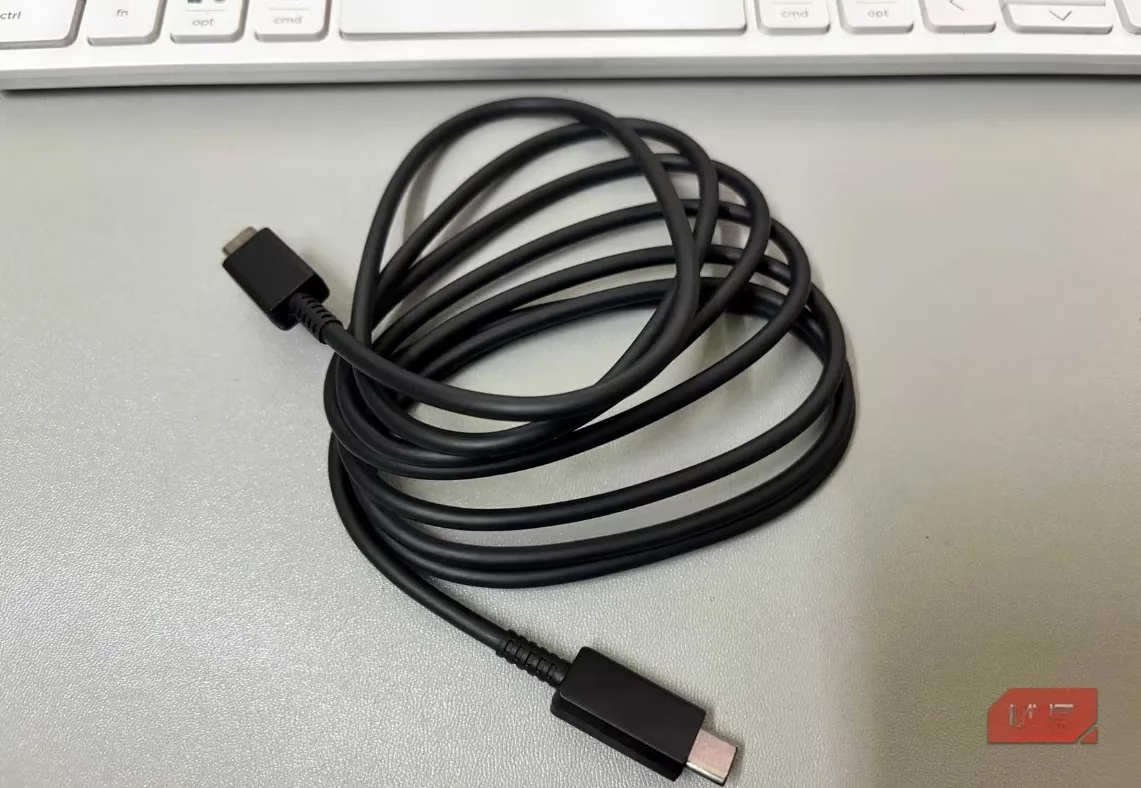
An often-overlooked factor emerged as crucial: the charging cable itself. To achieve its full 45W potential, Samsung's Super Fast Charger requires a specific 5-amp USB-C cable. With standard cables included with most phones, the charger can only deliver lower power levels. This created a situation where the charging experience became as unpredictable as trying to predict weather patterns without proper instruments.
| Time Elapsed | 45W Charger | 25W Charger | Advantage |
|---|---|---|---|
| 15 minutes | 41% | 25% | +16% |
| 30 minutes | 71% | 52% | +19% |
| 45 minutes | 90% | 80% | +10% |
| 60 minutes | 100% | 98% | +2% |
The Practical Charging Window
For most daily users, the charging experience typically occurs between 20% and 80% battery levels. Within this practical range—the sweet spot for battery health and convenience—the 45W adapter demonstrated only a 7-8 minute advantage. This narrow window of superiority felt like discovering a shortcut that saves only a few steps on an otherwise lengthy journey.
The Physical Trade-offs 📦
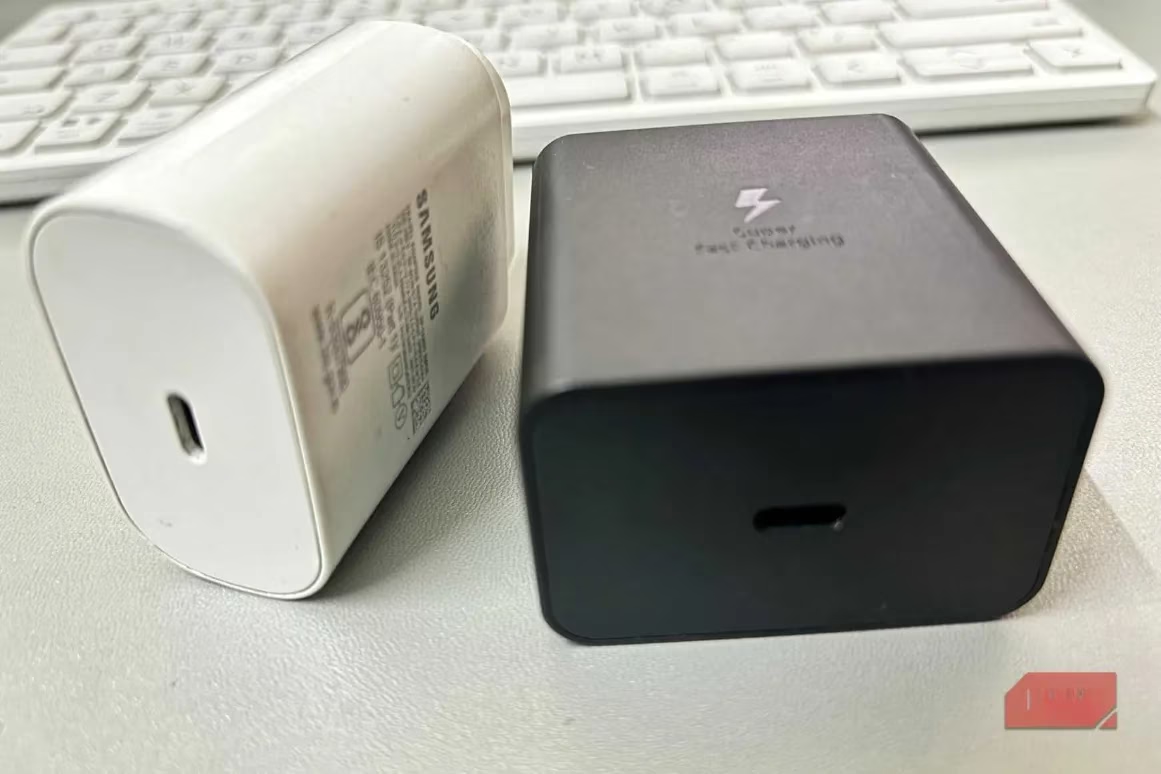
The speed comparison told only half the story. The 45W charger brought significant physical compromises:
-
Size and weight: Substantially larger and heavier than the 25W version
-
Desk real estate: Occupied more space on power strips and crowded nearby sockets
-
Cable management: Required longer, bulkier cables that created clutter
These physical drawbacks accumulated like small weights on a scale, gradually tipping the balance against the faster charger. The 45W adapter's increased bulk transformed charging from a simple, unobtrusive task into a space-consuming operation that demanded accommodation.
The Economic Equation 💰
Perhaps the most sobering realization came when considering cost versus benefit. The 45W adapter carried a price tag approximately three times higher than its 25W counterpart. For this premium, users gained:
✅ Faster charging from 0-50%
✅ Moderate speed improvement from 50-80%
❌ No advantage from 80-100%
❌ Increased heat generation during peak charging
❌ Significant size and weight penalties
This economic calculation revealed the upgrade as similar to purchasing premium theater tickets only to discover the performance differs minimally from the standard show.
Heat Generation Concerns 🔥
During testing, the 45W charger ran noticeably warmer during the early, high-speed charging phase. This thermal signature appeared precisely during the only period where the faster charger demonstrated clear advantages. The heat served as a physical reminder of the energy being transferred—and potentially wasted—during those brief moments of superior performance.
The User Experience Verdict
When evaluating the complete charging ecosystem—speed, convenience, physical footprint, and cost—the 25W charger emerged as the more balanced solution for typical usage patterns. The faster charger's advantages concentrated in scenarios that most users rarely encounter:
🚫 Complete battery drain to full charge (infrequent for daily use)
🚫 Emergency top-ups from critically low levels (avoided for battery health)
✅ Regular charging between 20-80% (where advantage is minimal)
For the enthusiast who conducted these tests, the realization crystallized that faster charging only matters if it meaningfully changes how one interacts with their device. In their daily routine, charging occurred during predictable moments—overnight, during work hours, or while preparing for the day ahead. In none of these scenarios did the additional minutes saved by the 45W charger create tangible lifestyle improvements.
The 2026 Perspective 🔮
As we move through 2026, the fast charging landscape continues evolving, but the fundamental trade-offs remain relevant. Manufacturers push wattage numbers higher—some now exceeding 100W—while users grapple with the same core questions:
-
How much speed do I actually need?
-
What physical compromises am I willing to accept?
-
Does the cost justify the marginal time savings?
For the majority of smartphone users, the answer increasingly points toward balanced solutions rather than maximum specifications. The 25W charger, in this comparison, represented that sweet spot—adequate speed for modern needs without the bulk, heat, and cost penalties of its more powerful sibling.
The experiment ultimately revealed that in the pursuit of technological advancement, sometimes the most sophisticated solution isn't the most practical one. Like an overly complex tool that performs brilliantly in laboratory conditions but falters in daily use, the 45W charger offered impressive specifications that translated poorly to real-world utility. The simpler, more compact 25W adapter did everything necessary while maintaining elegance and efficiency—a reminder that in technology, as in many aspects of life, more isn't always better.