
The Fall: Gillian Anderson and Jamie Dornan in a Gripping Cat-and-Mouse Drama
The Fall series review highlights Gillian Anderson and Jamie Dornan in a gripping detective noir with psychological depth.
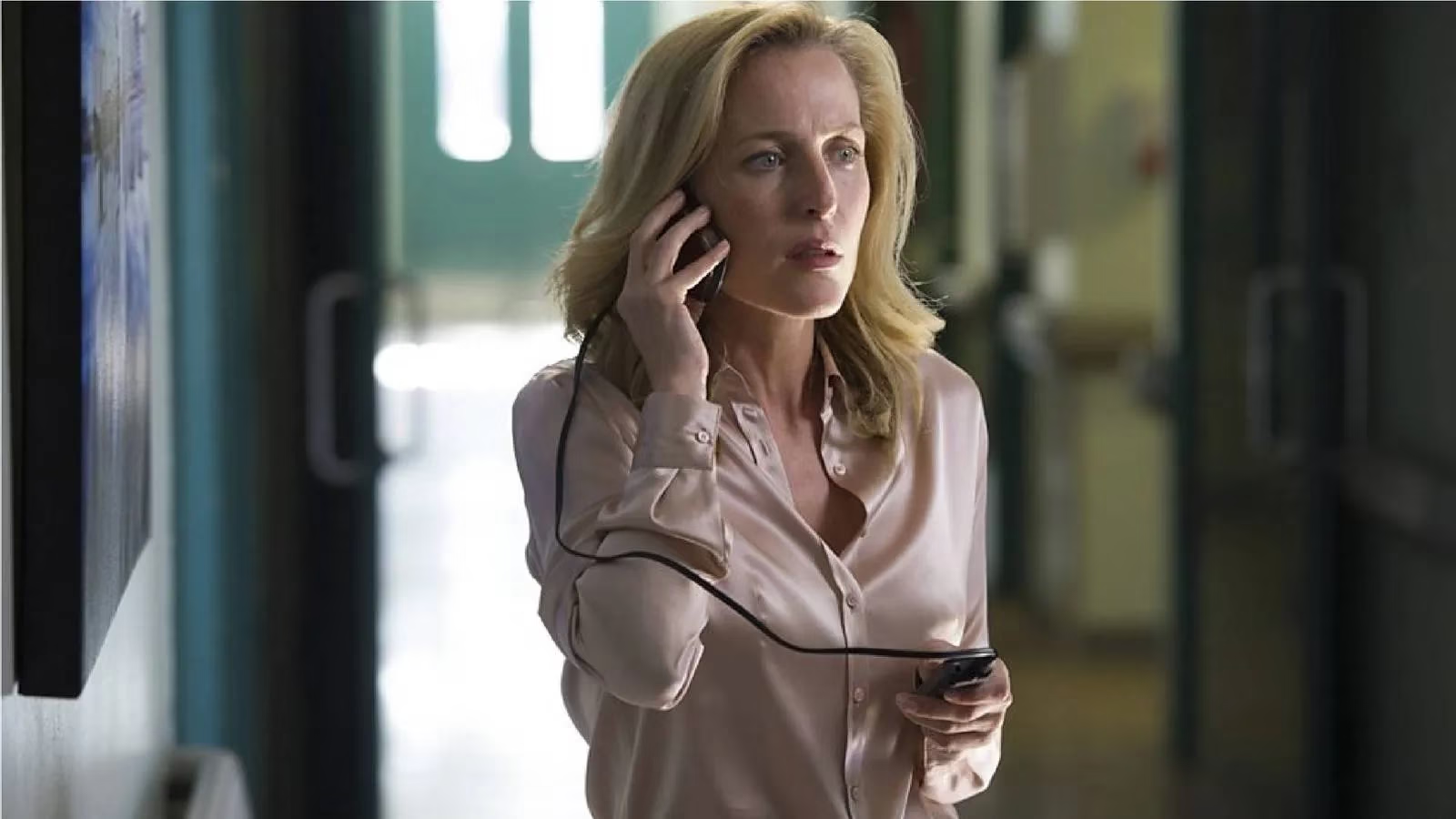
In an era where true crime podcasts and dark investigative dramas dominate the streaming landscape, a series that masterfully blends police procedure with psychological depth can easily become a hidden gem. The Fall is precisely that kind of show. Originally airing in 2013, this Northern Ireland–set thriller has migrated across platforms—from Tubi to Netflix—and now resides on Prime Video in the United States. Despite its impressive pedigree, its current placement on the platform undersells its detective noir heart, packaging it more like a generic thriller. Yet once a viewer dives in, the series reveals itself as a relentless, intellectually charged battle of wits between two powerhouse performances by Gillian Anderson and Jamie Dornan.
Created by Allan Cubitt, who wrote, produced, and later directed large parts of the series, The Fall unfolds across 17 taut episodes over three seasons. Cubitt drew on his own experiences in Belfast to craft a story where the city’s misty streets and quiet suburbs become a character in themselves. The narrative wastes no time concealing the identity of the predator. In the very first episode, the audience watches Paul Spector, a seemingly devoted husband and father, stalk a professional woman with chilling precision. This is no whodunit; it is a deep-dive into the mind of a serial killer and the exceptional investigator determined to stop him.
Detective Superintendent Stella Gibson, played with an icy, captivating intelligence by Gillian Anderson, arrives in Belfast on a 28-day secondment from the Metropolitan Police. Her task is to review a local murder investigation for procedural oversights, but she quickly perceives a pattern linking the death to other missing professional women. Gibson is a woman of razor-sharp intellect who wields her confidence—and an unapologetic awareness of her own sexuality—as professional tools. Anderson, already beloved by a generation for her role as Agent Dana Scully in The X-Files, was simultaneously starring in the macabre series Hannibal when The Fall premiered. Her portrayal of Gibson is one of quiet authority, a detective who builds a mosaic of evidence from overlooked fragments. Her performance became an early sign of the remarkable range that would later earn her an Emmy for playing Margaret Thatcher in The Crown and bring her acclaim in Sex Education.
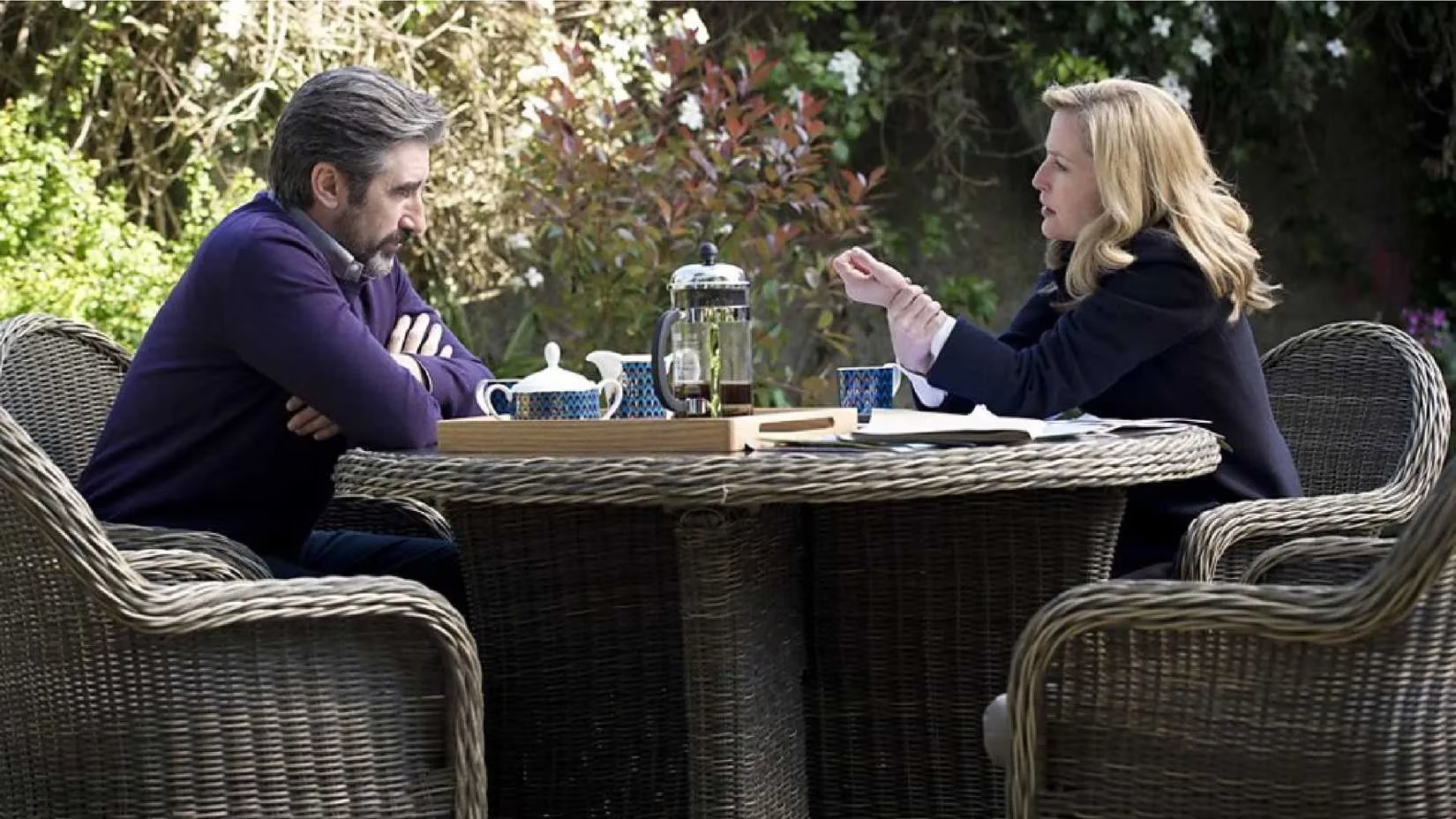
Opposite Anderson, Jamie Dornan delivers a bone-chilling performance as Paul Spector, a grief counsellor who leads a double life. Spector is a predator who meticulously plans his kills while maintaining the facade of a loving family man. His wife, Sally Ann (Bronagh Waugh), and two children represent the perfect cover, a domestic bubble that shields his monstrous nature. Dornan’s brooding intensity makes Spector disturbingly compelling; he is a product of past trauma twisted into a cold, methodical psychopath. Audiences in 2026, revisiting the show more than a decade after its debut, can witness Dornan’s talent before the global frenzy of the Fifty Shades film series turned him into a household name. His work here is arguably more nuanced, as he navigates Spector’s addiction to control and his growing obsession with the very detective hunting him.
The series thrives on its dual perspective. While Gibson pieces together forensic details, victim profiles, and jurisdictional friction, Spector is often shown tracking her movements, inserting himself into the investigation’s periphery. This mutual surveillance creates a suffocating tension rarely sustained across multiple seasons. Unlike procedural shows where a new killer appears each week, The Fall lingers on the cat-and-mouse dynamic. It forces the audience to wait for a confrontation that seems perpetually just out of reach, building anticipation through psychological realism rather than action set-pieces. Even after Gibson identifies Spector, the narrative shifts into a new gear: Spector tries to erase his digital and physical footprints while grappling with his escalating compulsion to kill.
The writing refuses to sensationalize violence. Instead, it focuses on the aftermath—the institutional failures, the trauma of survivors, and the quiet resilience of law enforcement professionals who must compartmentalize horror. Gibson’s own personal life, including brief relationships and internal politics with senior officers like ACC Jim Burns (John Lynch), reveals a woman who refuses to be defined by male expectations. The show’s handling of female agency and vulnerability remains strikingly relevant in 2026, as conversations around workplace power dynamics and systemic blind spots continue to evolve.
Fans of series like Mindhunter or Dexter, which themselves explored the interplay between hunter and hunted, will find The Fall a more claustrophobic and intimate affair. Its restraint is its greatest strength. Cubitt knew that showing Spector’s crimes early would rob viewers of cheap twists, but it also demands that the storytelling never slackens. Over three seasons, the narrative remains fresh by deepening the psychological wounds of both leads and introducing new threats, such as a troubled teenager (Aisling Franciosi) who becomes entwined in Spector’s world.
For years, The Fall was a Netflix staple, but its availability on Prime Video offers a new opportunity for discovery—especially for those who felt the platform’s generic thumbnail and truncated description obscured its true identity. The word “detective” might appear at the tail end of its blurb, but Detective Superintendent Stella Gibson is the beating heart of this series, a character so meticulously realized that she elevates the entire genre. The performances from Anderson and Dornan capture two artists on the cusp of even wider recognition, giving the series a crackling, unpredictable energy.
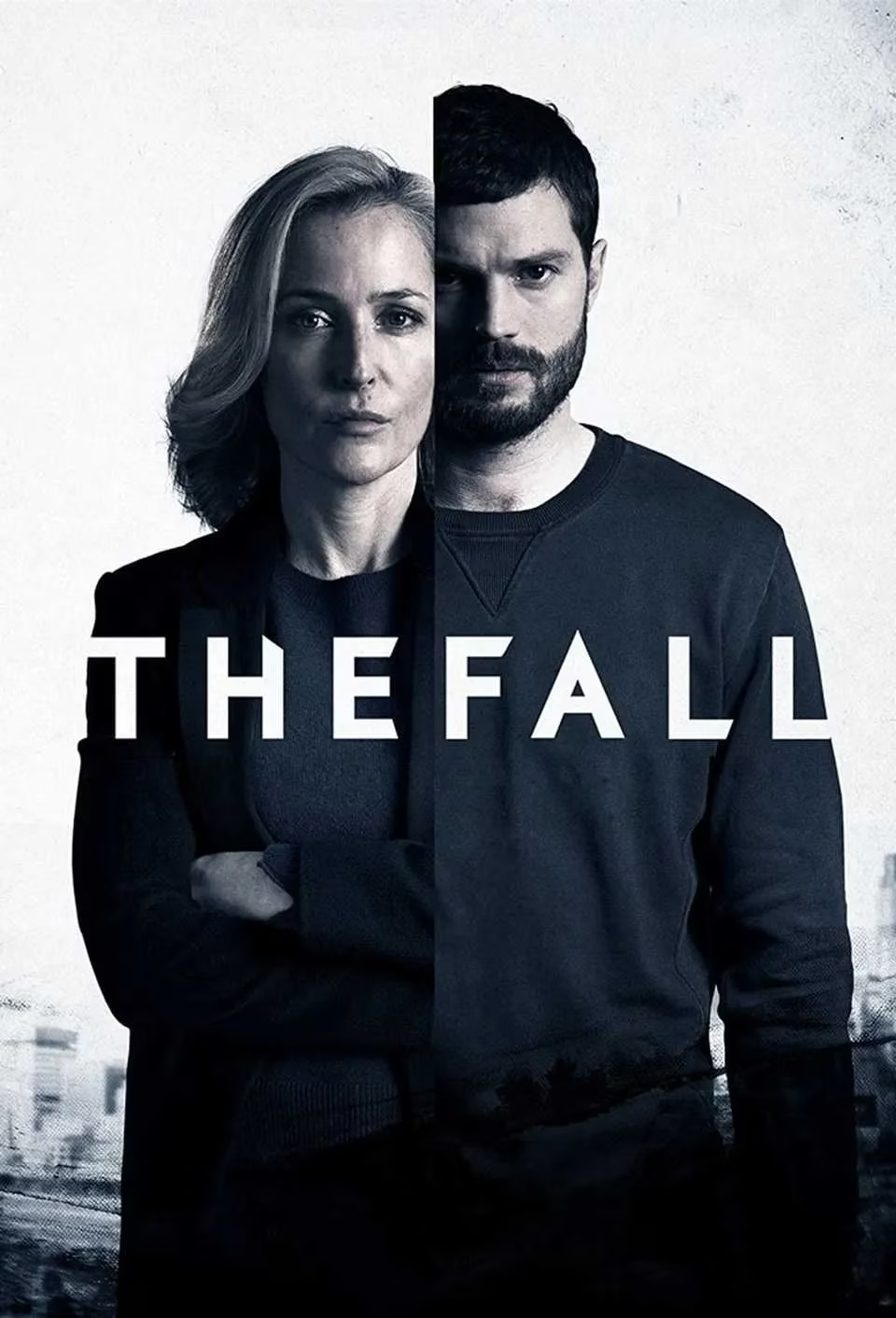
In a television landscape still saturated with crime dramas, The Fall stands out as a dark, beautifully acted, and tightly written examination of addiction—to power, to control, to the thrill of the chase. It is not merely a show to binge over a weekend; it is a series that invites viewers to think beyond the resolution and consider what monsters lurk behind polite smiles. And for those who appreciate seeing exceptional actors command the screen before they became global stars, this northern Irish thriller is essential viewing.