
The Fairphone 6: A Sustainable Smartphone That Puts Ethics and Repair First
The Murena Fairphone 6 revolutionizes smartphone longevity and repairability, directly addressing the growing consumer demand for sustainable, ethical devices. This groundbreaking phone prioritizes radical repairability and digital sovereignty over mere specs, offering a refreshing alternative to disposable tech. While its mid-range performance and premium price spark debate, its durable construction and core ethos make it a compelling choice for the conscious consumer.
In 2026, the smartphone conversation has finally started to shift. As a tech enthusiast who has tested countless devices, I’ve grown weary of the relentless pursuit of thinner bezels and incremental performance bumps. When I ask fellow consumers what they truly desire, the answers are increasingly about longevity, repairability, and digital sovereignty—not just raw specs. After spending significant time with the Murena Fairphone 6, I can confidently say it’s a device that directly addresses these evolving priorities. It’s not a phone for spec-sheet warriors, but for those who see their smartphone as a tool that should last, not a disposable fashion accessory.
The Murena Fairphone 6, now officially available stateside, makes its intentions clear from the outset: this is a device built on principles. Its design philosophy is a stark contrast to the industry norm, prioritizing ethical sourcing, fair labor practices, and radical repairability above all else. The result is a phone that feels like a breath of fresh air in a market saturated with sealed, glued-together rectangles. However, this commitment comes at a cost, both literal and figurative. The U.S. price tag is steep, a reality that forces a serious conversation about the true value of sustainability in our pocket computers.
Let’s address the elephant in the room: the specifications. The Fairphone 6 is powered by the Qualcomm Snapdragon 7s Gen 3, a capable but decidedly mid-range chip from 2024. It’s paired with 8GB of RAM and 256GB of internal storage, expandable via a microSDXC slot that supports up to 2TB. In daily use, this combination is perfectly adequate for the vast majority of tasks—social media, messaging, navigation, and media consumption. The performance is like a reliable commuter train; it won't break any land-speed records, but it gets you where you need to go consistently and without fuss. My primary concern lies with the 8GB of non-upgradeable RAM. For a phone marketed as a long-term companion, this feels like a potential bottleneck down the line, a single thread in an otherwise durable fabric that could fray under future software demands.
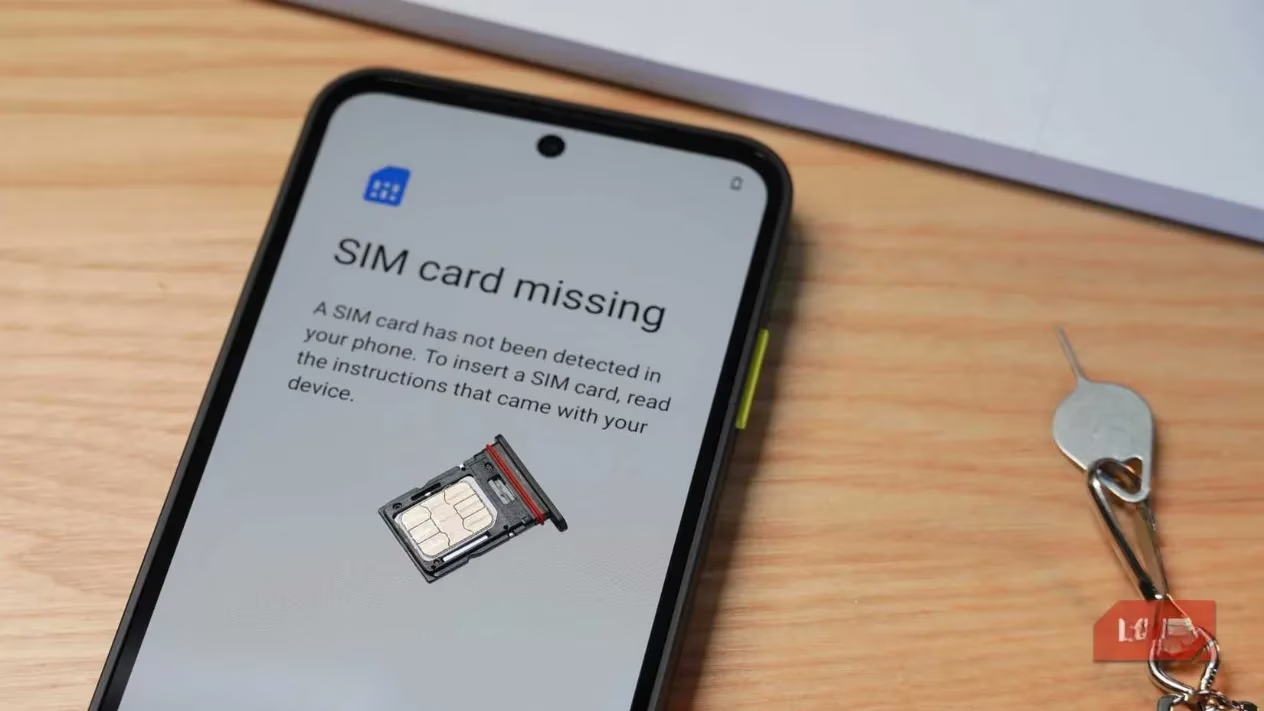
Where the Fairphone 6 truly shines is in its physical construction and core ethos. The fit and finish are outstanding for a device of this nature. At 9.6mm thick and 195 grams, it has a reassuring, substantial feel without being cumbersome. The plastic back is pleasant to hold, though it does attract smudges like a magnet for dust. The 6.31-inch P-OLED LTPO display is genuinely excellent, offering a sharp 432 PPI and a smooth 120Hz refresh rate. The 50MP main camera, utilizing a Sony Lytia 700C sensor, captures solid, reliable photos. These components aren't just good for a "sustainable" phone; they're good, period.
But the magic happens when you look inside. The Fairphone 6 is designed to be opened, understood, and fixed. It is, without exaggeration, the most repairable mainstream smartphone I have ever encountered. The company has achieved this through a modular architecture that feels like a beautifully solved engineering puzzle. With nothing more than a single Torx T5 screwdriver—a tool more commonly found in a watchmaker's kit than a phone repair shop—you can access and replace a staggering 12 key components. The process is so elegantly simple it’s almost cathartic.
As an inveterate tinkerer, I put this to the test. Two prominent screws on the backplate are your entry point. Removing them allows the back cover to slide off effortlessly, revealing the internal layout. The battery, the component that most often dictates a phone's lifespan, is front and center, clearly labeled and held by just five more screws. Swapping it out took me less than five minutes. In an industry where battery replacement is often a high-stakes game of heat guns and adhesive, this experience was as straightforward as changing the ink cartridge in a pen. This modularity extends to the display, cameras, earpiece, USB-C port, and loudspeaker. Each is a self-contained unit, making repairs not just possible, but practical for the average user.
This design philosophy is the phone's raison d'être. It directly combats the planned obsolescence that plagues the industry. When a battery degrades—and they all do—you don't need a new phone. You need a $47 battery and five minutes of your time. This transforms the smartphone from a sealed black box of mystery into a transparent, maintainable tool. It’s a shift as profound as moving from disposable cameras to a trusty film SLR where you control every part of the process.
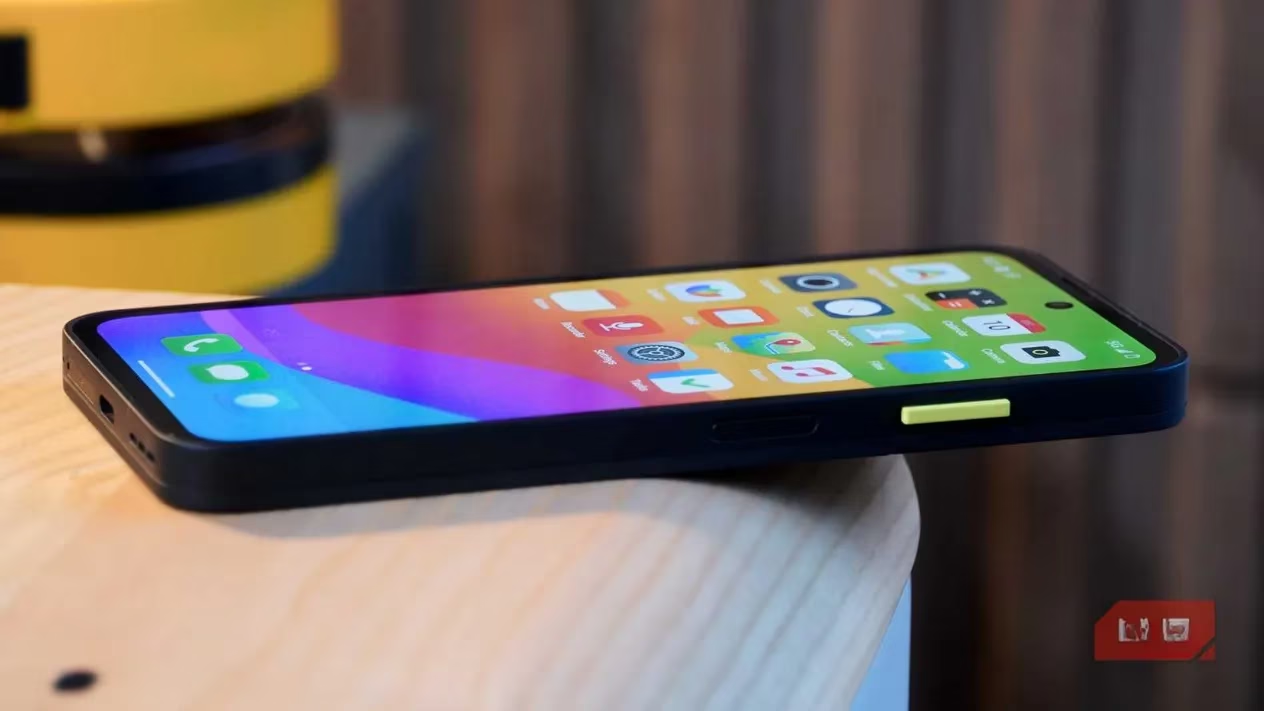
The software experience complements the hardware philosophy perfectly. In the U.S., the Fairphone 6 is sold by Murena and comes pre-installed with /e/OS, a privacy-focused, de-Googled Android ROM. It strips out Google services and telemetry by default, offering alternative privacy-respecting apps and cloud services. For users wary of the data-hungry ecosystems of major tech giants, /e/OS is a sanctuary. It runs smoothly on the Fairphone 6, and the lack of bloatware makes the 8GB of RAM feel more sufficient. The pairing makes sense: a phone built on ethical hardware deserves an operating system built on ethical data principles.
However, this principled package commands a premium in the American market. While the phone is priced at a more approachable €599 in Europe, U.S. buyers pay a significant markup through Murena. You're effectively investing an extra $200 for the official import, the pre-installed /e/OS, and a robust five-year warranty. Furthermore, carrier support is limited. In my testing, it worked flawlessly on T-Mobile's network, was functional but unofficial on AT&T, and was a complete no-go on Verizon. This is a crucial consideration for stateside buyers; the Fairphone 6 demands you choose your carrier as carefully as you choose your phone.
So, who is the Fairphone 6 for in 2026? It’s not for the user chasing benchmark scores or the absolute best low-light photography. It’s for the conscious consumer, the DIY advocate, the privacy-minded individual, and anyone tired of the upgrade treadmill. It’s a statement device that proves a different path is possible. Using it feels like tending to a well-made mechanical watch in a world of smartwatches that expire in two years—there’s a deep satisfaction in its longevity and serviceability.
In conclusion, the Murena Fairphone 6 is a landmark device. It successfully delivers on its core promises of radical repairability and a more ethical footprint. While its U.S. price and carrier limitations are genuine hurdles, they are the cost of entering a market that has long externalized the true environmental and social price of our gadgets. The Fairphone 6 challenges us to redefine value. It asks: is a slightly slower chip a fair trade for a device you can truly own, repair, and use for half a decade or more? For a growing number of us in 2026, the answer is a resounding yes. It’s time to put our money where our values are.