
The Eternal Echo: Wired IEMs vs. The Disposable TWS Dream
True Wireless Stereo earbuds and battery life woes highlight the fleeting convenience and planned obsolescence of modern audio technology.
He pulls the sleek, silent buds from his pocket, a ritual of modern life, only to be met with the hollow click of a dead battery. The treadmill's generic beats or the train's garbled announcements become the default soundtrack. For years, this was the trade-off, the price of admission for the futuristic dream of True Wireless Stereo. But in 2026, a quiet revolution is unfolding, one that asks: at what point does convenience become a costly, ephemeral subscription to planned obsolescence?
🔋 The Achilles' Heel: A Battery's Short, Tragic Life
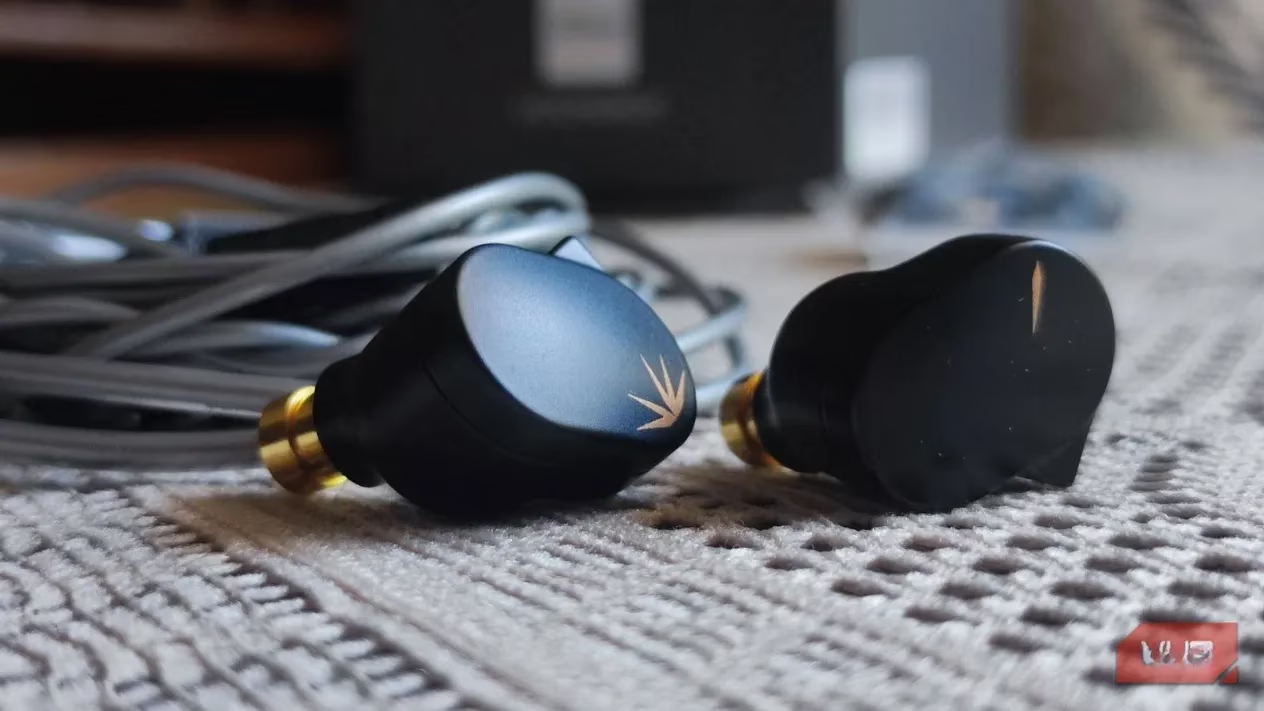
The heart of the TWS dilemma beats—and eventually fails—with its lithium-ion core. From the most affordable knockoffs to the premium, noise-cancelling titans, they all march toward the same fate. It's a matter of physics, not malice. These minuscule power cells, whether Li-ion or LiPo, are exceptionally vulnerable to the heat of daily charging cycles.
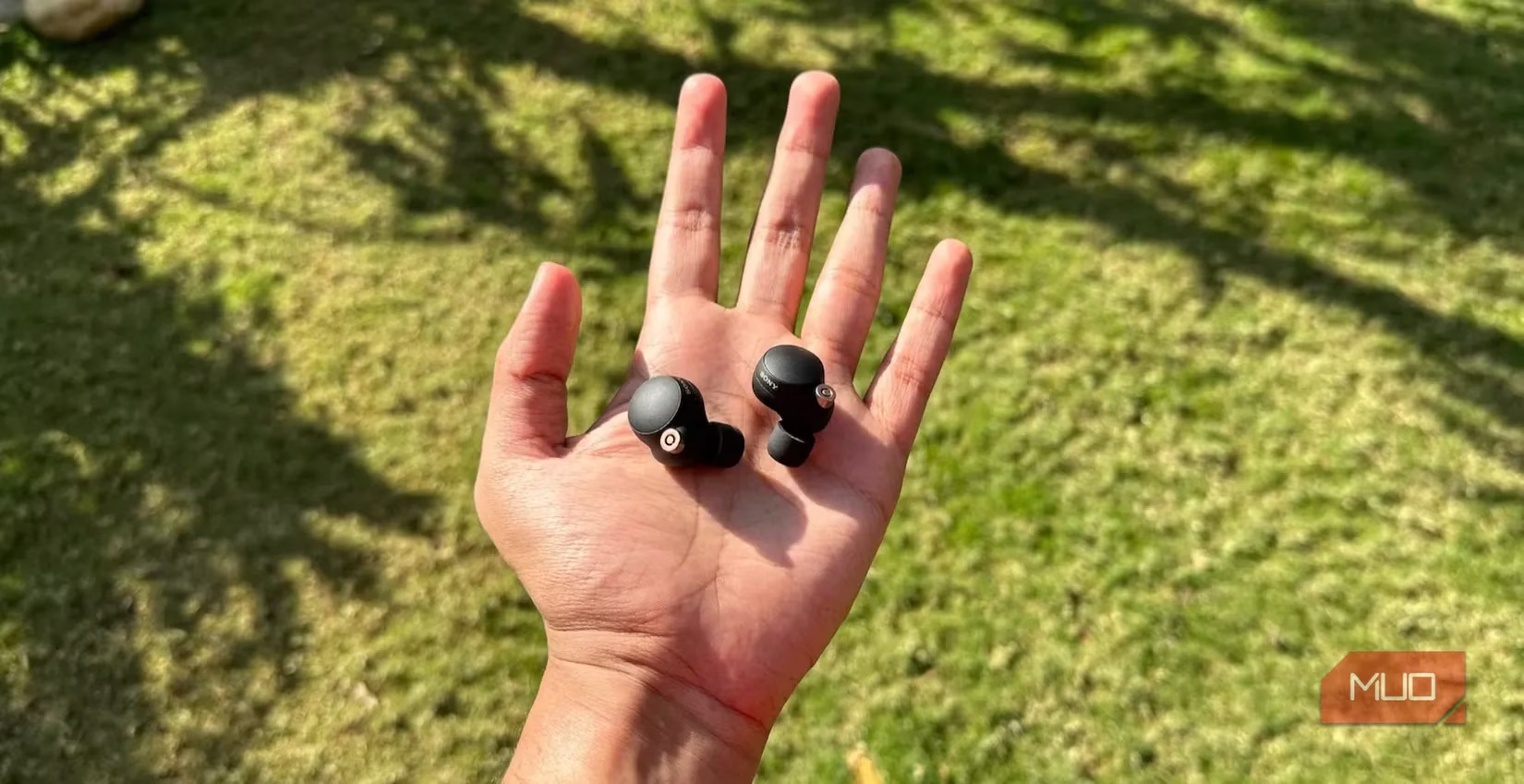
A high-quality battery might promise up to 500 full charge cycles before its capacity dwindles to 80%. For a smartphone, with its large battery, hitting that limit can take years. For TWS earbuds, with their tiny reservoirs, daily or even multiple daily charges in their case are the norm. They can hit their cycle limit in under a year, transforming a premium purchase into a piece of e-waste. And unlike some laptops or phones, most buds are hermetically sealed for water resistance, rendering battery replacement a near-impossible task. It's the ultimate throwaway culture in audio.
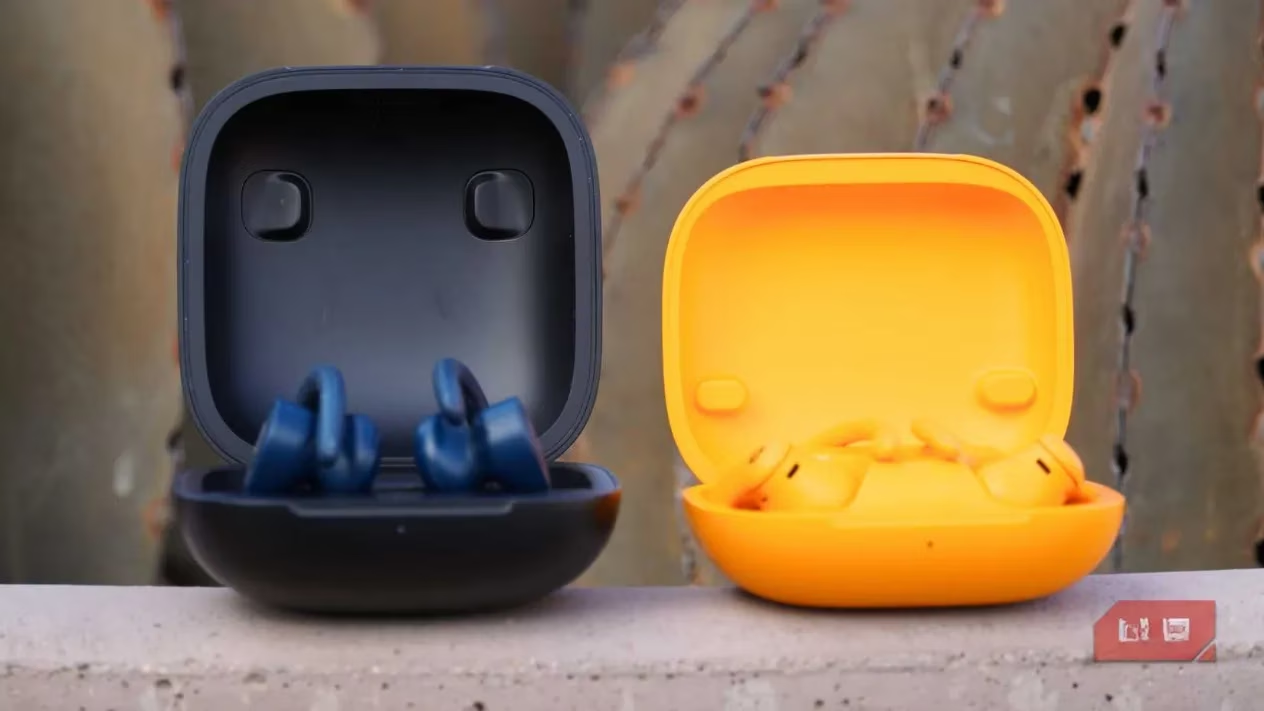
| Device Type | Battery Size/Charging | Typical Time to 500 Cycles | User Endgame |
|---|---|---|---|
| TWS Earbuds | Tiny, charges daily in case | < 1 Year | E-waste / Landfill |
| Wired IEMs | None (draws power from source) | N/A | Decades of use |
| Smartphone | Large, charges every 1-2 days | 1.5 - 3 Years | Often user-replaceable |
⏱️ The Ghost in the Machine: Latency & The Lossy Chain
Beyond the battery, there's the ghost of latency—the silent killer of immersion. Bluetooth, for all its wireless wonders, is a protocol of compromise. Your audio is compressed, packetized, flung through the air, and reassembled by a chip smaller than a fingernail. Even with advanced codecs like LDAC or aptX Adaptive, the transmission is inherently lossy. For casual listening, it's close enough for jazz. But for the gamer needing split-second audio cues or the video editor making frame-perfect cuts, those milliseconds of delay are the difference between victory and defeat, a perfect cut and a jarring one.
Enter the humble wired IEM (In-Ear Monitor). Its connection is a simple, elegant, analog loop. You plug it in, and it becomes a direct, zero-latency extension of your device's audio system. No compression, no packets, no reassembly. Just pure, unadulterated signal.
🚀 The Chi-Fi Revolution: Quality That Embarrasses the Mainstream
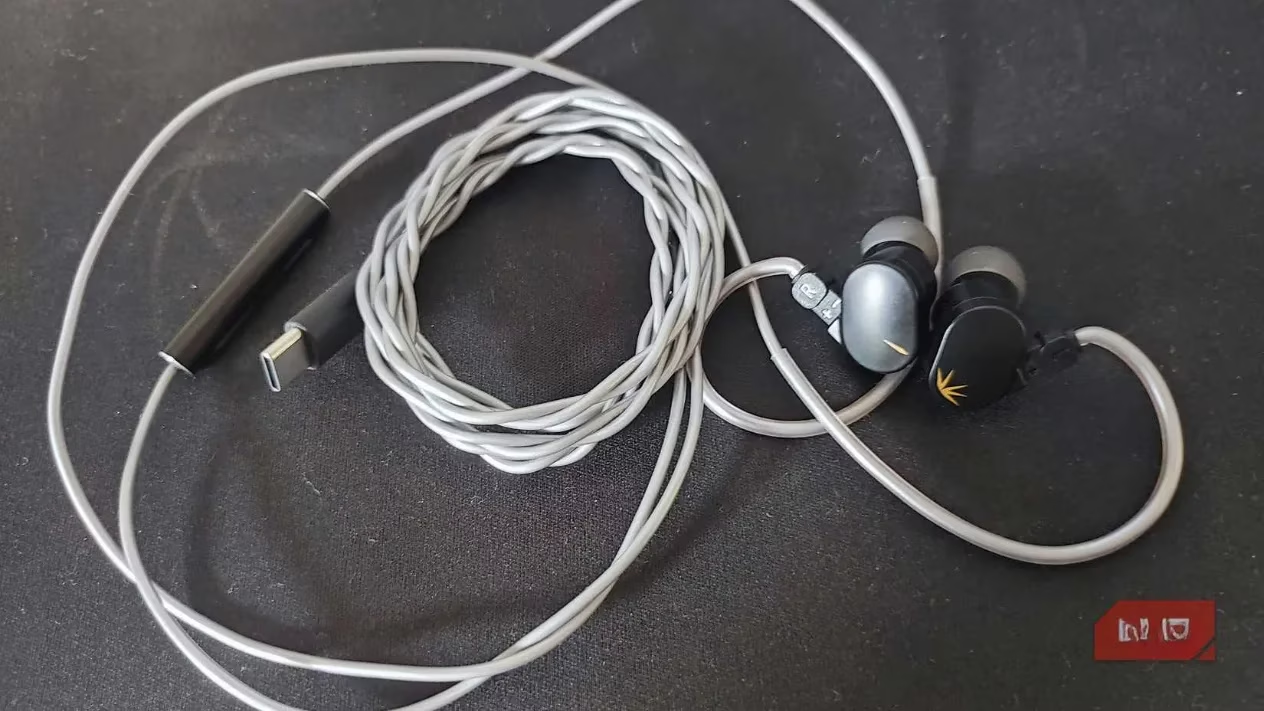
While the mainstream was chasing the dragon of noise cancellation, a seismic shift occurred in the audio underworld: the Chi-Fi (Chinese Hi-Fi) revolution. Brands like Moondrop, 7Hz, and Tangzu began producing budget IEMs that deliver sound quality so superior, it puts $250 wireless flagships to shame.
Why? The economics are brutally simple. A $20 Chi-Fi IEM invests your money where it counts: into high-quality dynamic or planar magnetic drivers tuned to revered frequency targets like the Harman curve. There's no budget siphoned off for Bluetooth licensing, battery packs, ANC processors, or glitzy marketing campaigns. The result is audiophile-grade sound for the price of a pizza. A pair purchased today will sing the same pristine tune in 2036, a timeless artifact in a world of digital decay.
⚖️ The Trade-Offs: Freedom vs. Fidelity, ANC vs. Anxiety
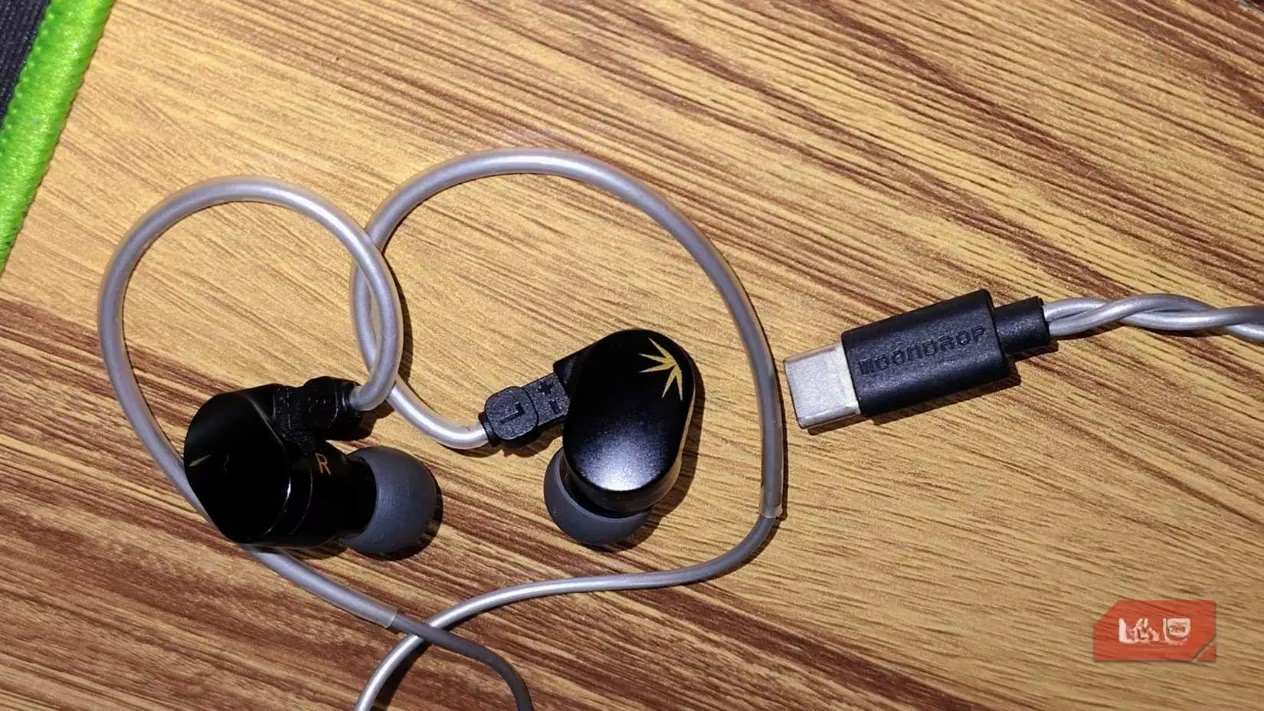
Of course, the IEM path isn't all sunshine and lossless rainbows. The very lack of a battery is both its greatest strength and its most tangible weakness. You are tethered, bound by the cable. For the runner or the weightlifter, that cable is a potential Achilles' heel. Your phone must remain in your pocket, a constant companion.
And then there's the siren song of Active Noise Cancellation (ANC). While IEMs offer excellent passive isolation, they cannot digitally generate that wave of "anti-noise" that silences a roaring bus or a chattering cafe. For many, this feature is non-negotiable, the killer app that justifies the TWS subscription model.
🧘 Finding Harmony in a Wireless World
So, where does that leave the modern listener in 2026? In a place of intentional choice. One can adapt the IEM lifestyle—routing the cable under a shirt, upgrading to memory foam tips for better isolation, and embracing the profound peace of mind that comes from never checking a battery level. The perspective shifts: wired is no longer retro; it's reliable, sustainable, and sonically superior.
For others, the true freedom of a cable-free workout or the digital silence of ANC will always win. But now, the choice is made with eyes wide open, understanding the long-term cost of that convenience. The drawer of technological doom need not grow. In the eternal echo between the disposable dream of wireless and the enduring fidelity of the wire, there is, at last, a clear signal amidst the noise. The future of personal audio isn't just about cutting cords; it's about cutting through the hype to find what truly lasts.