
Revisiting the 2000s: Four Sci-Fi Films That Still Feel Prophetic in 2026
Early 2000s sci-fi movies like Pitch Black and Children of Men still resonate in 2026, offering sharp social commentary and enduring tension.
Science fiction has always been my escape hatch. It’s the genre that lets my imagination wander while whispering uncomfortable truths about the present. These days, streaming platforms are drowning us in shiny new sci-fi—some brilliant, most forgettable—but I often find myself scrolling past them all and landing on the films that shaped me. I’m talking about the early to mid‑2000s, an era not exactly celebrated for timeless style. Yet, a handful of movies from that period have refused to age. They’ve clung to my brain and, if anything, gained new weight in 2026.
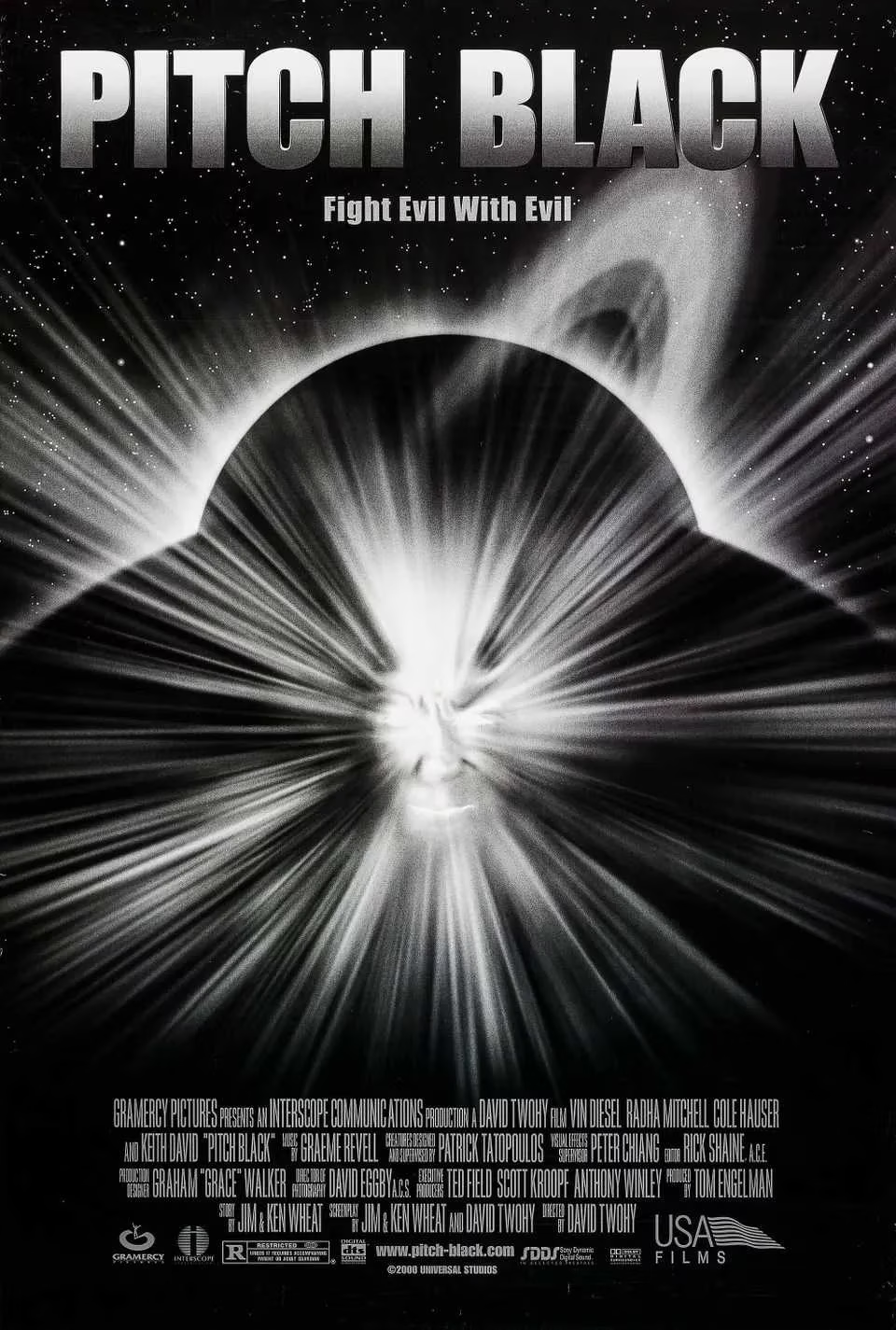
I first encountered Pitch Black at a sleepover in 2001, back when DVD menus still felt like portals. My friend’s older brother warned us it was “proper scary,” and he wasn’t wrong. The film drops you onto a desert planet about to be plunged into total darkness—a darkness that awakens swarms of razor‑toothed creatures who see via echolocation. What remains so effective is how the darkness itself becomes a character, an oppressive blanket that turns every flickering light into a lifeline. Vin Diesel’s Riddick is a perfect anti‑hero: a convicted murderer with surgically altered night vision who becomes the group’s best hope. It’s a role Diesel has returned to repeatedly, and you can feel how much he loves the character. I rewatched it last month with my teenage nephew, and the practical creature effects still made him flinch. The film’s tension doesn’t rely on jump scares; it builds through character logic. When people die, it’s usually because they made a very human mistake. That intelligence is rare in sci‑fi horror, and it’s why I keep coming back.
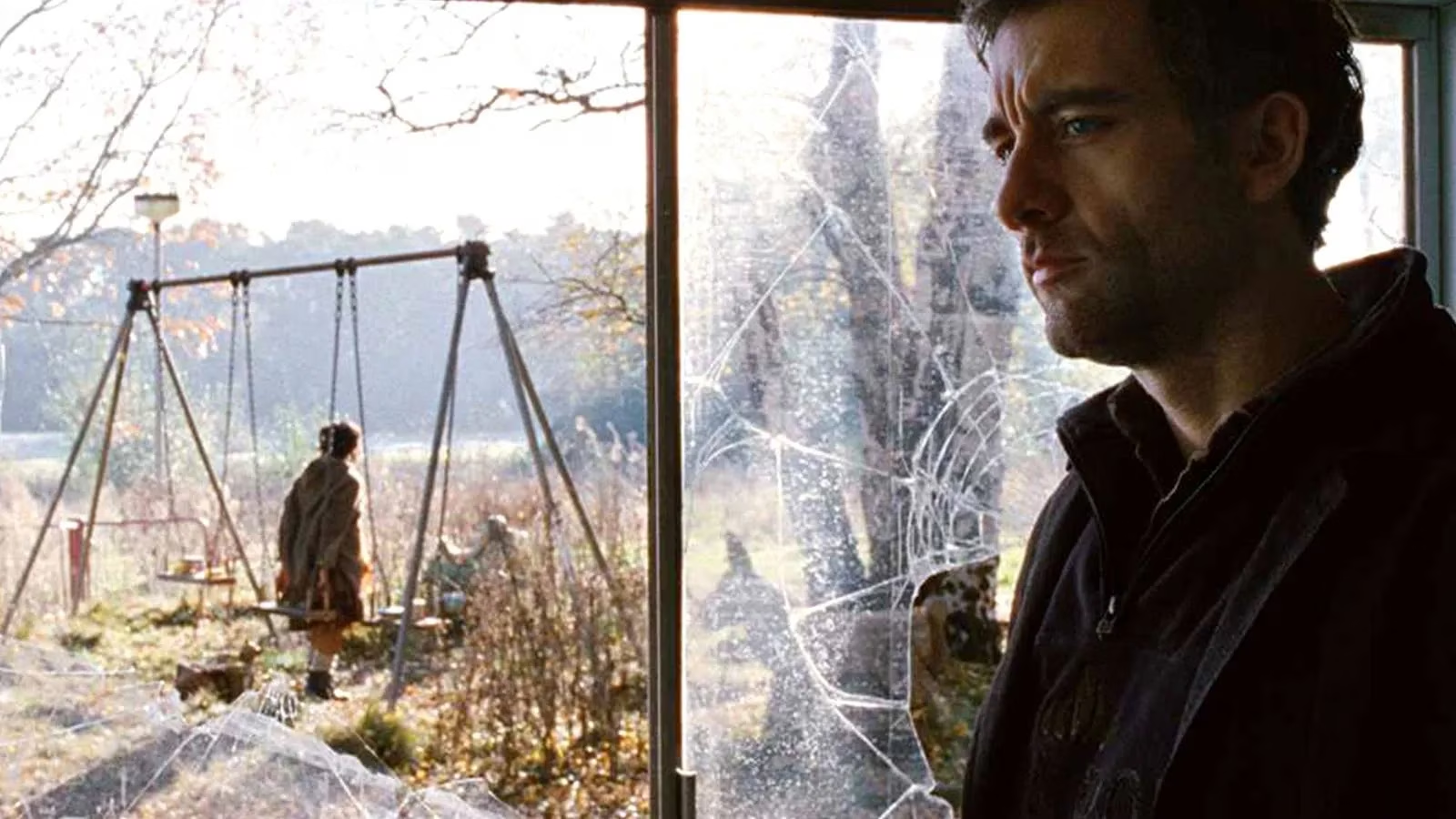
Then there’s Children of Men, which I caught in a half‑empty theatre during its original run. I was seventeen, and it rearranged something inside me. Alfonso Cuarón’s vision of 2027—a world where humans have become infertile and society is collapsing—felt like a warning. Now, living in 2026, that warning rings louder. The film’s famous one‑shot sequences are technical marvels, but they never feel like gimmicks. The car ambush, the staggering escape from a refugee camp: these are scenes imprinted on my brain. Clive Owen plays Theo with such bone‑deep exhaustion that you forget he’s acting. And Clare‑Hope Ashitey’s Kee, the pregnant woman who represents hope, carries the entire film’s thematic weight on her shoulders. I still get emotional thinking about the moment the crying baby silences the gunfire. Cuarón refuses to offer a tidy resolution, and that honesty feels more relevant than ever. In 2026, as headlines are filled with displacement and environmental anxiety, Children of Men doesn’t just hold up—it hurts.
If Cuarón’s film is a lament, District 9 is a punch to the gut. Neill Blomkamp’s debut arrived in 2009 and immediately felt like a classic. It imagines a world where an alien ship stalls over Johannesburg, and its insectoid passengers are herded into a slum called District 9. The aliens—derisively nicknamed “prawns”—are treated with casual brutality by humans, and the film’s documentary style makes the racism painfully literal. Sharlto Copley’s Wikus van de Merwe starts as a bumbling bureaucrat and transforms into something genuinely tragic as his body begins to turn alien. I rewatched it in 2024 during a period of intense immigration debate, and the allegory was so blunt it made my stomach churn. Blomkamp never recaptured this lightning, but that’s okay. District 9 remains a time capsule of post‑apartheid anxiety and a mirror to any society that “others” those seeking refuge. Its visual effects, shot on a shoestring, still look better than most modern blockbusters because they are grounded in grimy reality.

Then, just to prove the 2000s could do heartwarming without losing bite, there’s WALL‑E. Pixar took a monumental risk with a protagonist who barely speaks, and it paid off in ways the studio has rarely matched since. Set on an Earth buried in trash, the film follows a lonely garbage‑compacting robot who falls in love with a sleek probe named EVE. Their wordless courtship is pure cinema—Charlie Chaplin by way of a trash cube. When WALL‑E clings to the outside of a spaceship and sails through a starfield, I still tear up. The film’s vision of humans as boneless screen‑addicts in hover chairs was satire in 2008; in 2026, it’s practically a documentary. I showed it to my daughter last year, and she spent the next week trying to recycle everything in sight. That’s the power of great sci‑fi: it entertains you while rewiring your values.

Revisiting these four films in 2026 isn’t just a nostalgia trip. It’s a reminder that the best science fiction doesn’t predict the future—it dissects the present. Pitch Black forces us to see clearly in the dark, Children of Men asks what we’d do if hope were extinct, District 9 confronts our ugliest impulses, and WALL‑E shows that love can survive even when we’ve ruined everything. They were made over twenty years ago, yet they feel more urgent than half the stuff I watch on opening weekend. That’s a rare, beautiful thing. And it’s why I’ll keep returning to them, every time the real world gets a little too dystopian.