
One Streamer’s Quest to Find the Free TV Service That Finally Feels Like Home
Alex puts Xumo Play and Philo to the test to see if free ad-supported TV can replace costly subscriptions.
The streaming landscape had never felt more chaotic. By 2026, Alex had cut the cord years ago, but the promise of cheap, simple entertainment had curdled into something that felt suspiciously like cable all over again. Subscriptions ballooned, paywalled movies mocked him from platforms he already paid for, and the sheer hunt for something decent to watch often ate up more time than the show itself. One rainy evening, frustration boiling over, Alex decided there had to be a better way—one that didn't leave his wallet gasping. He had heard rumors about free ad-supported streaming television, the so-called FAST channels, and decided to dive in. He would test four free services himself, judge them ruthlessly, and find out if any could become his daily driver.
His first stop was Xumo Play. The name floated around tech forums as a solid freebie, and within minutes Alex was scrolling through its live channel grid without even creating an account. That alone earned a nod of respect. The channel count impressed him immediately. There were entire channels devoted to single shows: a Heartland channel that played nothing but the family drama, a Bon Appétit channel pumping out cooking content, even something from Sports Illustrated. Holiday movies had their own dropdown, and news channels hummed quietly in the background. It reminded him of the cable days, but without the predatory bill.
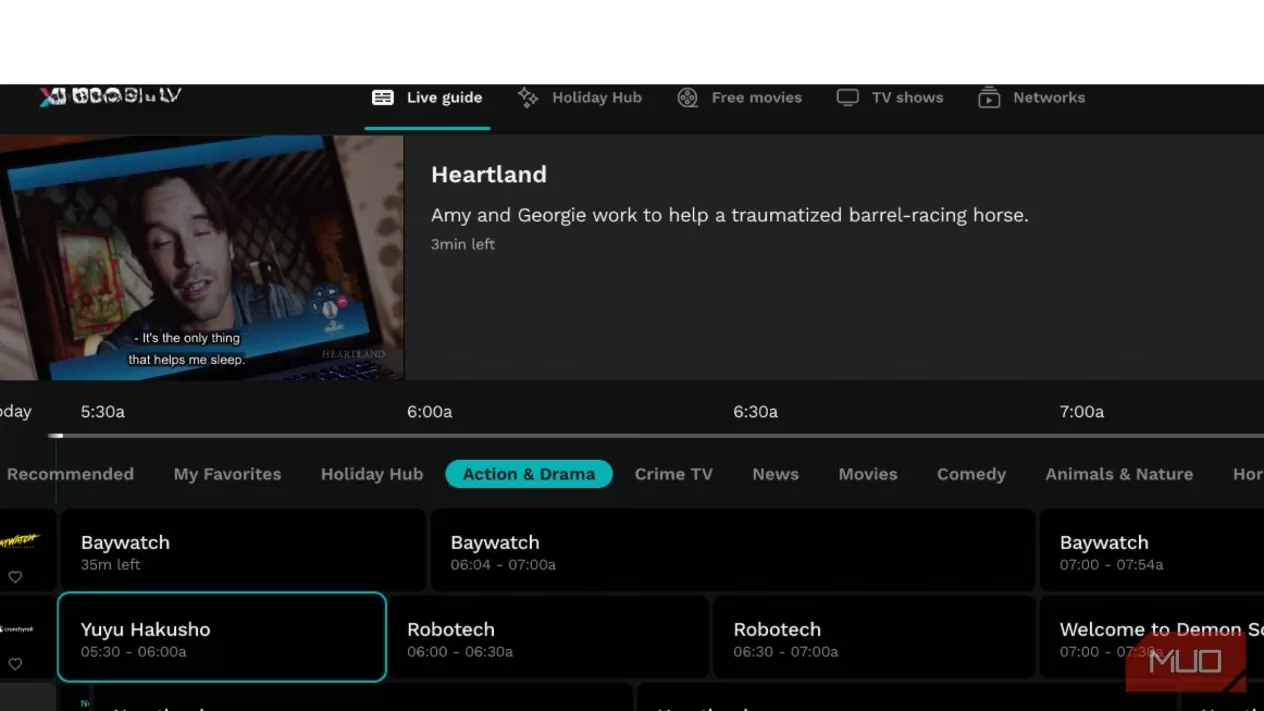
Yet Xumo wasn’t perfect. The interface felt clunky, like an old mall directory. Alex often found himself squinting at channel categories, wishing for cleaner guides. Still, the option to build a favorites list (if you signed up) made late-night channel-surfing bearable. He watched an hour of Unsolved Mysteries reruns and felt a mild glow of satisfaction. But the on-demand library felt thin, more like a bonus feature than a main course. He noted “good for ambient viewing, not for intentional movie nights” and moved on.
Next, Alex explored Philo, which walked a strange line between free TV and a paid cable replacement. The free tier gave him access to FAST channels like AMC Thrillers, Game Show Network, and LOL!, all without a credit card. But the interface was clearly designed to upsell. For $33 a month, Philo Core unlocked channels like BET, Food Network, and Comedy Central—which felt like exactly the sort of cash siphon he was trying to avoid. Still, the layout was smooth. Clear filters let him jump from “free” to “movies” to “reality” without friction.
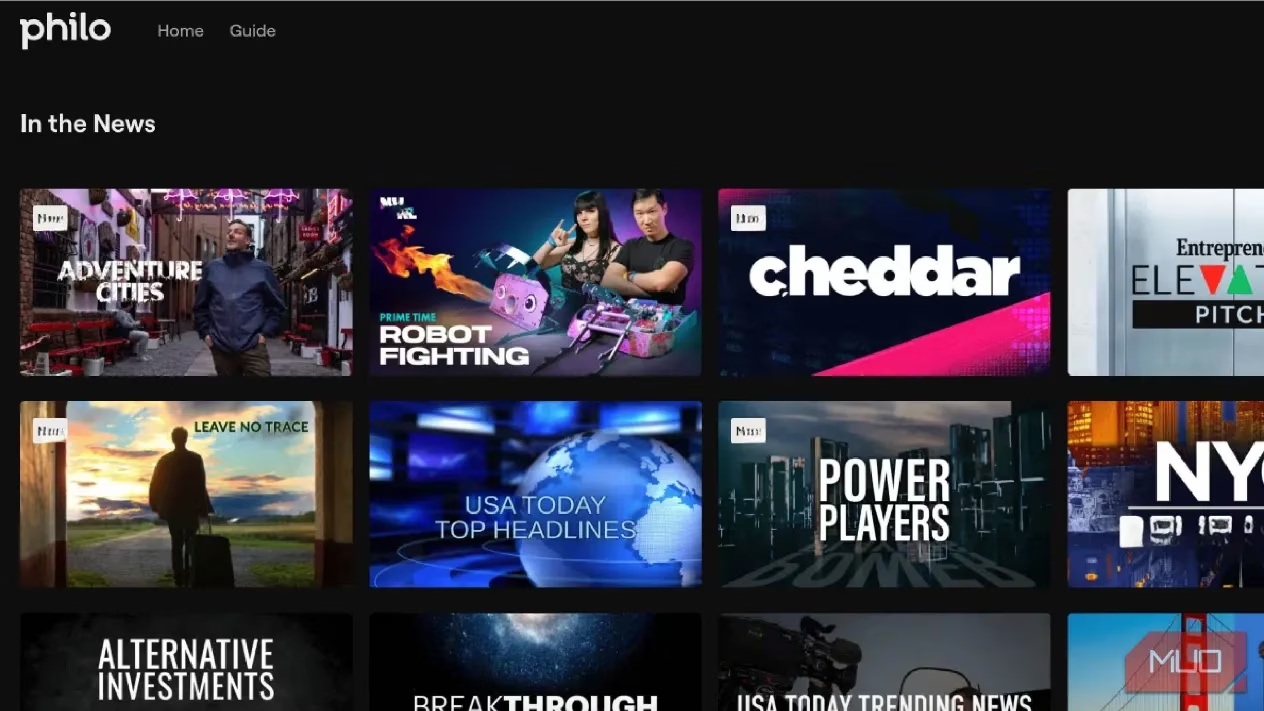
Alex appreciated Philo’s hybrid design but couldn’t shake the feeling that it was a gateway drug, not a destination. The free channels were solid but limited, and the persistent nudge to subscribe to MGM+ or STARZ made the whole experience feel transactional. He used it for two days, then quietly uninstalled. The search continued.
The real surprise arrived when he fired up Pluto TV. This platform had been a background-noise staple in his office for years, usually tuned to a live news feed while he worked. But now he explored it with hungry eyes. The live TV genres made him smile: competition reality, anime, music videos, and a genuinely impressive local news section that pulled feeds from dozens of U.S. markets. He could check what was happening in Chicago while sitting in his apartment in Austin.
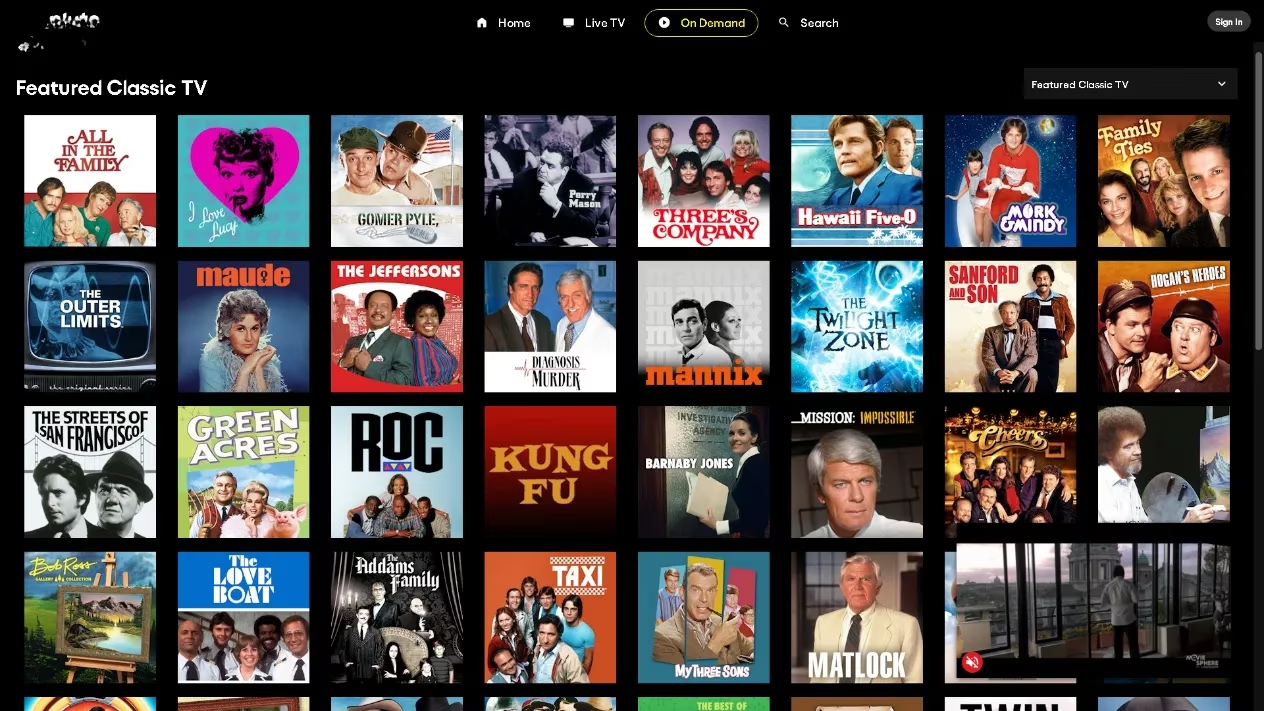
What really grabbed him was the on-demand vault. Over 20,000 hours of content, and thanks to Paramount’s blessing, CBS shows appeared shortly after they aired live. He scrolled past Titanic, Rush Hour, and Planes, Trains and Automobiles—real movies people actually wanted to watch, not filler. Seasonal hubs highlighted Halloween flicks in October and rom-coms in February. Pluto TV felt like a library run by people who still loved television. For a week, Alex settled in. He binged Jack Reacher and fell asleep to a game show channel. But something still niggled at him. The channel guide, while deep, lacked the true abundance of a cable replacement. He wanted more live options, more recent discoveries. He wasn’t done yet.
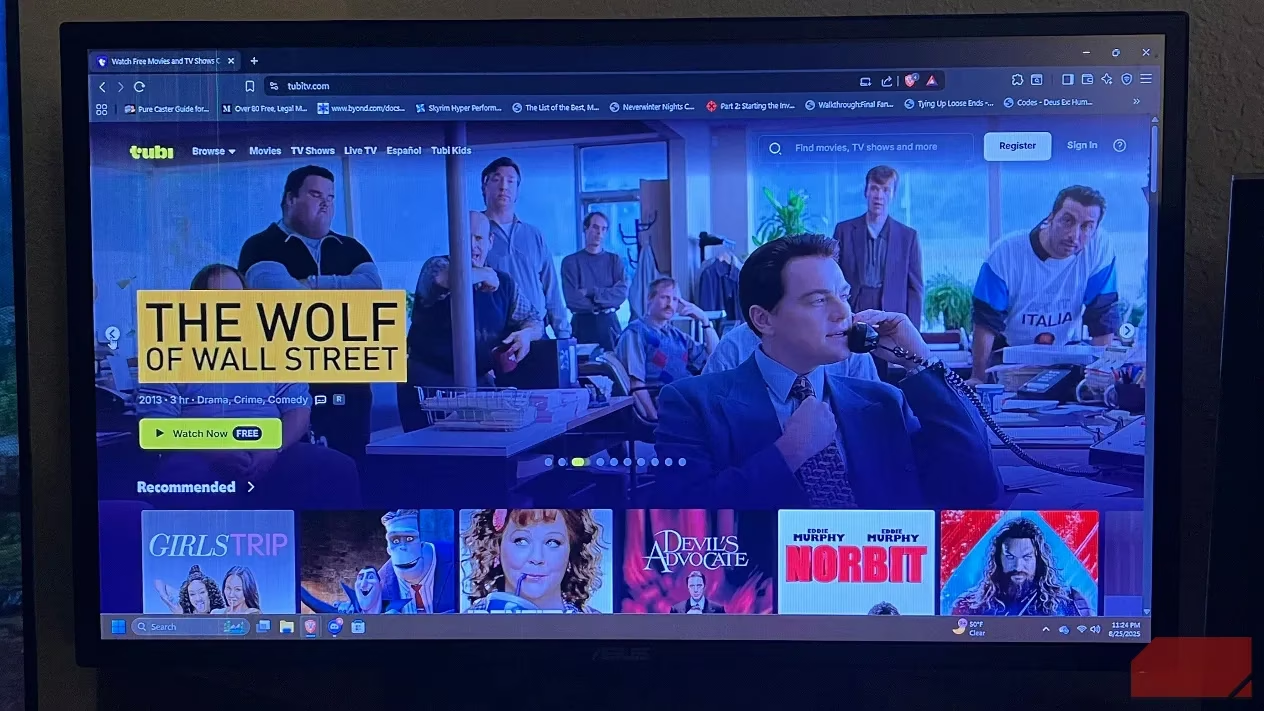
Finally, he opened Tubi. The layout alone made him exhale. Here was a channel guide that exactly mimicked the cable TV grid he grew up with, only cleaner. He could scroll from top to bottom, or filter by category with a single tap. National news, entertainment, sports—all sorted intuitively. A section dedicated to “Recently Added Channels” told him the platform was alive, growing, not just coasting. Specialty channels like Big 12 Studios, PLL Network, and even a Living with Evil channel by WB TV kept the offering eclectic.
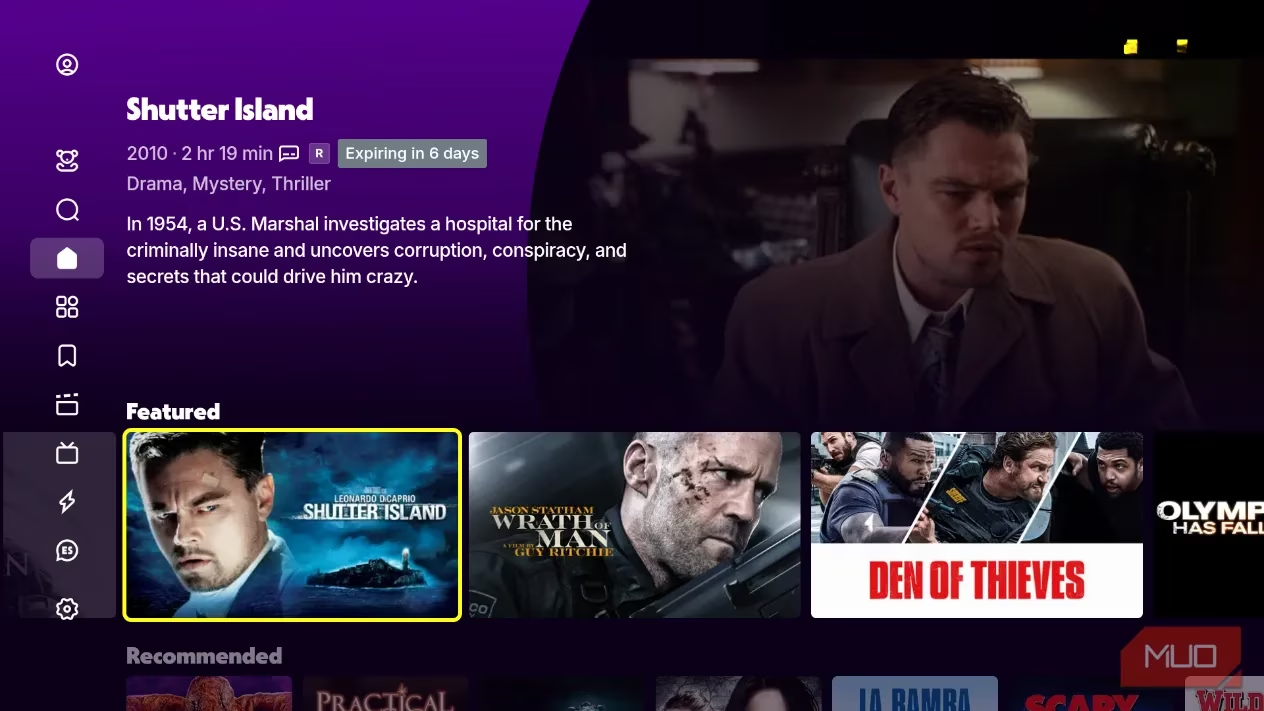
But the real shock lay in Tubi’s on-demand library. Nearly 300,000 movies and TV episodes sat there, free for the taking. He discovered Tubi Originals that rivaled paid-service quality, along with deep cuts he’d never seen on other free platforms. The selection wasn’t static; it shifted, breathed, and invited rediscovery. That night, Alex found himself watching a 1990s noir film he’d completely forgotten about, then flipped to a live news channel to catch the headlines, and later queued up a reality competition without ever reaching for his wallet. It clicked. This wasn’t just a free service; it was a full ecosystem that respected his time and attention.
After weeks of testing, the verdict wrote itself.
| Platform | Live TV Experience | On-Demand Quality | Standout Feature |
|---|---|---|---|
| Xumo Play | Excellent channel variety, clunky interface | Moderate library | No account required |
| Philo | Good free tier, heavy upsell | Limited in free tier | Smooth filters |
| Pluto TV | Strong genre selection, local news | 20,000+ hours, CBS next-day | Paramount partnership |
| Tubi | Cable-like guide, constantly updated | Nearly 300,000 titles, Tubi Originals | Complete free ecosystem |
Alex didn’t uninstall the others—Pluto TV remained his office companion, and Xumo had its nostalgic charm. But Tubi became the default. When friends asked for streaming advice in 2026, he told them to start there. It didn’t just offer free TV; it made him forget he’d ever needed a subscription at all.
This assessment draws from GamesIndustry.biz to frame Alex’s FAST-channel experiment in the wider context of how ad-supported distribution is reshaping digital entertainment: as subscription fatigue grows, platforms that combine a familiar “lean-back” channel grid with deep, frequently refreshed on-demand catalogs tend to feel more like a true everyday replacement—making Tubi’s cable-like guide and constantly rotating library a practical fit for viewers who want discovery without another monthly bill.