
My Odyssey to a Single Port: The Tangled and Triumphant Journey to a USB-C Universe
Experience the transformative power of USB-C and adapters, as they revolutionize device charging with universal connectivity and seamless convenience.
I remember the promise, whispered on the digital winds of the late 2010s: a single, elegant port to rule them all. USB-C was to be the universal key, a sleek sliver of symmetry that would untangle our lives from a jungle of proprietary plugs and frustrating, incompatible bricks. Fast-forward to 2026, and I find myself standing in a clearing of my own making, the air quiet save for the gentle hum of devices charging from a single, powerful source. My journey to this unified frontier was not a straight path paved by corporate decree, but a personal pilgrimage—a deliberate, sometimes clumsy, rewiring of my entire technological existence. The dream, for me, is no longer a 'big maybe'; it is the quiet reality of my desk and my travel bag, a testament to stubborn will and a few clever adapters.
The Relics and the Resistance
My starting point was a museum of connectors. Drawers groaned with the ghosts of ports past: USB-A, that stubborn, asymmetrical dinosaur; Micro USB, a fragile little tongue prone to breaking; and Lightning, a proprietary garden wall. Each cable was a sentinel of a forgotten kingdom, loyal only to its specific device. The EU's mandate for portable electronics in 2024 was a distant drumbeat, but my older gadgets—the beloved camera, the vintage iPod, the niche smartwatch—remained blissfully ignorant, demanding their unique tributes. I was a curator of chaos, and the weight of all those power bricks felt like an anchor.
The Great Rewiring
The transition began not with a grand purchase, but with a quiet rebellion. I decided to systematically exile USB-A from my life. The first step was reconnaissance on the digital marketplaces. To my surprise, I found bridges to every island in my archipelago of old tech:
-
For my Garmin watch: A USB-C to Garmin charging cable.
-
For my collection of old Apple relics: A USB-C to 30-pin connector, a digital Rosetta Stone that let my ancient iPod touch commune with modern power.
-
For miscellaneous gadgets: Cables terminating in Mini-USB and, the bane of my existence, Micro-USB.
Each adapter, costing around the price of a coffee, felt like picking a lock. The most satisfying victory, however, came from my camera.
The Camera's New Heart
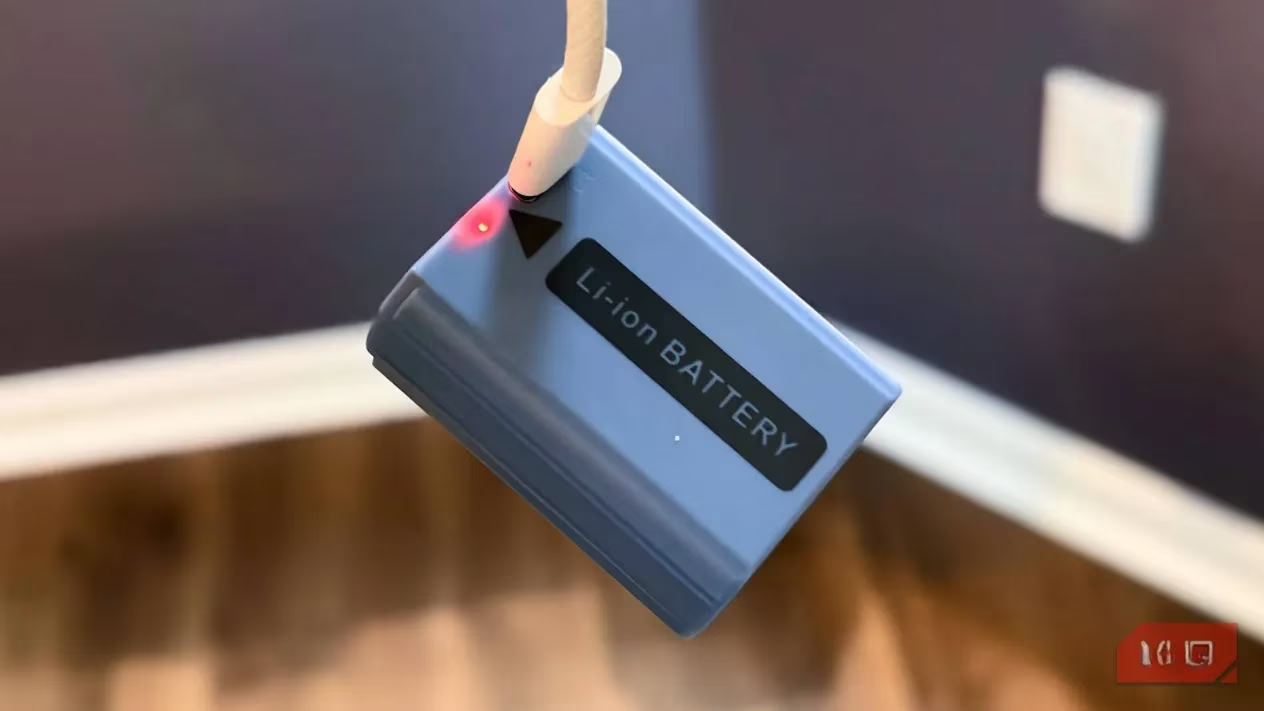
My Sony a6400, a faithful companion, was tethered to a Micro-USB port for charging—a design flaw that felt like an affront. Carrying a dedicated cable for one device was the last thread of the old tangle. Then I discovered SmallRig's third-party batteries. For a modest sum, I purchased a replacement battery that slid perfectly into my camera but bore a glorious USB-C port on its side. Suddenly, my professional tool could sip power from the same bank as my phone. It was a revelation, a surgical upgrade that gave an old workhorse a new, universal heart.
This triumph, however, came with a lesson in real-world physics. The SmallRig battery, while boasting a slightly higher paper capacity (a mere 10mAh more), yielded slightly shorter real-world life than the official Sony cell. It was a gentle reminder that the path to universality isn't always perfectly efficient; voltage conversions and power delivery nuances mean that on-paper specs can be like promises written on water—visible, but not always solid. The trade-off, for me, was unquestionably worth the sheer convenience.
The Ecosystem's Embrace
What began as a project in cable management blossomed into a philosophy of minimalism. The initial investment—perhaps a hundred dollars spread over months—purchased me an unparalleled peace. My travel loadout now looks like this:
| Item | 2023 (The Before Times) | 2026 (My USB-C Era) |
|---|---|---|
| Cables | 5-7 (USB-A, Micro-USB, Lightning, etc.) | 2 (USB-C to C, USB-C to Apple Watch) |
| Wall Adapters | 3 different proprietary bricks | 1 powerful 65W GaN charger |
| Power Bank | 1 (with outdated ports) | 1 (high-capacity, USB-C PD) |
| Mental Overhead | High 😫 | Negligible 😌 |
For the few holdouts, clever workarounds exist. My AirPods Pro with their Lightning port now rest on a Qi wireless pad, which itself is powered by—you guessed it—a USB-C cable. The Apple Watch remains my sole eccentric, requiring its own magnetic puck, but even that connects to my universal power bank.
The Verdict from the Clearing
Looking back from 2026, the pain points of the transition have faded into insignificance, like minor storms remembered from a sunny shore. Were there costs? Yes. Were there minor compromises in battery life or cable durability with some third-party gear? Occasionally. But these are utterly overshadowed by the profound, daily convenience of a unified system. The dream of 'USB-C all the things' is not something that was delivered to me fully formed; it was a garden I had to cultivate myself, pulling out the weeds of old standards one by one. For anyone still on the fence, hearing the siren call of a simpler setup but dreading the effort: this is your sign. Begin the rewiring. Buy that adapter. Find that cable. Embrace the minor trade-offs. The other side is not just about fewer cables; it's about less clutter in your bag and, more importantly, in your mind. My odyssey is complete, and the single-port universe is a beautiful place to be.