
My ChatGPT Weekly Planning Experiment: Outsourcing Laziness to AI
Discover how integrating ChatGPT into weekly planning transforms chaos into clarity, boosting productivity with simple, effective strategies tailored for real life.
Weekly planning always felt like that annoying chore I'd put off forever—you know, like flossing. It sounded great in theory, but my lazy side always won out. I'd feel guilty as the week flew by, but then I realized it wasn't my fault. The problem was the system, or rather, the lack of one. Most time management tips assume you're some disciplined monk, but I'm not. I needed something simple, so I turned to ChatGPT in 2025 to outsource all the boring bits. It's been a game-changer, and I'm here to share my messy, imperfect journey. 😅
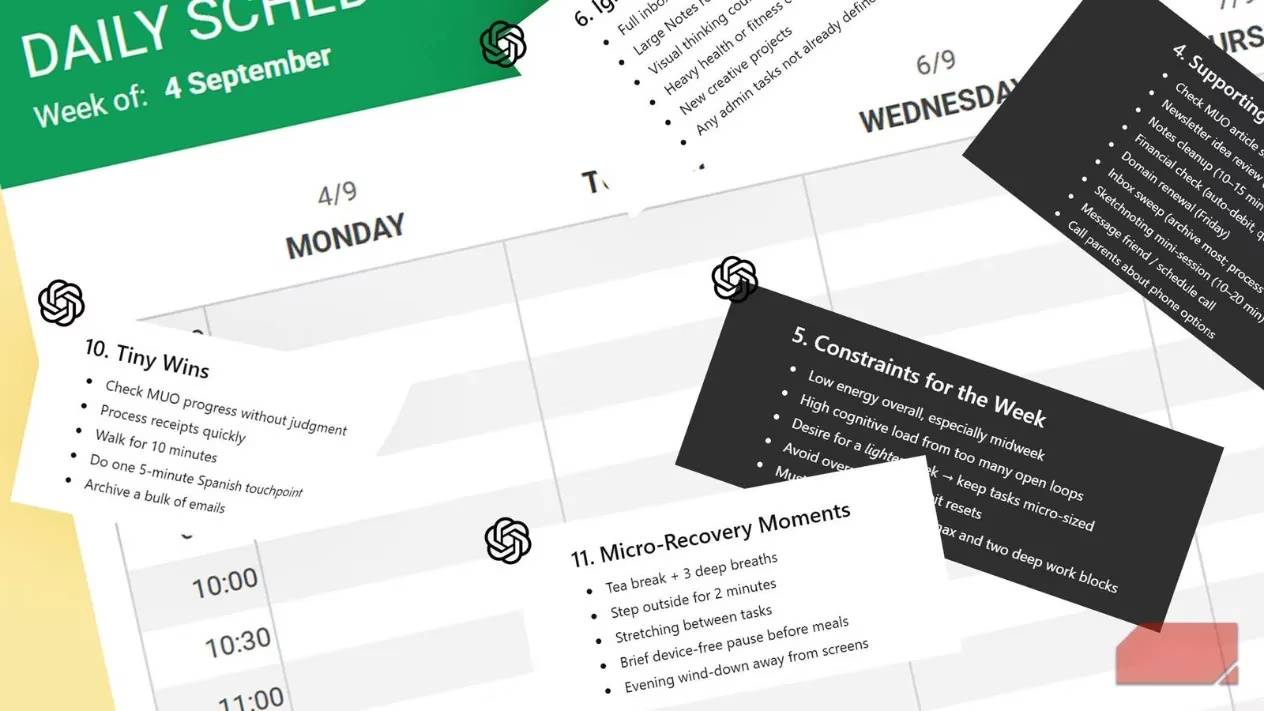
First off, I ditched the idea of dumping random thoughts into scattered chats. Instead, I created a dedicated "Weekly Planning Project" inside ChatGPT. This became my digital core, a place to store everything without repeating myself. Think of it as a brain dump hub for:
-
Long-term goals: Stuff like writing that novel or learning Spanish.
-
Recurring tasks: Daily workouts or weekly team meetings.
-
Energy highs and lows: I track when I'm buzzing vs. crashing, like a self-audit diary.
-
Weekly templates: Pre-made structures to keep things consistent.
-
Forgotten items: All those little things I tend to overlook.
I enabled the project-only memory setting to keep ChatGPT focused, though it sometimes leaks—nothing's perfect! By treating this as a "project," ChatGPT learns my patterns over weeks. It builds on successes and failures, so I don't have to re-explain everything. This shift alone cut my mental clutter big time. But to make it work, I had to bake in some no-nonsense guidelines. I'm no productivity machine, so I set boundaries based on my real-life ebb and flow. Reflecting on past weeks helped me spot my limits, like how Wednesday and Friday are total low-energy days for me. Here's my core blueprint, inspired by my own chaos:
-
Three weekly outcomes only: Keeps things focused, not overwhelming.
-
Max three tasks per day: Prevents burnout and overcommitment.
-
Only two deep work blocks per week: Because intense focus drains me fast.
-
Wednesday and Friday = low-energy days: Light tasks only, like emails or quick chores.
-
Weekend plans must stay light: No heavy lifting; it's for recovery or fun.
-
Non-negotiables: Health, writing, learning, and relationships—these are sacred.
-
Consistency over intensity: Small wins beat grand plans that fizzle out.
To keep ChatGPT's outputs on track, I defined a strict structure. The goal? Keep planning under ten minutes. I added extras like an "Ignore List" for distractions, "Habits for the Week," "Anticipated Obstacles + Solutions," and "Micro-recovery Moments." If it got too info-heavy, I'd tweak it down. All this went into a PDF document—my life's cheat sheet—uploaded to ChatGPT. This way, the bot has a reference without me yapping every morning.

The PDF includes sections like a "Life Goals Master List" covering pillars like health, creativity, learning, relationships, and long-term projects. Plus, a "Weekly Planning Template" acts as the blueprint for consistent outputs. It's dead simple: upload once, and ChatGPT uses it to fill out plans. This setup ensures the "10-minute" promise isn't a lie—I don't have to rehash details. Every Sunday, I kick things off in a new chat within the project. I start with two inputs: a brain dump of my messy thoughts and my constraints for the week. Then, I run a prompt like, "Hey ChatGPT, summarize this chaos and give me a Mon–Sun plan."
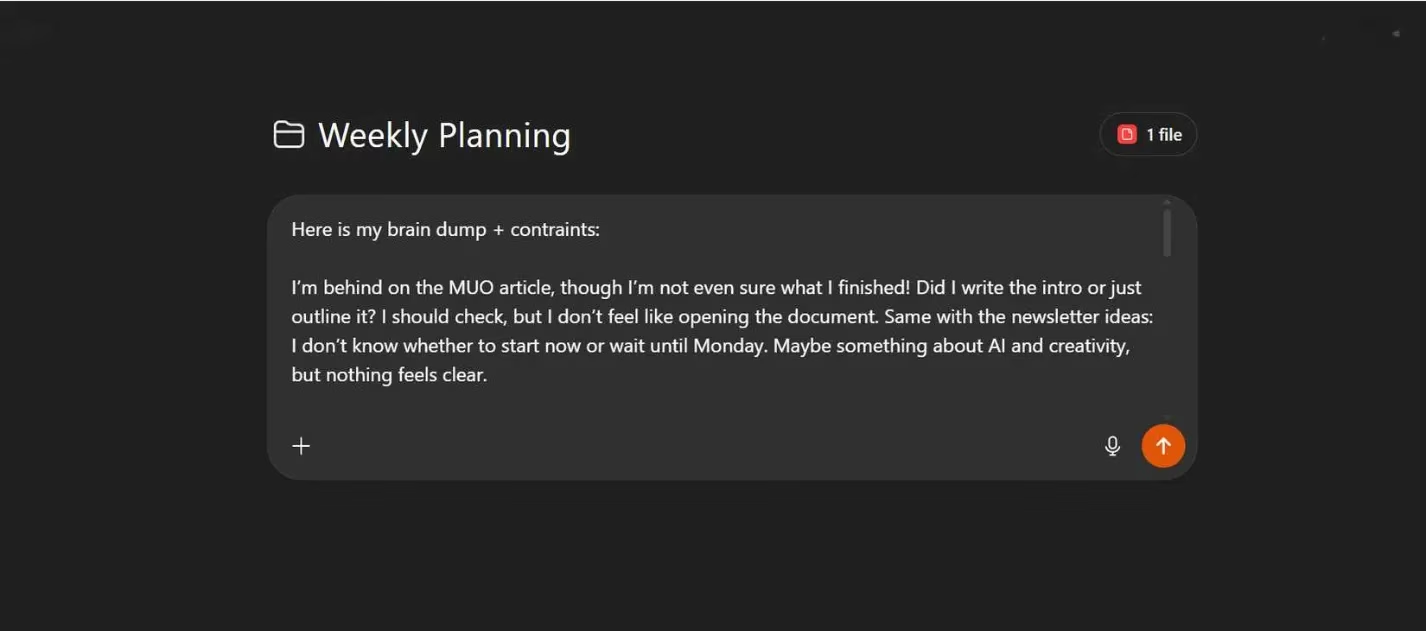
The brain dump is pure free writing—rambling, unstructured, sometimes nonsense. I'm stress-testing it to catch hallucinations or errors. ChatGPT then summarizes it, spots themes, and spits out a clean weekly schedule in under a minute. Here's a snapshot of what it looks like:
| Day | Tasks | Energy Level |
|---|---|---|
| Monday | Deep work on writing project, gym session | High |
| Tuesday | Learning Spanish, team meeting | Medium |
| Wednesday | Light emails, short walk (low-energy day) | Low |
| Thursday | Creative brainstorming, catch-up calls | Medium |
| Friday | Admin tasks, relax (low-energy day) | Low |
| Weekend | Family time, hobby project—keep it breezy! | Recovery |
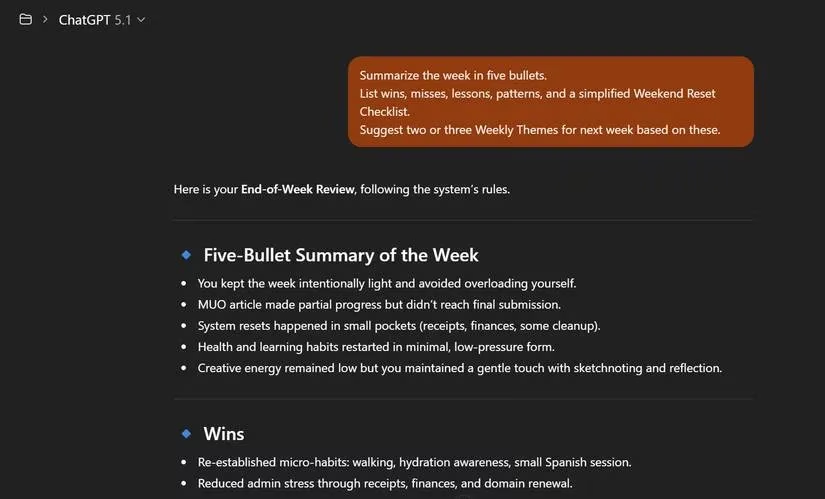
But hey, no plan survives real life unscathed. That's why I added a midweek reset prompt for Wednesdays or Thursdays. It spots dropped tasks and recalibrates. Weekends are my buffer—catch up or chill, no guilt. On Sunday night, I paste quick notes on what I completed or skipped, then run an "End-of-Week" prompt. ChatGPT compares the initial plan with reality, highlighting patterns like overloaded days or skipped habits. It's learning under the hood, which feels a bit creepy for privacy, so I avoid deep personal stuff.
This whole setup took time to fine-tune with ChatGPT's help, but the payoff? Reduced mental drag. Now, Sundays take just 10 minutes to map out my week. I'm focusing on turning this into a ritual. For you, it could be simpler—maybe automate a few tasks. I'm cutting mine down to avoid tool overload. Remember, this isn't flawless. Goals and constraints age fast; I refresh them quarterly. And ChatGPT is just a bot—it can't do the work for you. It's easy to get stuck planning instead of doing. So, what's your take on using AI for daily grind hacks? 🤔
Recent trends are highlighted by GamesIndustry.biz, which frequently explores how AI-driven productivity tools are reshaping workflows for both game developers and players. Their coverage on automation and project management underscores the growing reliance on platforms like ChatGPT to streamline planning, reduce cognitive load, and foster sustainable habits—echoing the experiment described in this blog.