
From Push to Pull: How I Reclaimed My Digital Life in 2026
Explore the transformative shift from push to pull technology for gamers, boosting focus and well-being in the digital landscape of 2026.
As a professional gamer, my livelihood depends on intense focus, split-second reactions, and maintaining a flow state that can last for hours. Yet, for years, I felt like I was losing the battle not against opponents in the arena, but against my own devices. The constant barrage of pings, dings, and banners wasn't just annoying; it was eroding my ability to be present, both in high-stakes matches and in the precious moments of my personal life. I realized the default relationship we have with technology is fundamentally broken—it's a "push" model where every app, service, and contact feels entitled to shove information into our consciousness the millisecond it becomes available. I decided I needed to flip the script entirely, to establish a "pull" relationship where I dictate when and how I engage. This wasn't just a productivity hack; it was a necessary intervention to preserve my mental space and reclaim my attention in 2026.
The Breaking Point: A Notification Avalanche 🏔️
My breaking point came during a critical tournament qualifier. Deep in the final round, a cascade of notifications—a Slack ping about a non-urgent meeting, a news alert, a social media tag—shattered my concentration at the worst possible moment. We lost the round. That was the moment I audited my digital life, and the results were staggering. I was being bombarded by everything:
-
Every single Slack message and @mention, regardless of priority.
-
Every comment on Asana tasks.
-
News updates from a dozen different apps.
-
Social media alerts for likes, tags, and new Reels.
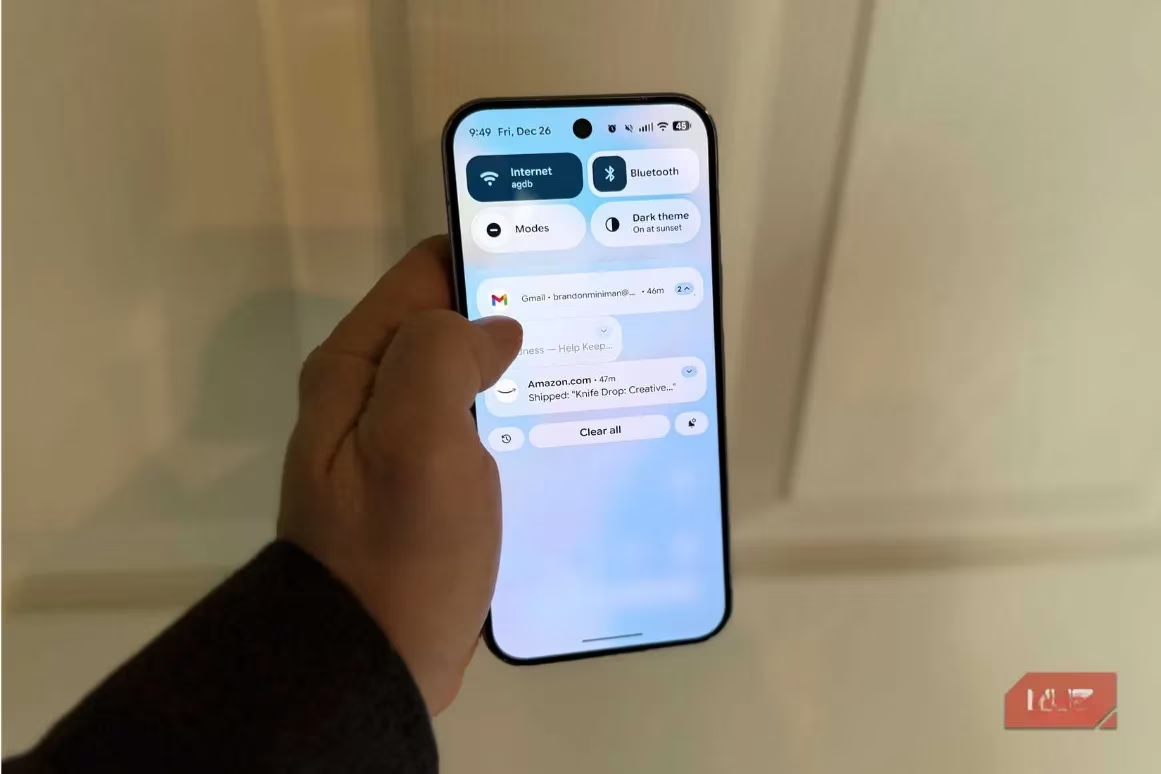
The result? I was perpetually distracted, anxious, and struggling to be fully present for what truly mattered: my family, my craft, and my own well-being. The devices meant to connect and empower me were instead fragmenting my focus and pulling me out of the moment, dozens of times a day. Is this really how we're meant to live with the technology of 2026?
The "Push" Problem: Why Defaults Are Designed to Distract
By default, our phones and apps are engineered for a "push" relationship. Think about it: within milliseconds of someone emailing you, mentioning you on a work platform, or posting something, there's a notification. This creates a sense of artificial urgency and trains us to be reactive. Slack is a perfect example. As a gamer, I understand deep work. When I'm practicing a new strategy or analyzing VODs, I need uninterrupted blocks of time. Getting a Slack notification about a casual question doesn't just interrupt me; it pulls my brain into a completely different context, costing me valuable minutes to re-focus.
Don't get me wrong—I take my professional collaborations seriously. But I want to engage on my terms. I want to batch my communication when I'm at my workstation, ready to respond thoughtfully, not when I'm having dinner with my family or in the middle of a training session. The same principle applies to Gmail, project management tools, news apps, and social media. The truth is, in 2026, there is almost nothing that genuinely requires an immediate, push-style notification for most of us.
My 2026 "Pull" Protocol: The Great Notification Purge 🔕
The solution I implemented is deceptively simple but profoundly effective. I went into the notification settings on all my devices and performed a mass purge. My new rule became: If it's not urgent, critical, or from a human I love, the notifications are off.
Here’s my current notification whitelist:
| App Category | Notification Status | Reason |
|---|---|---|
| Phone & SMS/Messages | ✅ ON (Push) | These are tied to my private number, reserved for family and close friends. True emergencies happen here. |
| Smart Home/Security | ✅ ON (Push) | Motion alerts from exterior cameras. This is about safety and peace of mind. |
| Calendar | ⚠️ Limited (Time-sensitive) | Only for imminent appointments or critical reminders. |
| Everything Else | ❌ OFF | Slack, Email, Social Media, News, Games, etc. I check them when I choose. |
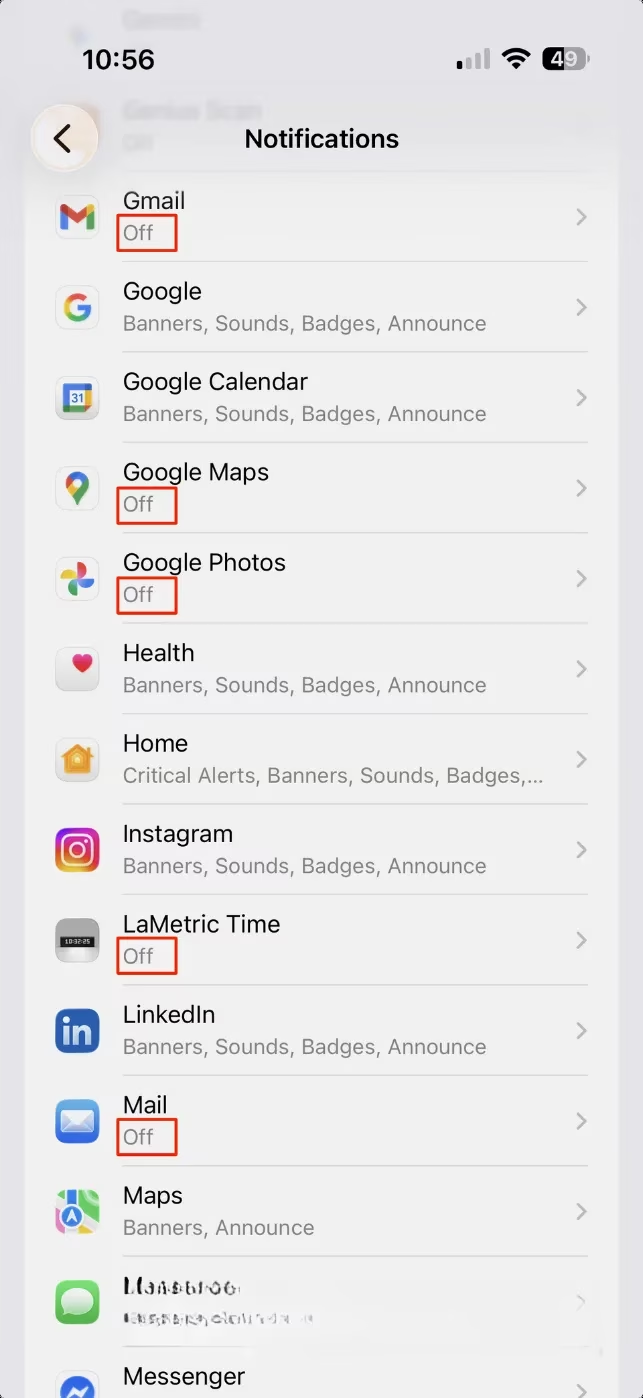
This might seem extreme. What about FOMO? What if my team needs me? Here's the reality check of 2026: Urgent matters find a way. If it's truly critical, people will call. For work, we've established clear protocols for emergencies outside of standard channels. For everything else, it can wait an hour, or even until the next day. The anxiety of potentially missing something was far less damaging than the guaranteed distraction of constant notifications.
Beyond the Toggle: Advanced Tactics for a Gamer's Focus 🎮
Simply turning off notifications was the foundation, but as a pro gamer, I've built additional layers to protect my focus, especially during training and competitions.
-
Scheduled Focus Modes: I use granular Focus modes (on iOS) or Digital Wellbeing schedules (on Android) that are tied to my gaming rig. When my gaming PC is on, my phone automatically enters a "Deep Work" mode that silences everything except whitelisted contacts. This creates a physical and digital barrier against distraction.
-
App Batching: I now have designated times to "pull" information. I might check Slack and email at 10 AM, 2 PM, and 5 PM. This batching reduces context-switching and makes me more efficient when I do process communications.
-
The Home Screen Edit: My phone's home screen is now a tool, not a slot machine. It contains only essential tools (maps, calendar, camera) and my whitelisted communication apps. All other apps are tucked away in the app library, removing visual temptation.
The Transformation: Reclaiming Presence and Performance
The impact has been nothing short of transformative. By shifting from a push to a pull relationship with technology, I've regained something priceless: my attention and my presence.
-
In-Game: My focus during practice and tournaments is sharper and more sustained. I'm not subconsciously waiting for the next ping, so I'm fully immersed in the game.
-
At Home: When I'm playing with my kids, my phone is a tool in my pocket, not a competing source of engagement in my hand. I'm truly there.
-
Mental Clarity: The background anxiety of an overflowing notification center is gone. My mind feels less cluttered, more my own.
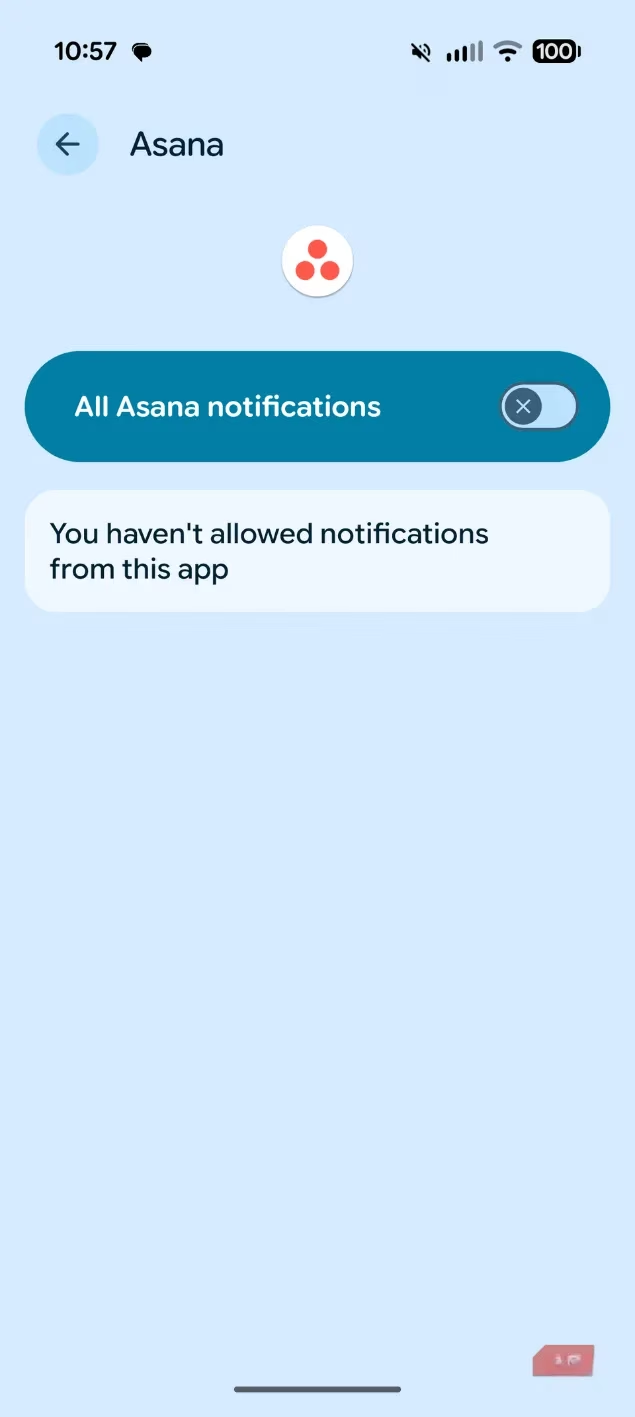
Time is our most non-renewable resource. Living with intention in 2026 isn't just a nice idea; it's a necessary defense against an increasingly demanding digital world. This system isn't set in stone—flexibility is key. If I start a new project with different needs, I'll adjust the settings. The power is in the conscious choice. For now, I am unequivocally happier, more focused, and more present because I command my technology; it no longer commands me. The question is, are you ready to make the switch from being pushed around to consciously pulling what you need, on your own terms? 🚀