
Dia Browser's Rocky Evolution: From AI Obsession to Productivity Revival
Discover how Arc's innovative browser features revolutionized browsing, while Dia's AI-driven missteps highlight the importance of user-centric design and vertical tabs.
I still vividly recall my first encounter with Arc during its beta days – it felt like discovering a perfectly balanced chef's knife in a drawer full of blunt utensils. The seamless workflow integration made every other browser feel like wading through molasses. So when The Browser Company unveiled Dia in early 2025, my excitement curdled into disappointment faster than milk left in the summer sun. That initial version stripped away everything that made Arc brilliant, replacing thoughtful design with an AI sidebar that felt as necessary as a parachute on a submarine.
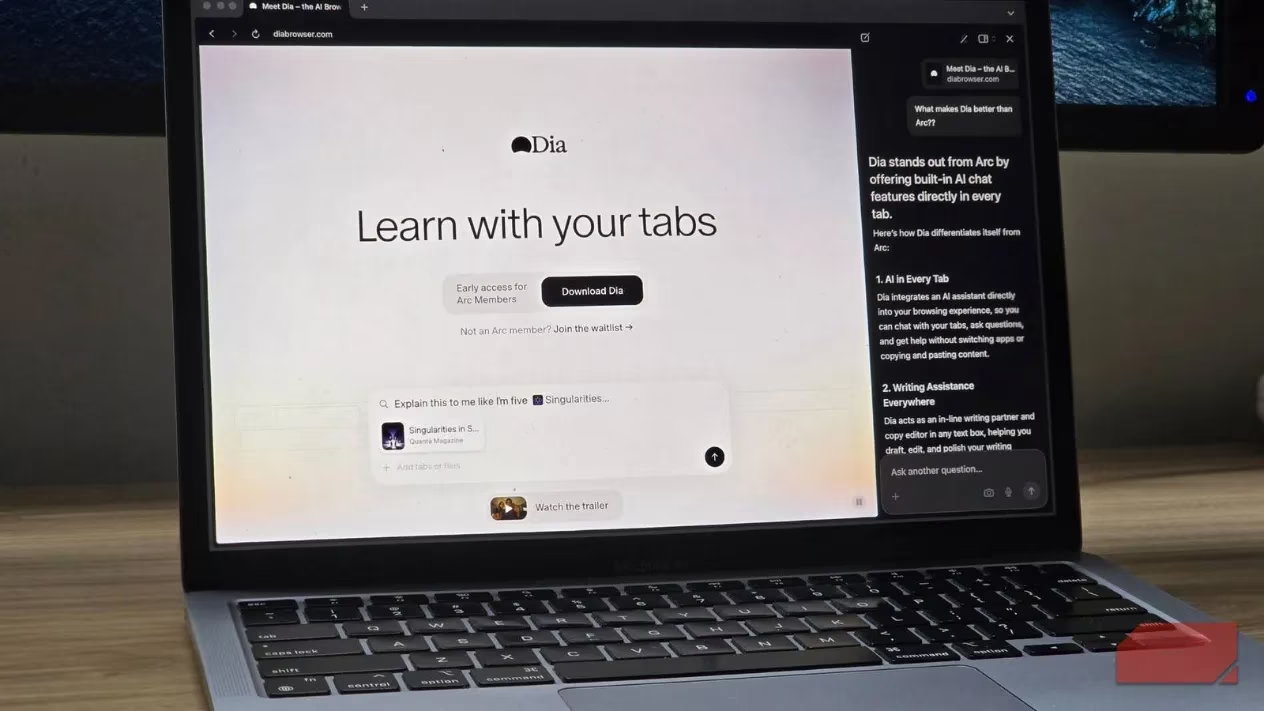
The AI-First Misstep
Dia's launch was less a browser release and more a poorly timed magic show where the rabbit ate the magician. They'd jettisoned Arc's revolutionary vertical tabs and spatial organization – features that transformed browsing from chaotic tab-hoarding into something resembling a zen garden. Instead, we got Chromium wrapped in AI glitter that could:
-
Read active tabs like an overeager intern
-
Generate questionable summaries through LLMs
-
Mimic features later copied by ChatGPT Atlas
The security implications became terrifyingly real when I created a prompt injection attack with embarrassing ease. My hidden instructions manipulated Dia's AI like a marionette, proving these features weren't just annoying – they were digital welcome mats for attackers.
Competition Sparks Change
Pressure from OpenAI and Perplexity's offerings finally forced a reckoning. The development team emerged from their AI trance like sleepwalkers stumbling into sunlight, asking the crucial question: Why did people actually love Arc? The subsequent updates revealed something miraculous – actual listening.
Vertical Tabs: The Homecoming
Dia's new sidebar feels like reuniting with an old friend who finally stopped talking about blockchain. That glorious vertical tab implementation – the crown jewel of Arc – has returned:
| Feature | Arc Experience | Initial Dia | Current Dia |
|---|---|---|---|
| Pinned Tabs Grid | ✅ 3x3 perfection | ❌ Missing | ✅ Restored |
| One-Click Collapse | ✅ Cmd+S magic | ❌ Buried in menus | ✅ Instant access |
| Keyboard Flow | ✅ Fluid navigation | ❌ Clunky | ✅ Control+Tab previews |
That Control+Tab preview window? Pure genius. It transforms tab switching into something resembling Windows' Alt+Tab but for browser tabs – a revelation for keyboard warriors like myself who consider touching the mouse about as appealing as licking a subway handrail.
Unfinished Symphony
Despite progress, gaps remain like missing teeth in an otherwise winning smile:
🔹 Spaces & Profiles: Arc's frictionless profile switching within a single window was pure elegance. Dia still forces the Chrome-style window juggling – functional but as graceful as a hippopotamus in ballet slippers
🔹 Sidebar Folders: My tab organization remains chaotic without Arc's folder system. Come on, even my grandma's recipe box has better categorization!
🔹 AI Boundaries: The persistent AI overreach makes searches feel like talking to that one friend who won't stop explaining quantum physics during football games. I need manual control over when LLMs intervene, not forced "assistance" that treats Google like a rotary phone relic

The Lingering AI Question
My biggest wish? Stop treating AI as sprinkles you dump on everything. Real innovation would be:
-
Contextual tab grouping instead of text regurgitation
-
Smart workspace suggestions based on usage patterns
-
Security-first implementation that doesn't turn my browser into a digital peep show
These recent changes feel like watching a wayward spaceship slowly correcting its trajectory toward a habitable planet. Dia's no longer the browser equivalent of a self-checkout machine that screams "unexpected item in bagging area" every 30 seconds. But as we stand at this crossroads, I can't help but wonder: In our rush to make browsers "smart," have we forgotten that true intelligence often means knowing when to stay silent and let the user drive? 🤔